
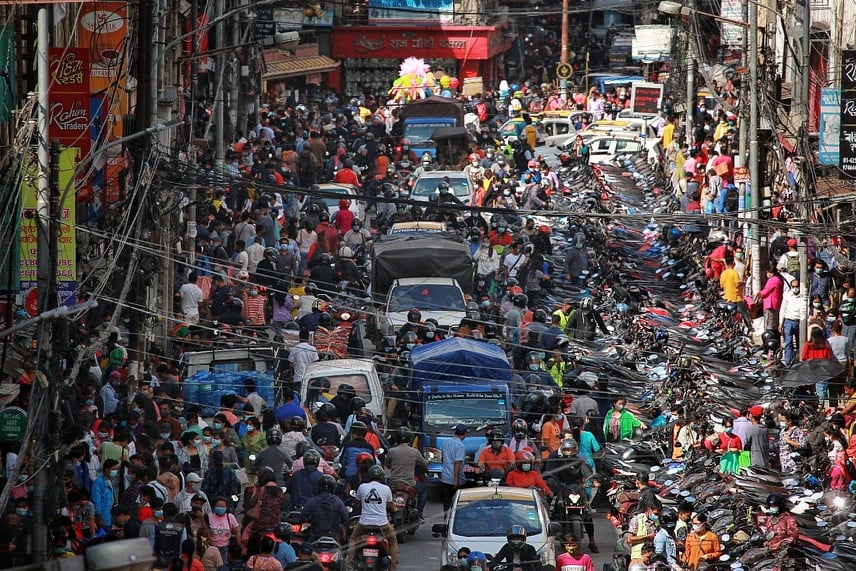
Nearly half of Kathmandu Valley’s population is fully vaccinated against Covid-19, but the national average is only a little over 20%. In essence, this is a microcosm of vaccine inequity seen globally – but it also reflects Nepal’s in-built socioeconomic inequalities.
In Asia and Africa, a majority of the population including health workers and the elderly are yet to receive even their first dose. But the US, France, Germany, and Israel are already providing booster shots to their vulnerable populations.
On one hand, this is a stark reminder that Nepal is not on the priority of wealthy nations. Just as it was not during the devastating second wave in May when, despite the prime minister and the president calling on foreign governments for vaccine shipments, the response was tepid.
On the other hand, the imbalance in vaccine distribution within Nepal is a reflection of long-standing inequities in healthcare services, education, drinking water, and food that predate Covid-19.
Despite a federal Constitution that has devolved decisions and delivery of basic services to local governments, it is still Kathmandu that holds the purse strings and power. Isolated and beyond the state’s reach even at the best of times, Nepal’s hinterland this year has been cut off by destructive floods blamed on the climate crisis.
A village in Kailali with 200 Tharu and Dalit families has been marooned by floods for the past month, where the submerged roads block access to even the rudimentary healthcare available.
It is not surprising, therefore, that very few in this village are inoculated. In fact, those who need to be vaccinated the most now face a triple whammy: historical state neglect, international apathy, and now climate-induced extreme weather.
This in turn has set off a vicious cycle, and the poor are getting poorer. The official death toll from Covid-19 in Nepal is nearly 12,000, but the ‘excess deaths’ that were not counted in remote villages across the country is probably several times higher.
An estimated 1,200 children have become orphans because of the death of one or both parents due to Covid-19. Many of them do not have support for food, healthcare, and education – setting a stage for intergenerational inequity.