
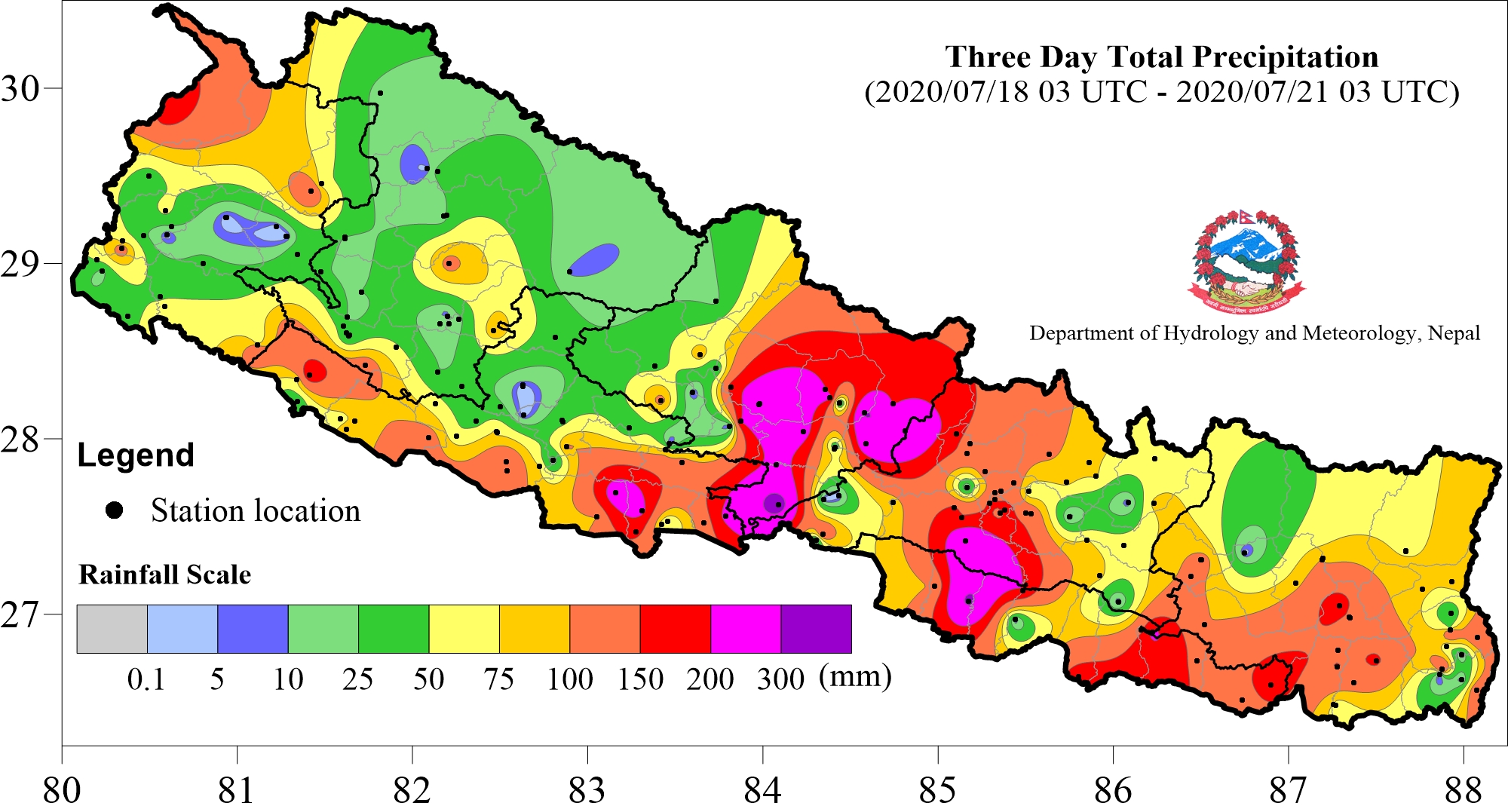
This year’s vigorous monsoon in Nepal has left at least 116 dead and 50 missing in landslides and floods, with Gandaki Province hardest hit by heavier than usual rainfall.
Nawalparasi district in Gandaki Province received 312mm of rain between Sunday-Tuesday with Monday registering 157mm in 24 hours. Bara district in the central Tarai recorded the highest precipitation in the period with 324mm of rain, and parts of Kaski district got 312mm.
According to the Department of Meteorology and Hydrology, Nepal has received 736mm of rain since the start of the monsoon in mid-June – nearly 150mm more than the average for the same time period. Kaski and the mountains of central Nepal as well as the eastern districts have the highest annual precipitation in Nepal with 3,500mm.
Nepal villages cope with climate-induced floods, Sonia Awale
The Department said that most places in Nepal this year received above average rainfall. But worryingly, some of these weather events were cloudbursts – concentrated localised rain that can be very destructive.
For example, Suryapura in Rupandehi received 140mm of rain in just one hour between 11pm to midnight of Monday. Climate expert Ngamindra Dahal says: “This was unusually heavy, although it is difficult to say how exceptional it was. We have had cloudbursts before, it’s just that they have become easier to detect with automatic rainfall monitoring stations.”
Dahal says the cloudburst would have been much more destructive if it had happened in the Chure or the mid-mountains like they have in 1984 and other years with frequent cloudbursts.