At Saraswati Primary School in Bhalohiya village in the central Tarai last week, children in Class 5 sweat in the humid heat, waiting attentively for a signal. A sharp clap from Disaster Focal Person Mukesh Jha, and they are down on the floor, covering their heads with their hands. Then they walk out single file from class, form a circle in the playground and start counting aloud their pre-assigned numbers.
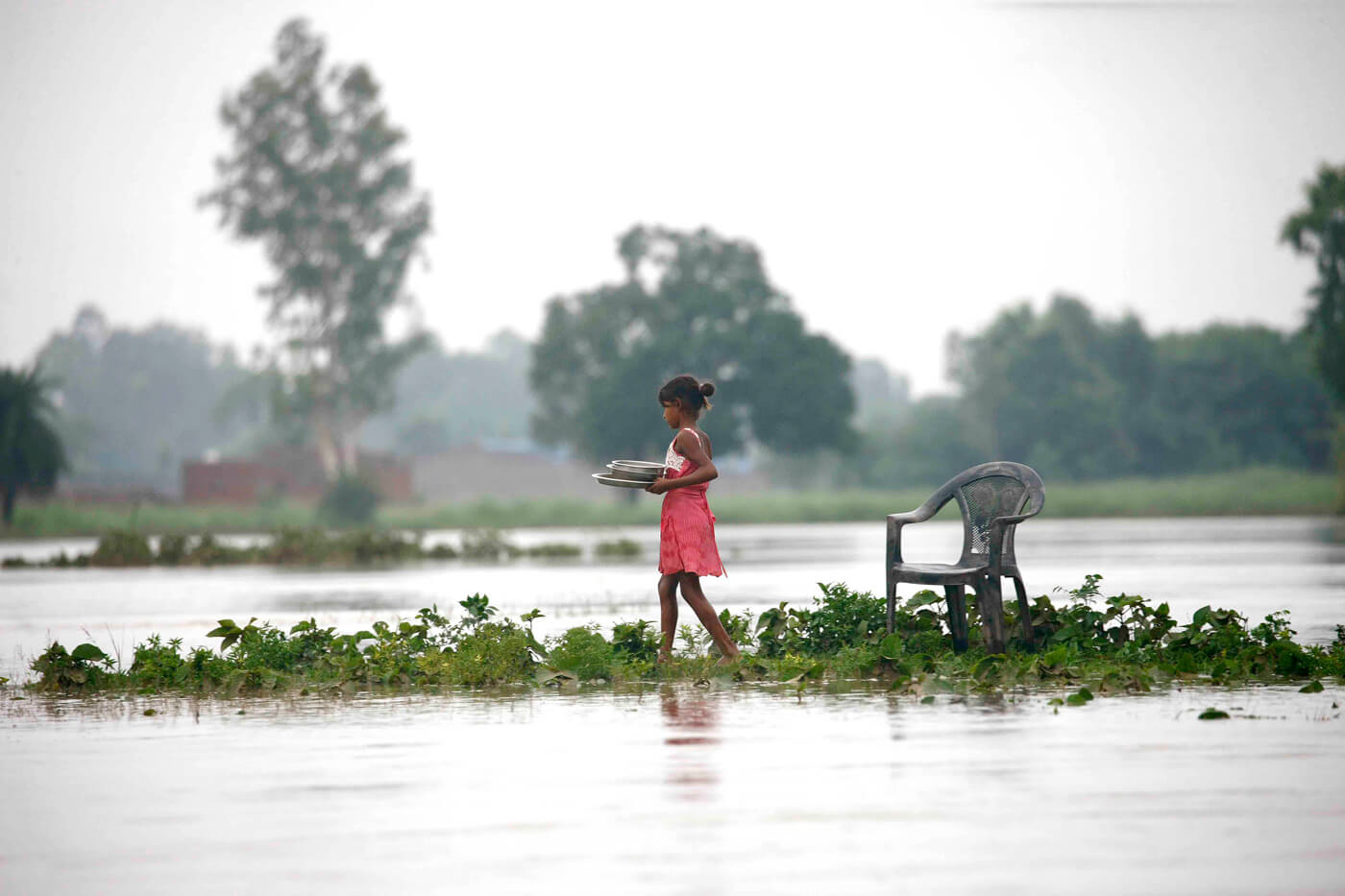
The students are practising a drill on disaster response in these flood-prone plains bordering India. Two years after a devastating flood that displaced more than 400,000 people, destroyed 65,000 homes and killed 143 people, parts of the Tarai are beginning to incorporate disaster management activities.
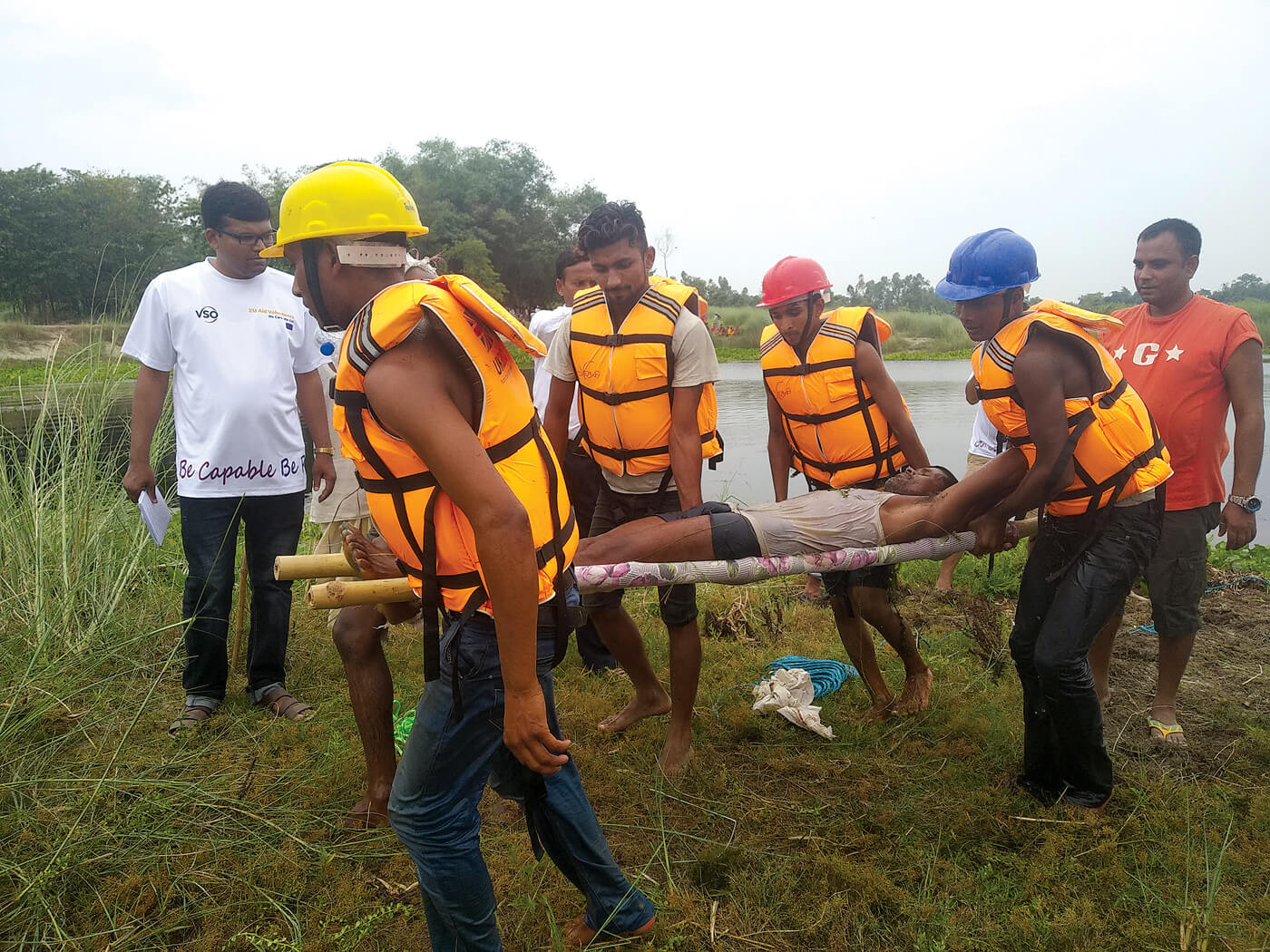
Eighteen lives were lost and 325 schools were submerged here in Rautahat alone, including Saraswati School. It was repaired under the Flood Response Project funded by theBritish agency, VSO (Voluntary Services Overseas) and implemented by local partner Mandvi, and supported by Be Capable Project funded by EU Aid Volunteers .
Read also:
Only half prepared, Sewa Bhattarai
Flood of recrimination, Editorial
Yet while disaster management is starting to attract the attention it deserves, rampant construction in the district, and across the country, is increasing vulnerability to disasters, say experts. Much of the new infrastructure actually blocks the natural drainage of rivers, resulting in flooding, especially along Nepal’s southern border.
“Disruption by roads, low capacity bridges, urban expansion and embankments along the border in India constrain water flow,” says climate expert Ajaya Dixit.
Inundation in the Tarai has got worse after roads were built on the Indian side, which act like dams. The damage is more severe because river basins in Nepal are already encroached by roads and human settlements where there used to be only fields or sandy riverbanks. As a result, floods that could have passed by in a few hours with minimal damage now submerge farms and towns.
In 2017, heavy rainfall in the Chure catchment of the Tarai caused damage worth more than Rs60 billion, according to estimates. But such cost is set to increase, especially as rainfall patterns have become more unpredictable with the climate crisis. Higher intensity storms that drop more rain in shorter periods are becoming more common, raising the risk of sudden inundation.
Read also:
Dancing with the river, Ramesh Bhushal
From nowhere to nowhere, Basanta Pratap Singh
Among the 49 disasters monitored by the Disaster Risk Reduction Portal under the Home Ministry, flooding is among the mostly minutely monitored. Water levels of major rivers are watched in real time, and if they cross the danger mark, the government sends out text messages to all at-risk residents or informs local disaster management committees. This early warning system was instrumental in evacuating residents and minimising the loss of lives in 2017.
The Disaster Risk and Management Act 2017 prioritises the role of local governments in disaster management. “After these policies came into effect, we have prepared for floods by stocking boats, tents and other emergency materials,” says Arun Kumar Yadav, mayor of Durga Bhagwati rural municipality in Rautahat. Security forces at local levels have been trained for rescue and relief and are alerted when disaster is imminent.
Though Nepal has improved its performance in rescue and relief, many parts of the Act are yet to be implemented. The government is still working on a comprehensive Disaster Information Management System, which is supposed to include information about areas at risk of hazards and the resources available nearby.
Read also:
Disastrous unpreparedness, Ajaya Dixit
“We have asked local level governments to start sending us this information, but they must conduct a hazard mapping in their area first for us to create a nation-wide risk atlas,” says Bed Nidhi Khanal, the under-secretary at the Home Ministry who oversees the Disaster Risk Reduction Portal. The law also requires the government to conduct drills for disasters, but until now it has only held sporadic simulations along five river basins, and has no immediate plans for systematic, nation-wide drills.