
The series Nepal Made profiles world-class Nepali products and the people behind them.
The Dutch colonised Indonesian island of Java in 1596, and found that the coffee plant thrived in its fertile volcanic soil. Java had become the primary source of coffee for the world by 1720, and the place name became synonymous with the beverage.
Four hundred years later, in Kathmandu an entrepreneur named Gagan Pradhan founded Himalayan Java Coffee. After returning from Australia in 1990, he found that opening a café was the most affordable investment.
Now, 27 years later, there are 100 Java franchises in the Kathmandu Valley, Pokhara, Kurintar, Itahari and even Toronto and Lhasa.
The story of Himalayan Java is pioneering, yet simple, combining consistent delivery in tastefully designed cafes at strategic locations to create a juggernaut of a brand. New Javas seem to pop up exactly where you would expect them to.
“It all started as a passion, a hobby, and I never expected this venture to spread so widely so rapidly,” founder Pradhan told us at the Thamel outlet, where Himalayan Java moved in 2000 after opening the first small café in Kamaladi.
Located on the first floor of a North Face showroom opposite Fire & Ice Pizzeria in Thamel, the cafe has seating overlooking the street, and a spacious, bright indoors that is packed with locals, tourists, furniture, staff, baked goods on display, Himalayan Java merch, and coffee paraphernalia.
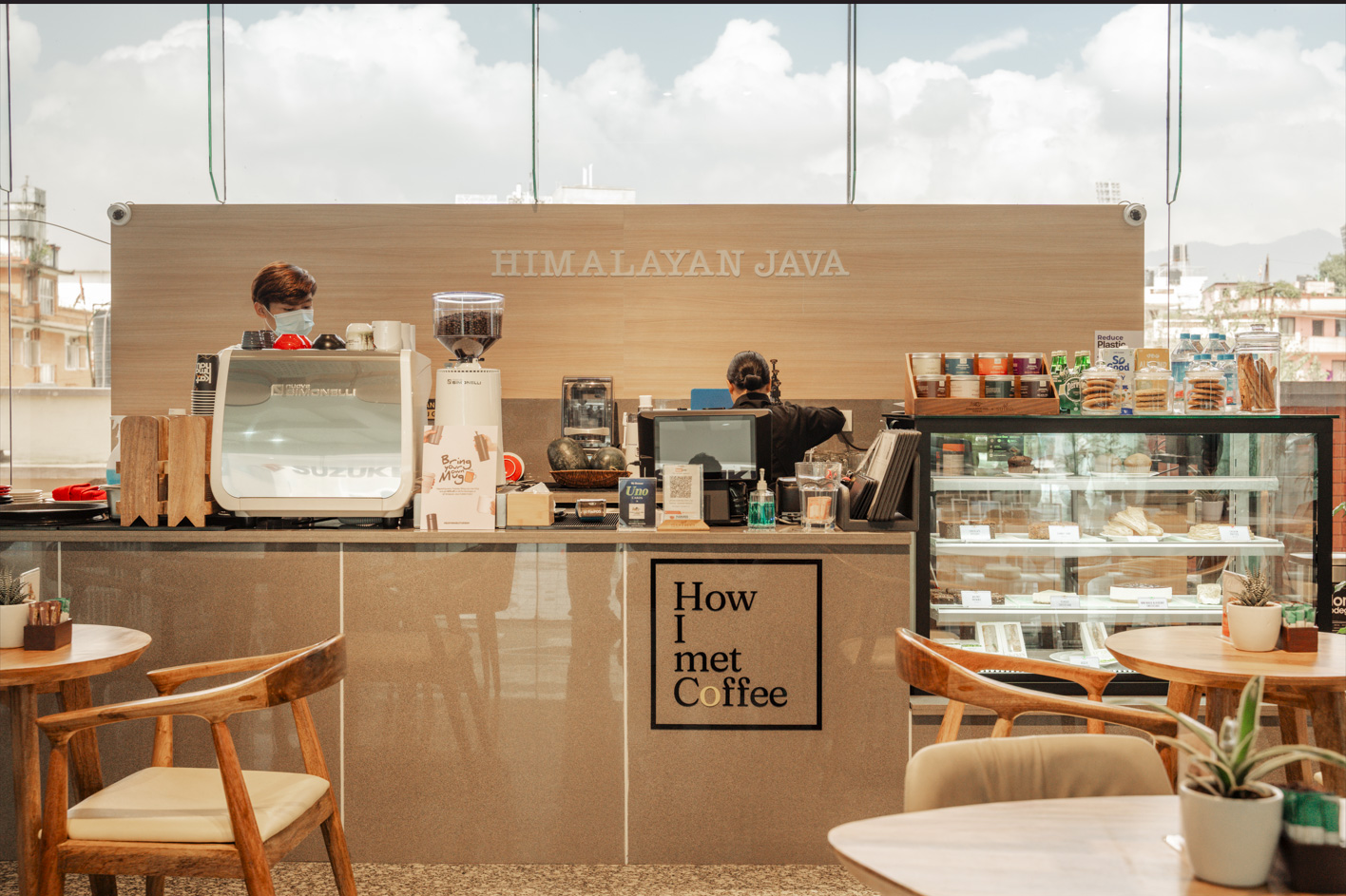
On a recent Friday afternoon, there were Nepalis, tourists from India and China in groups and solo, and monks in maroon. Westerners lounged on sofas, focused intensely on their laptops with headphones on. On an isolated balcony corner, two UML cadre could be overheard planning a campaign rally for the March election.
CUSTOMER SATISFACTION
Nearby in Darbar Marg is another Himalayan Java on the top floor of a building overlooking Narayanhiti Palace. On Mandala Street up a flight of stairs and in JP Marg is another Java outlet. That makes four outlets within a 400m circle in Kathmandu.
Over in Patan, the density of locations is even higher: within 1sq km in the Sanepa-Jhamsikhel- Pulchok area are eight Himalayan Java outlets.
Himalayan Java’s franchise business model is unique for Nepal: there is no other food or beverage business that has pulled it off on this scale.
“We want Java to become a part of the customers’ life, as a casual place to meet or rest,” says General Manager Diwakar Ojha, explaining that an interested party applies, is vetted and can buy a franchise for a certain location. The criteria is whether the franchise has the resources and capacity to handle running the outlet long-term.
The investor must follow rules and regulations to ensure quality of the product, standard of service and interior décor. But the management, marketing, staffing and supply chain are all handled by Himalayan Java which charges a franchise fee and a percentage of sales.

Some investors are prolific – there is one in Kathmandu who opened three franchises in two years. The outlets have a common ambience, but each location has its own unique vibe as well.
“Same same, but different. We put a lot of thought into it,” Ojha says. “We are careful about location, and getting the design and feel of the cafe to gel with the surroundings. We integrate core things like furniture, bar counters, colours, but each one is unique.”
A key value of the brand is consistency, and the main challenge is managing the supply chain. There are sister companies under the Himalayan Java brand: The Bakery, Bakery School, Roastery, Barista School, Import and Export, and Brewshala, where coffees and drinks are trialed and experimented.
The hub of the operation is the Roastery and the Bakery in Bluebird Mall from where all beans and baked goods are sent to the outlets. Java now also has its own coffee farm in Ilam, and the rest of the beans are sourced from the Nepal Coffee Company, and it sells only Nepali coffee sourced from small farmers.
Java has also evolved into co-working and lounge-type spaces where customers can meet, explore and follow social media trends like Matcha the green-tea based beverage that Java modified into the popular Blended Matcha, a Matcha Latte, and a Strawberry Matcha drink.
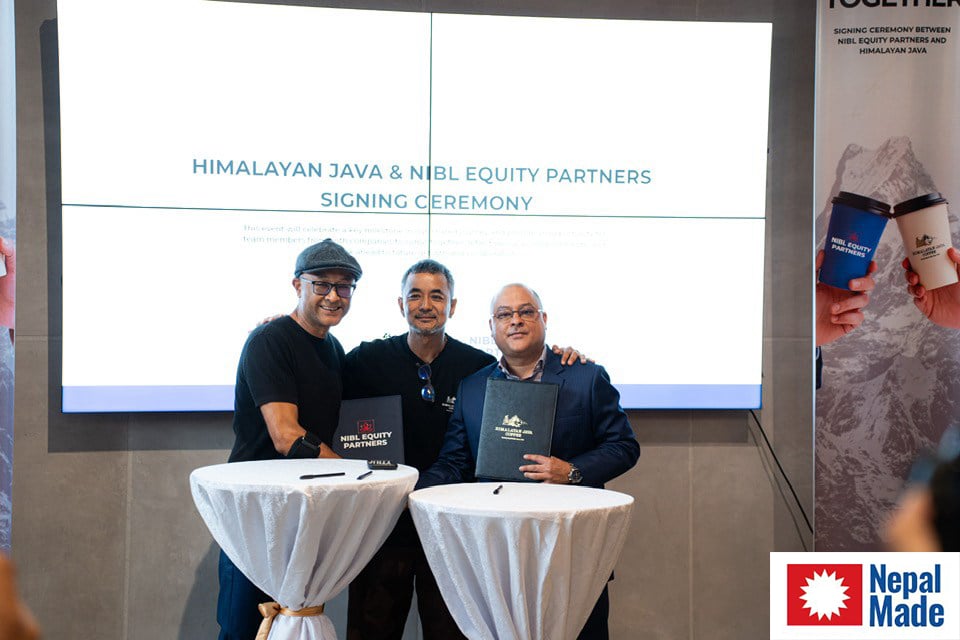
Himalayan Java Coffee recently received a large investment from NIBL Equity Partners who acquired a 28.8% stake opening the way for more expansion (pictured). Plans are afoot to open more franchises across Nepal and in New Delhi.
Despite its popularity, one criticism is the price point. An Americano can cost up to Rs355. Ojha justifies this saying the price reflects the high overheads.
One solution is Himalayan Java Express, designed much more pragmatically, mainly for to-go orders where drink prices are slashed by half.