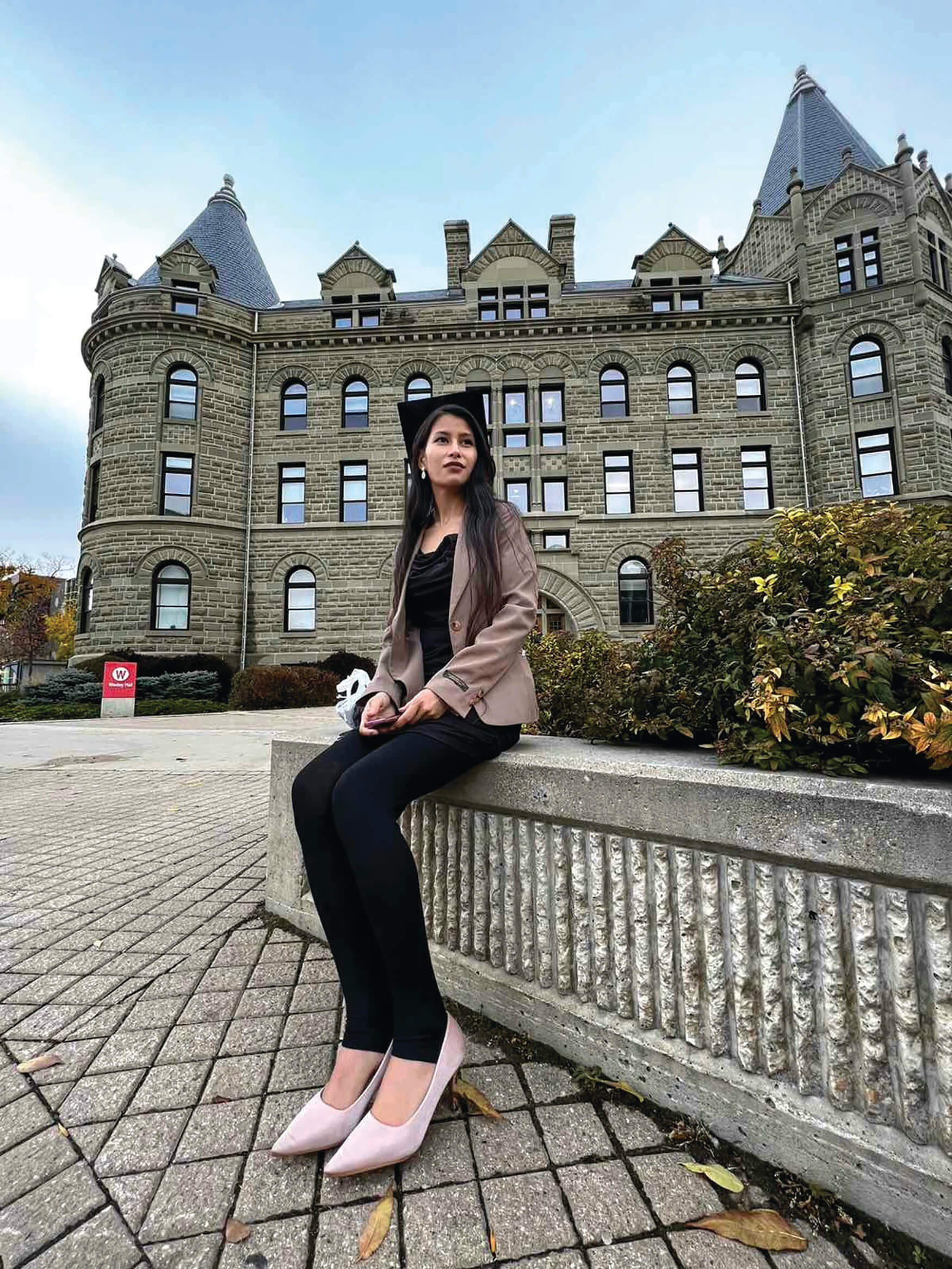
At a recent graduation ceremony of one Australian university, 300 students paraded across the stage to receive their diplomas. All were Nepalis, except one. The only white people there were faculty members.
A back-of-the-envelope calculation shows that at an average cost of USD30,000 per year for their undergraduate education Nepali students spent $15 million in just that one university in Australia.
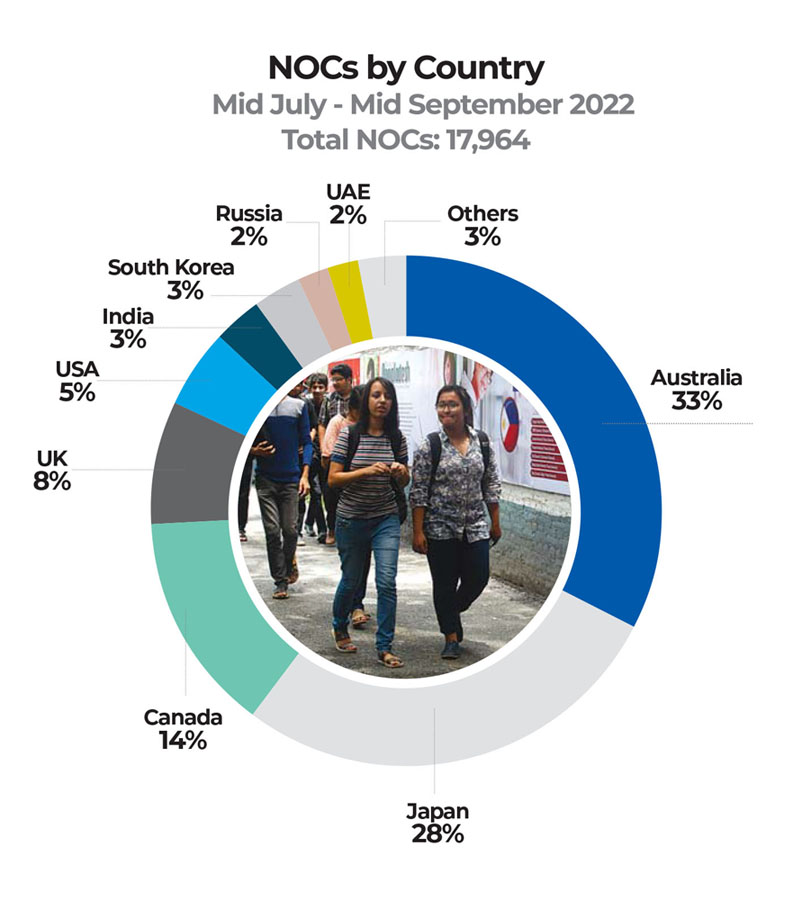
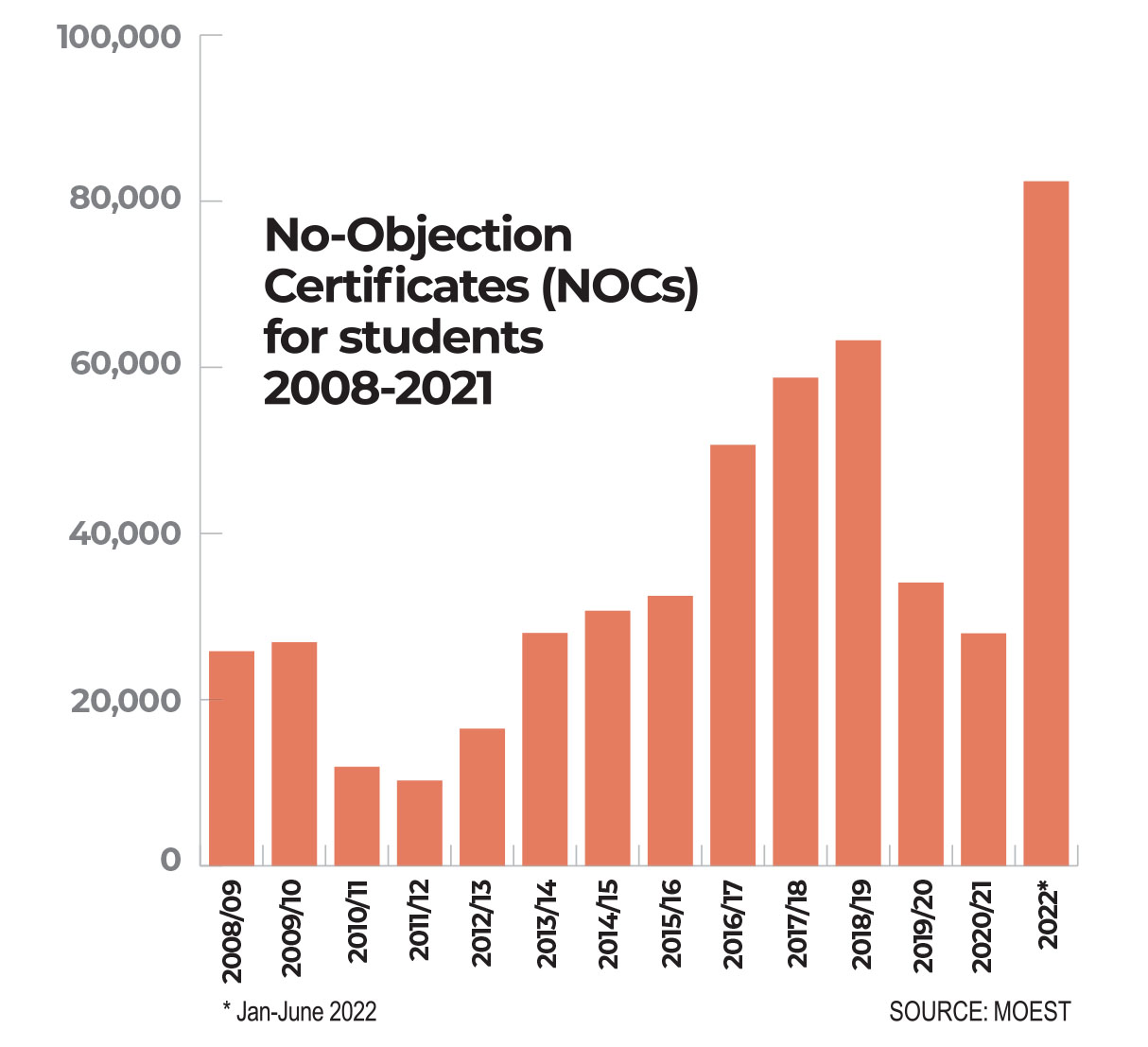
Just from January-June 2022, the Ministry of Education in Kathmandu approved 82,000 NOC (No Objection Certificates) for Nepali students going to Australia, Canada, UK, Japan and the US. This was more than double the figure for last year.
A conservative estimate shows that Nepalis spent a whopping $3.3 billion for education overseas in just the first six months of this year. By comparison, Nepal’s annual petroleum import bill has risen to $2.5 billion, and tourism brought in less than $1 million in 2019.

Nepalis are essentially enriching first world countries with student out-migration now costing the country more than what it earns from all its exports combined.
Although some of the money students spend on fees and living costs are from what they earn from part-time jobs, much of it is funded by families in Nepal who sell their land or borrow money to send their children away.
Since work and residence permits are difficult, getting a student visa is the easiest path to emigration for desperate Nepali youth. For host countries, this is a way to get cheap labour for low-skill jobs that their own nationals will not do.
The Sydney Morning Herald reported recently that the ‘Nepal market’ was worth $2.6 billion to Australia in 2018-19, up from $1.6 billion the previous year. Nepal is the third biggest source of international students in Australia accounting for 7% of them.
"My best guess is that a majority of Nepalese students in Australia are here simply for work, hoping to make enough money in Australia both to pay off their tuition loans and return some extra to their families back in Nepal,” Salvatore Babones at the Centre for Independent Studies of the University of Sydney told the Herald.
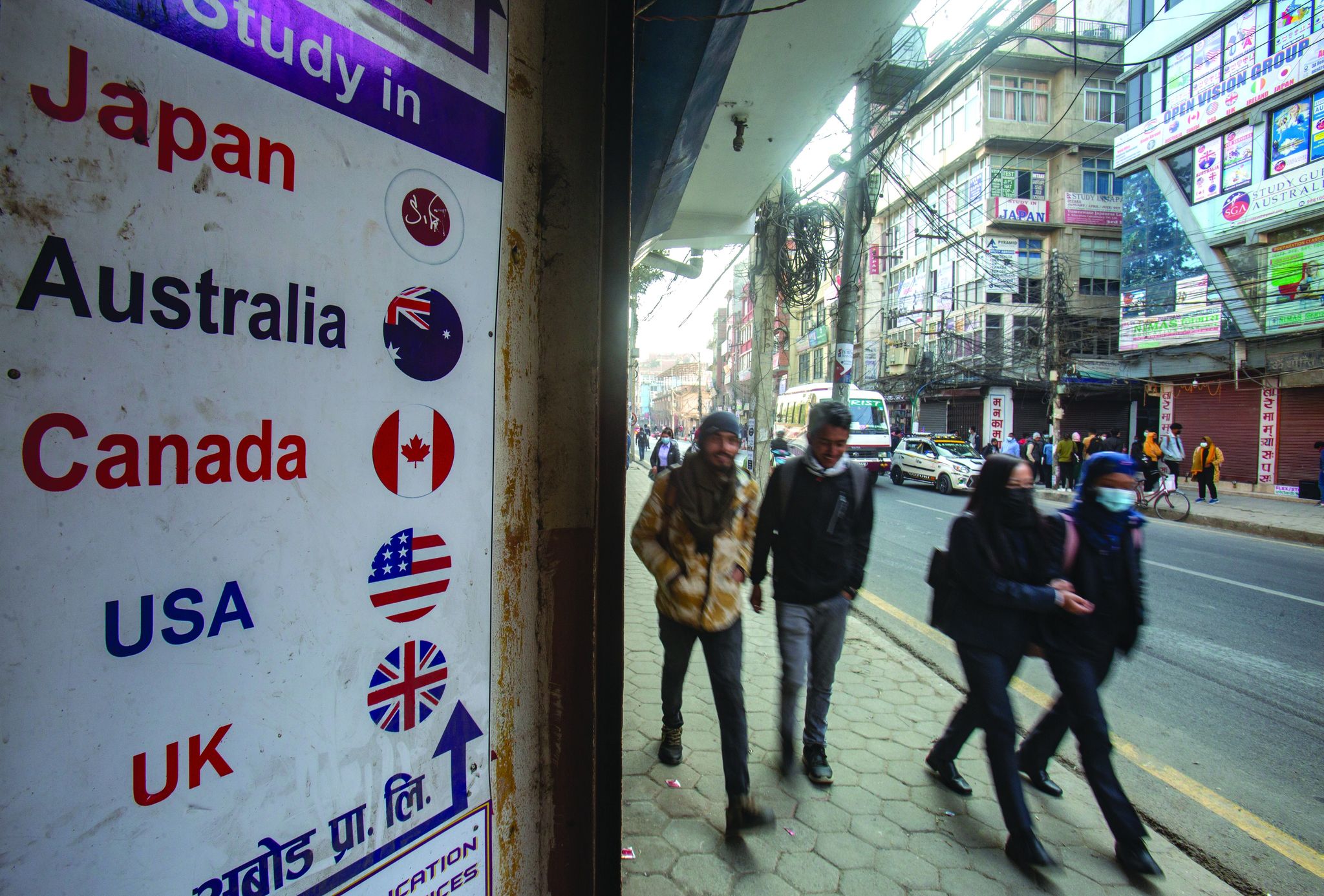
Countries like Australia, Canada, Japan, and increasingly the UK have deliberately left their immigration door slightly ajar to address their temporary labour shortage by giving out student visas, without a drastic liberalisation of their strict immigration policies. A bonus is the income that they earn from student fees.
International students are an excellent business proposition. The Danish Society of Engineers in Copenhagen this week asked the government to drop the cap on foreign graduates and allow them to work after completing studies to fill a crippling shortage of engineers.
Many Nepali students interviewed for this report admitted that getting a student visa was a one-way ticket out of Nepal. Indeed, the push-factors are strong: erratic and low quality instruction in colleges, and the lack of job prospects.
Whereas abroad, students get better education and exposure, earn some money on the side because the host governments allow them to work a limited hours per week, and also because of the possibility of staying on.
Read Also: Hardworking Students, Editorial
Another push factor, especially for young Nepali women is that by going abroad they can escape family pressure for an arranged marriage. Nepali youth are also frustrated with Nepal’s politics and leadership, and most voted for the Rastriya Swatantra Party in November elections.
“Three thousand Nepali youth are leaving the country every day either on work or student visas, but many of them will not be coming back,” says Pukar Malla of the non-profit Dayitwa which supports returnees with entrepreneurship in Nepal.
Making it easy for students to leave allows the government to get away with not improving the state of education in Nepal. This is similar to labour migration which lets the government off the hook by not having to worry about job creation, and runs the country on the estimated $10 billion in remittance that Nepalis send home every year.
The disparity between public and private education systems in Nepal is stark. And while there have been some notable improvements including world-class education in business administration, economics and public policy, much of this is centred around Kathmandu and not on the scale required.