

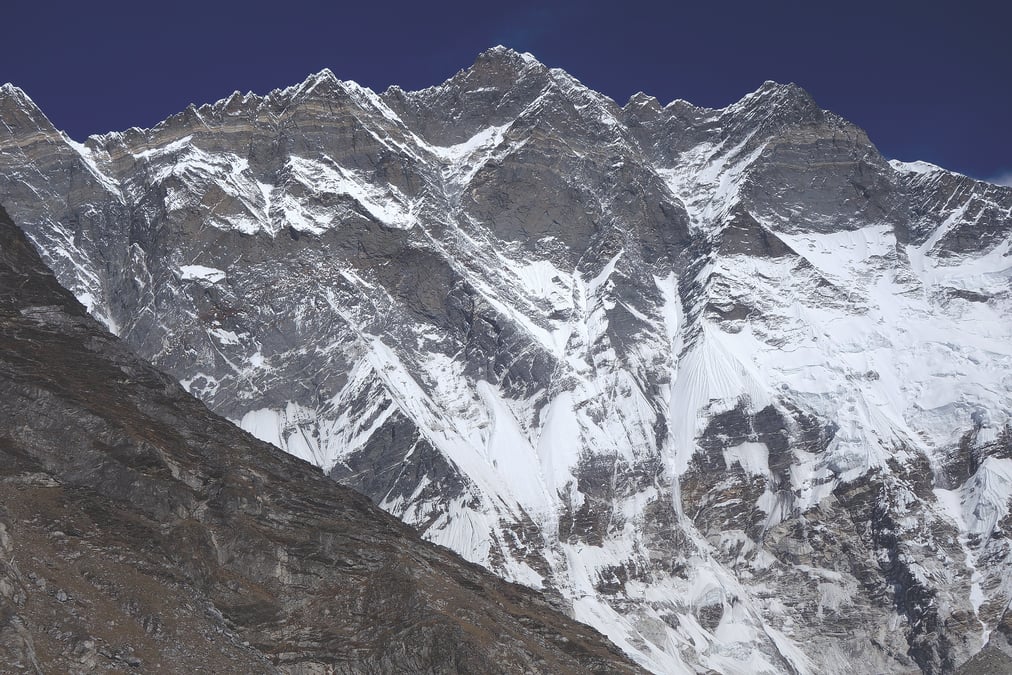
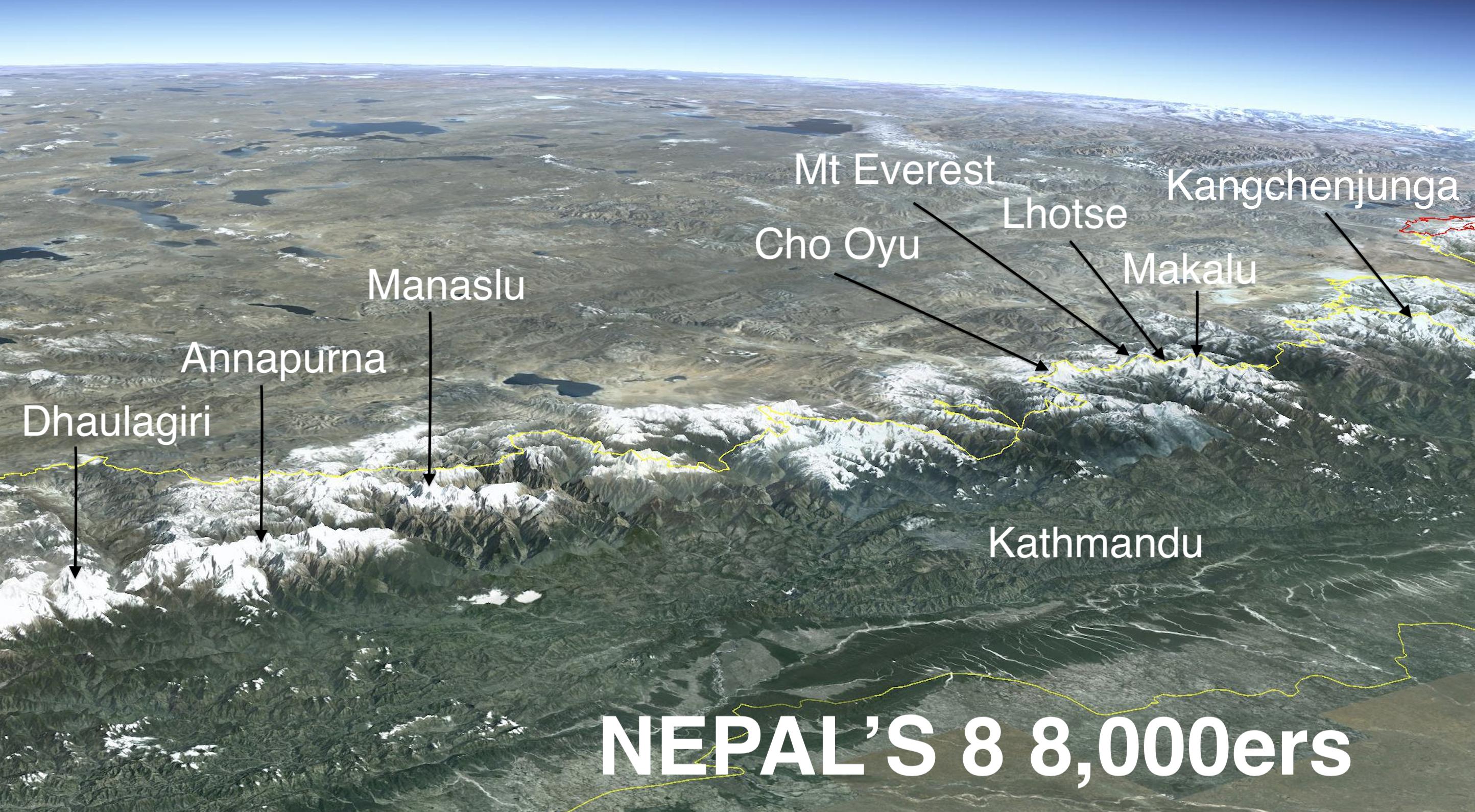
In 2025, Nepal’s Ministry of Tourism added six new 8,000m peaks to those listed on its website. These are subsidiary summits of Kangchenjunga and Lhotse, which some view as insufficiently independent to be called separate peaks.
In 2024, the international mountaineering federation (UIAA) responded to a request by the Nepal Mountaineering Association (NMA) and the government to officially recognise these peaks. While recognising that ‘there is no one definition of a “mountain” or a “peak” or a “top” or “point” in topographic terms’, and encouraging further debate the UIAA’s opinion was that the 8,000m peaks should continue to the ‘Classic 14’, first completed by Reinhold Messner in 1986.
The degree of prominence and isolation of the six new peaks varies, with Yalung Kang having the strongest claim to being a separate peak with a prominence of 135m, but they are all separate enough to be included on some peak-bagging lists. The UIAA’s own list of 4,000m summits in the European Alps includes Punta Giordani with a prominence of only 6m.
Whatever the case for the six peaks being geographically separate mountains, they represent significant climbing challenges. They are not minor tops that can simply be ‘bagged’ on route to a main summit. In the case of Lhotse Middle and Lhotse Shar, no one has ever managed to traverse between them and Lhotse itself.
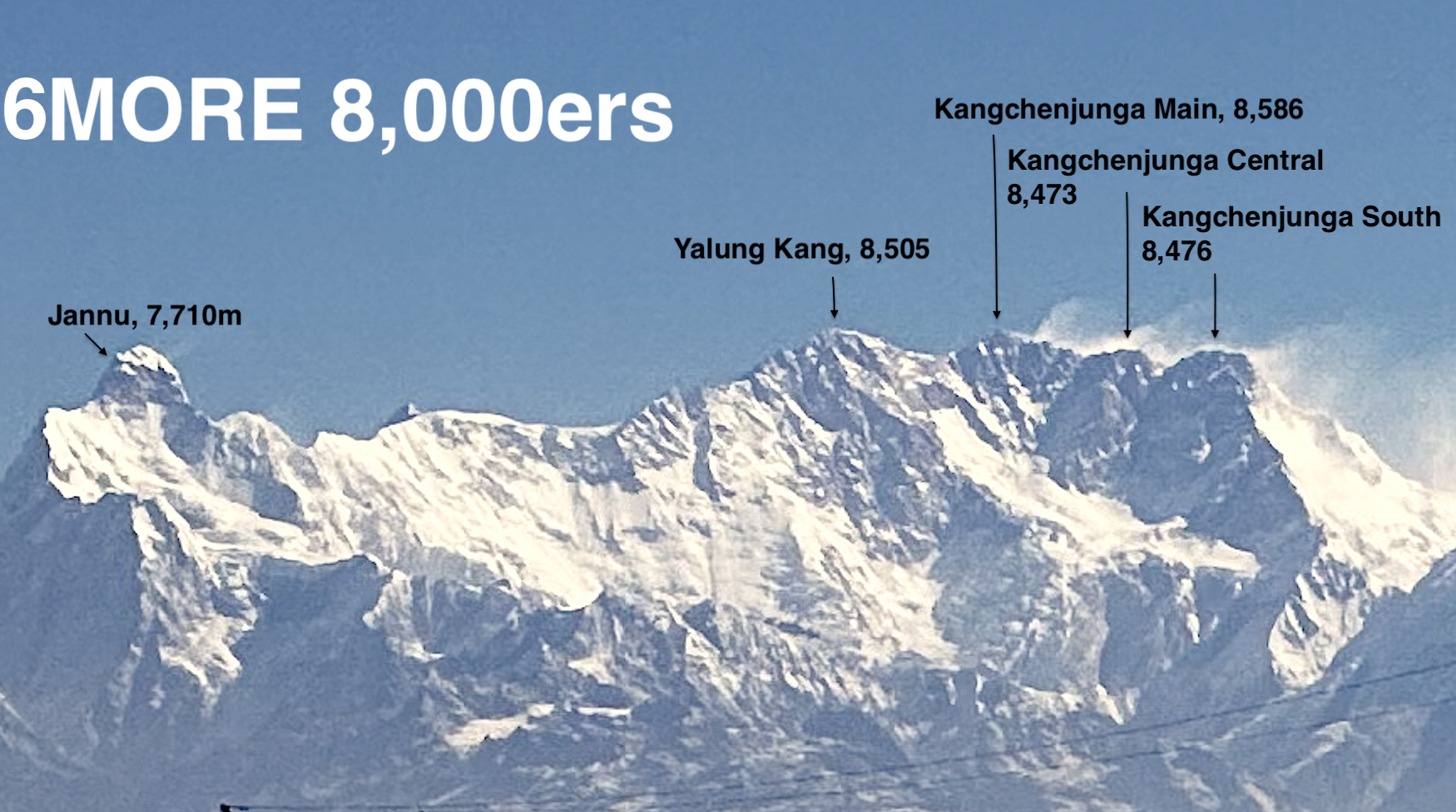
Several fine routes have already been climbed on these mountains, such as Slovenians Andrej Štremfelj and Marko Prezelj’s alpine style ascent of the South-West Ridge of Kangchenjunga South.
The six peaks have not yet achieved universal acceptance, but it is possible that climbing an expanded list of 20 eight-thousanders could become a new mountaineering challenge, just as the 14 classic peaks are today. It is therefore interesting to analyse who is currently closest to achieving this goal, using data from The Himalayan Database and other Internet research.
The first conclusion of my analysis is that these six additional peaks have received far less attention than the classic 14 eight-thousanders. One of them, Yalung Kang West, has never been climbed or even attempted: probably because it is a subsidiary peak of Yalung Kang which is itself a subsidiary peak.
The other five peaks have seen a total of 138 ascents. Just 101 people have ever climbed one or more of the additional peaks, which compares with 354 people who climbed Everest on a single day: 23 May 2019.
Russian Evgeni Vinogradski is unique in having climbed five of the six new peaks. He has also climbed six of the classic 8,000ers, giving him a total of 11 out of the 20 peaks on the expanded list. Vinogradski is now 80 and is unlikely to increase this total.
Several other former Soviet climbers have climbed three of the new peaks, having participated in the 1989 traverse of the four main summits of Kangchenjunga. This includes two legends of Soviet climbing: Kazakh Anatoli Boukreev and Ukrainian Sergey Bershov, each of whom has climbed 13 out of the 20 peaks on the extended list.
Boukreev died attempting Annapurna in 1997. Bershov, one of the only men to have ever climbed Lhotse South Face, is now 78 and, although he was in good form when I met him in Chamonix last summer, he is unlikely to further extend his tally.
The addition of the new peaks does not take any of these climbers beyond the total of 14 peaks achieved by the 76 climbers who have completed the classic ‘Himalayan Crown’. Of those who have climbed all 14 classic eight-thousanders, only one, Korean Um Hong-Gil, has climbed any of the six additional peaks.
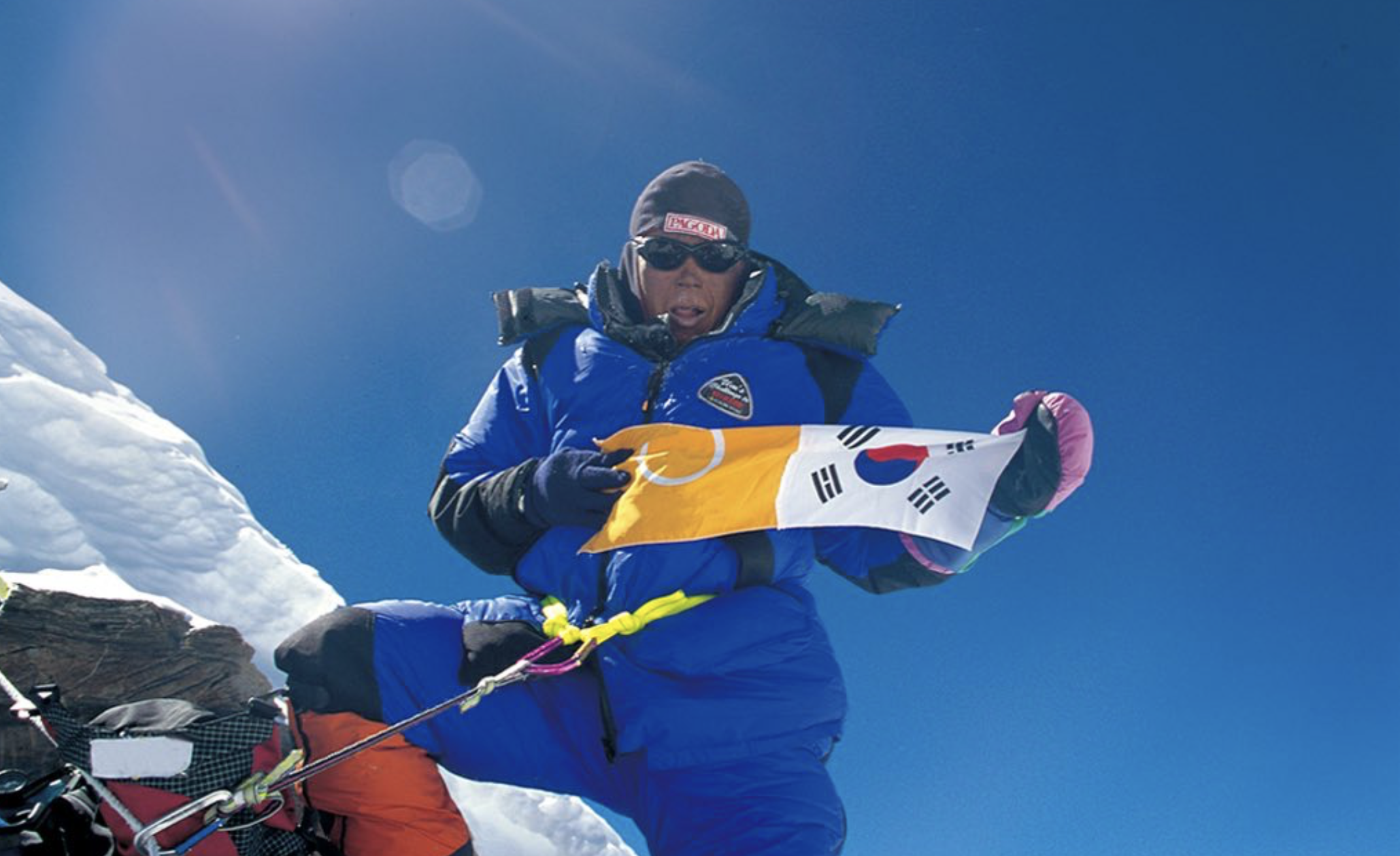
Um climbed both Lhotse Shar and Yalung Kang, giving him a total of 16 summits. He required four attempts to climb Lhotse Shar, including one attempt in which he turned back just 100m from the summit following the deaths of two teammates. He finally succeeded in 2007 via a route up the Lhotse South Face. If a race to climb all 20 eight-thousanders were to begin, Um is currently in the lead.
The Himalayan Database also lists two additional mountains in Nepal not included among the peaks announced by the Ministry of Tourism: Annapurna Central and Annapurna East. If these are included, bringing the total to 22 peaks, a few additional climbers deserve mention.
Poles Piotr Pustelnik and the great Jerzy Kukuczka have both climbed all 14 classic eight-thousanders as well as Annapurna East, giving them 15 out of 22. Swiss climber Erhard Loretan climbed all 14 as well, and both Annapurna subsidiary summits, giving him a total of 16 out of 22 peaks.
Annapurna East has a greater prominence than some of the 6 new peaks proposed by Nepal, but Broad Peak Central in the Karakoram has the greatest prominence of any subsidiary 8000m summit. Kukuczka has also climbed Broad Peak Central, so if the list is extended to 23 peaks, he has 16, equal with Loretan and Um.
Then, there is a case for Shishapangma Central in China, which further complicates the task of coming up with a definite extended list. At the moment, these subsidiary summits are not attracting a lot of attention: of the 138 summit climbs on them, only 12 occurred in the last 25 years and none since 2011.
Most climbers like to have some wide recognition of a target before investing time and money in trying to achieve it, and this may make it hard to build interest. But as completing the classic 8,000m peaks starts to become a rather frequent occurrence, some may be attracted to the longer list.
If this new challenge catches on, as the Ministry of Tourism presumably hopes, how long will it be before someone passes Um Hong-Gil’s total and how long before someone climbs all 20 or 22 or 23 summits?
Edward Morgan is a British author and climber based in Switzerland. His first book, Lhotse South Face - The Wall of Legends, has been published in several languages and his second book, Chasing Mallory's Dream is due out in the UK this year.