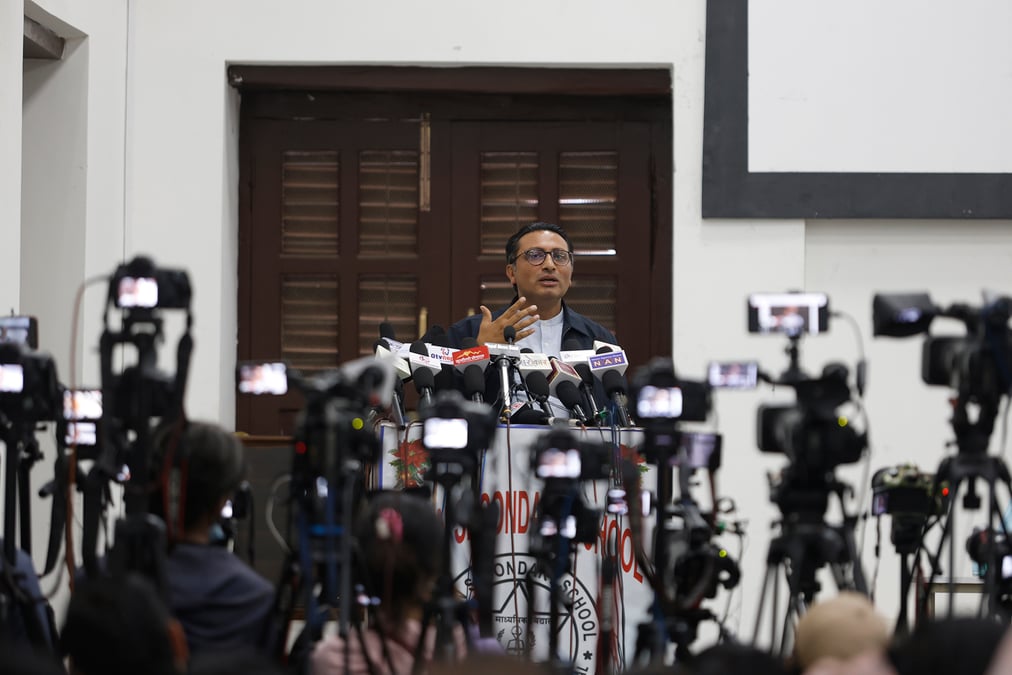
Former Home Minister and Deputy Prime Minister Top Bahadur Rayamajhi had been on the run ever since he was named as one of high ranking officials involved in a fake refugee scandal. After being MIA for 10 days, he was finally arrested on Sunday evening.
Rayamajhi is a former Maoist guerrilla commander who defected to the UML, and served in the K P Oli government after 2018. Warrants for his and his son’s arrest were issued on 3 May. His son was detained the same day, but Rayamajhi reportedly fled to India and was finally arrested in Kathmandu.
He is the highest ranking former government official to go down in a scandal that has so far snared another former home minister from the Nepali Congress (NC), Bal Krishna Khand, government secretaries, middlemen and masterminds of a scheme to send hundreds of Nepalis pretending to be Bhutanese refugees to the United States.
The story came out after an expose in Kantipur in March in which Nepalis who had paid up to Rs5 million to recruiters to take them to the US as refugees from Bhutan lodged complaints against them. They had paid to have falsified documents to be on a list of Bhutanese refugees who were supposed to be resettled in the US, even though the relocation scheme had been closed since 2016.
On 10 May, former Home Minister Bal Krishna Khand was arrested from Kathmandu after being implicated in the scam. Bal Krishna Khand’s wife Manju, who is also an MP, has also been incriminated, and is said to be on the run.
MP Arzu Rana Deuba, the wife of NC leader and five-time prime minister Sher Bahadur Deuba has also been accused of accepting a kickback from the fake refugees on the basis of an audio recording made by one of the recruiters. Rana for her part strongly denied the accusations on the floor of Parliament, calling for an investigation into the audio, which she maintains is fake.
As the police investigation continues, top leaders from the NC, UML, and Maoist Center have met to discuss developments amid growing demands from within their own parties for an unhindered inquiry into the scam, and for the perpetrators to be brought to justice. Social media is rife with accusations that the three main parties are trying to brush the dirt under the carpet.
The leaders of the three parties have publicly called for an objective and thorough investigation, even though Deuba is said to be the most worried -- keeping tabs on the police inquiry over his concerns that his wife will be embroiled in the investigation. The snowballing scandal and its international repercusiions appears to have spooked the government, and Prime Minister Pushpa Kamal Dahal summooned Kathmandu-based diplomats to Singha Darbar on Monday to put forth his government's commitment to pursue the guilty.
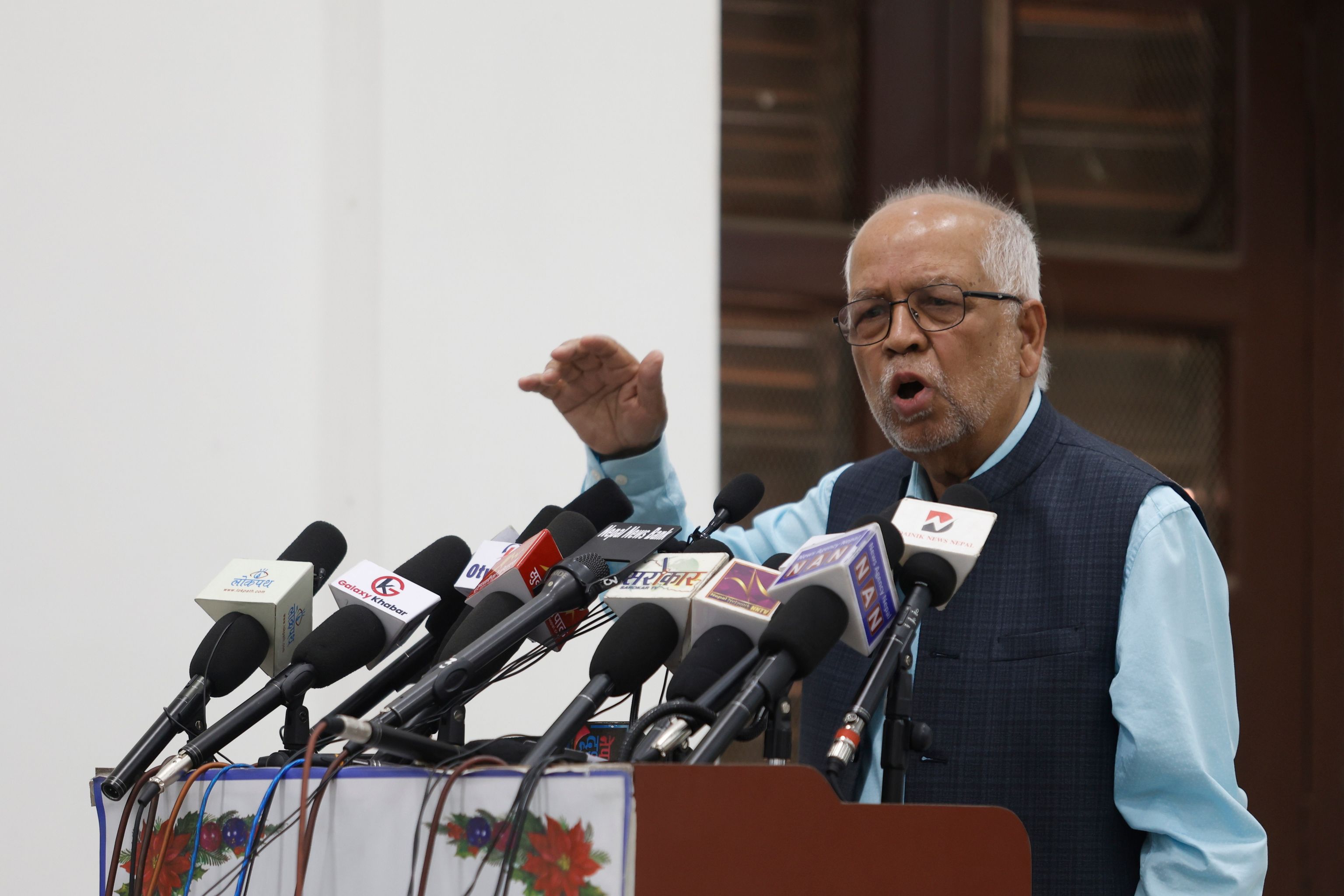
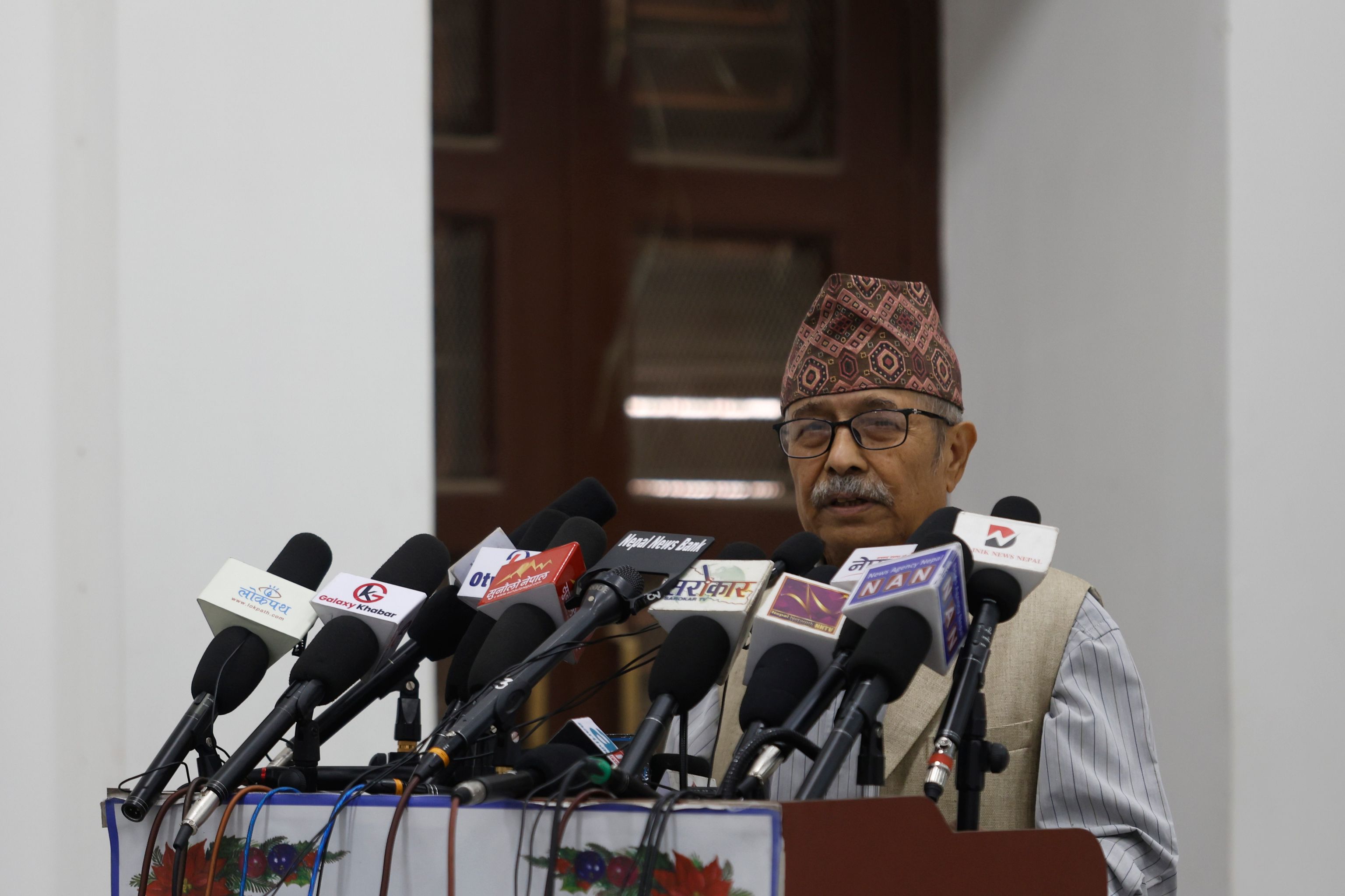
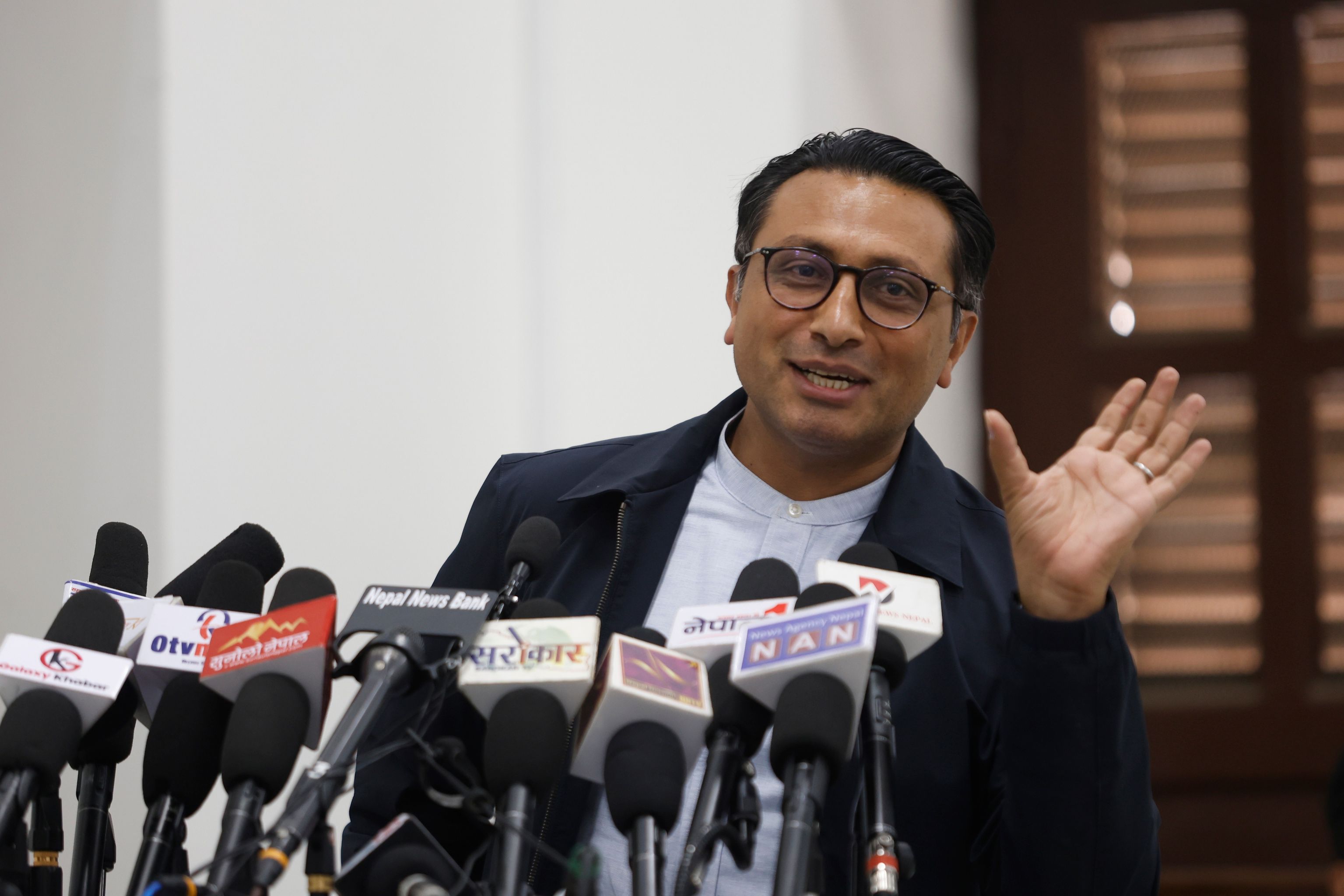
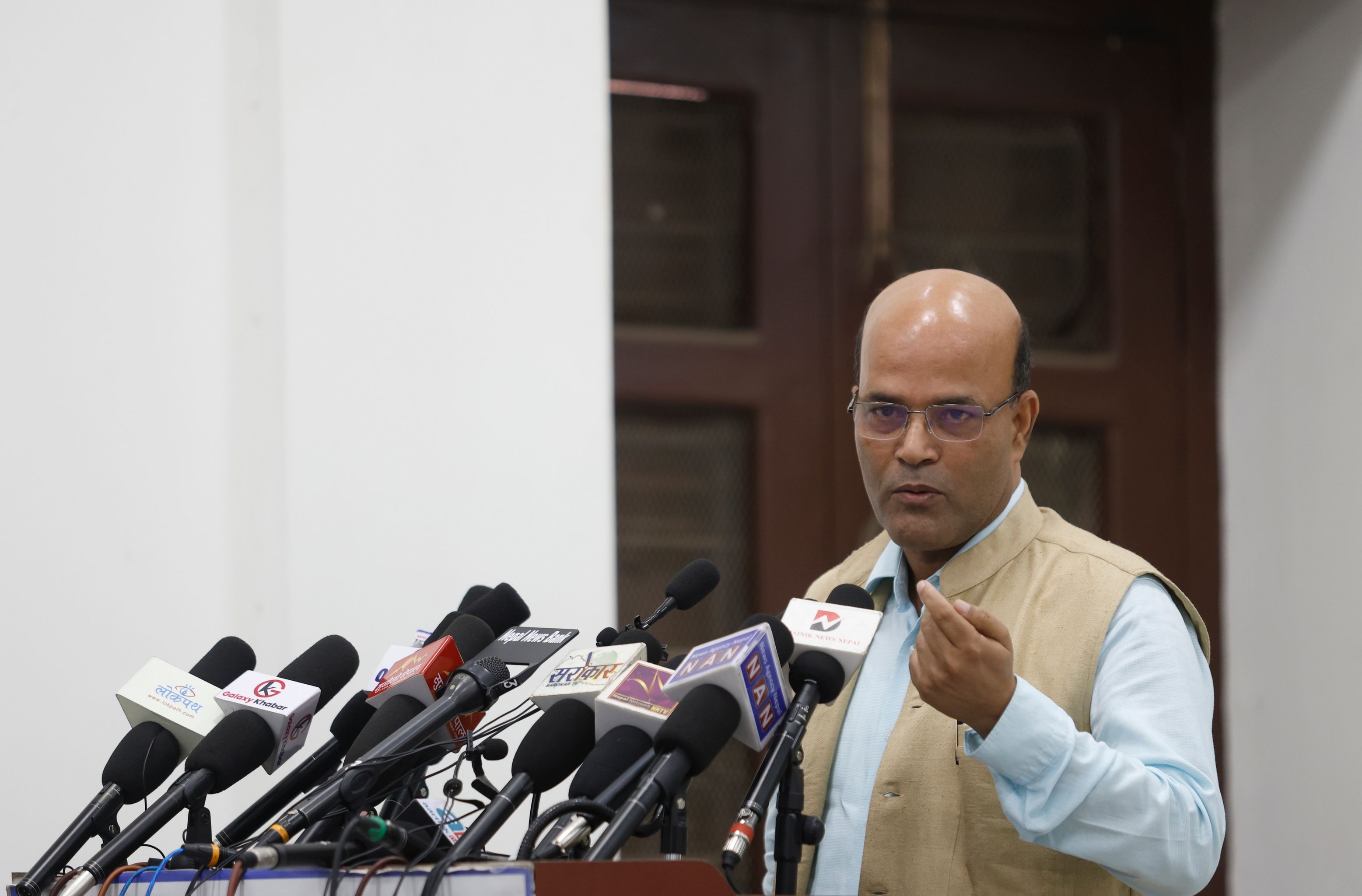
Earlier on Monday, former minister and Nepal’s ambassador to India Nilamber Acharya, former head of the CIAA (the anti-corruption watchdog) Surya Nath Upadhyay, as well as independent lawmaker Amaresh Kumar Singh and RSP MP Swarnim Wagle spoke about the scandal and its implications for Nepali politics and the country's standing on the global stage during a program organised by the Tanka Prasad Acharya Foundation in Patan (pictured, below).
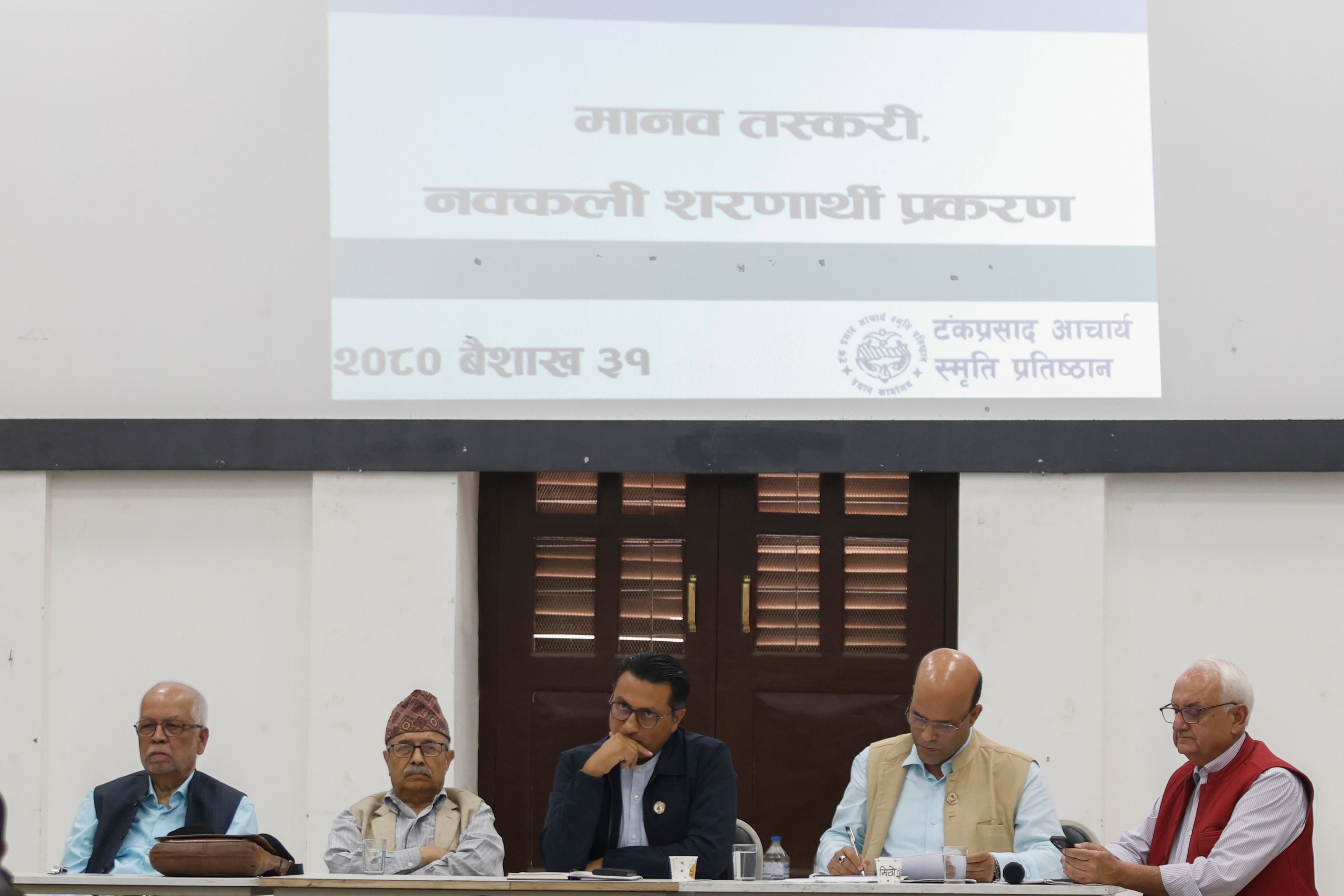
Speaking at the event, Nilamber Acharya said the scandal has put the spotlight on Nepal’s governance failure and a decline of its political mechanisms, adding that corruption, not ideology, unites leaders making it easier for parties with fundamentally opposing principles to come together in governments. He stressed that crime is on the rise because powerful figures commit them, and even more powerful figures shield criminals.
“The world is watching Nepal,” warned Acharya. “And it is up to us which side we choose to stand on: whether we establish Nepal as a country of corruption, or emerge from this as a nation that holds the corrupt to account.”
Meanwhile, Surya Nath Upadhyay praised Nepal Police for their independent investigation so far without giving in to pressure, adding that there have been attempts to whitewash it by people in power even as they publicly call for a thorough inquiry.