
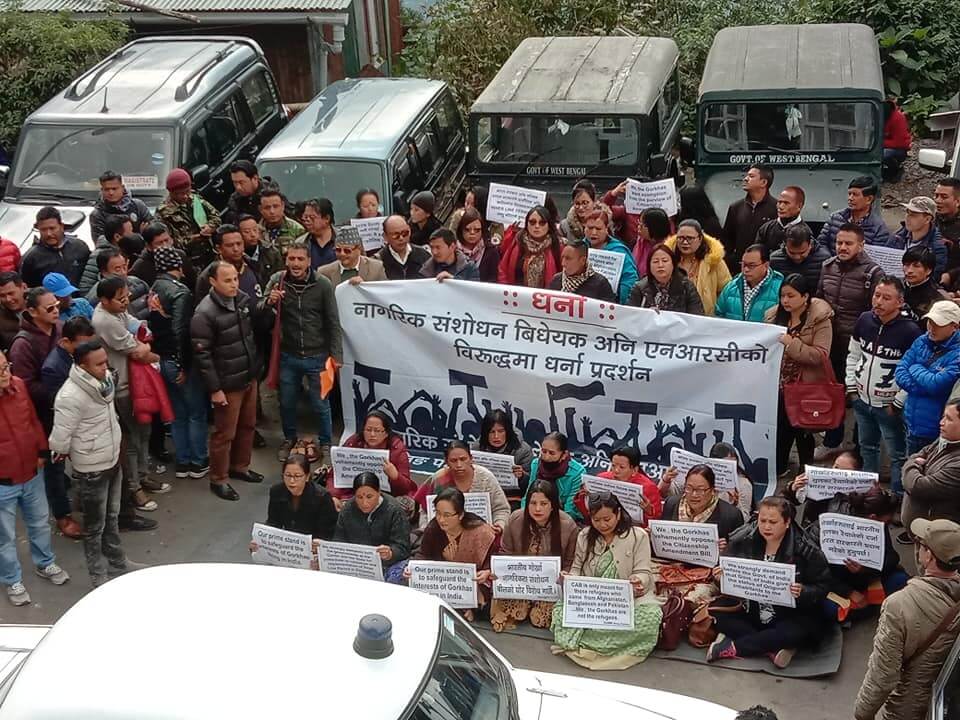
After India recently amended its laws regarding citizenship, Nepalis living in Northeast India are terrified. Both of India’s Upper and Lower Houses of Parliament passed the Citizenship Amendment Bill (CAB) which tightens laws regarding citizenship.
Assam’s National Register of Citizens (NRC), published on 31 August 2019, generated protests all over India because it was missing 1.9 million residents. About 100,000 Nepalis, whose ancestors have been living in the northeast Indian state for up to 200 years, were among those excluded from the list for technical reasons like marriage, migration, differences in last name, mistakes or lost documents. They are now terrified that they will not be counted as Indian citizens. They are listed as ‘D Voters’ meaning ‘Doubtful’ Voters.
In November, Indian Home Minister Amit Shah declared in parliament that the list would be expanded over the entire country, and his ruling BJP appears determined to implement NRC countrywide. It has amended the constitution and got CAB passed by both Houses which will make it easier to implement the NRC, which will ultimately affect the status of Indians of Nepali origin at present and future.
Since 1951, Assam has been the only Indian state to have created and updated its register of citizens. The NRC is said to be an attempt to discover ‘foreigners’ residing illegally in the state. The concept of the NRC came up in 1951, after India became independent and held its first census. Its purpose later was to differentiate between Assam natives and Bangladeshi refugees.
During British rule, many people from Bihar, Bengal and Nepal migrated to Assam to work on its tea estates and settle on empty land. After Partition and the breakup of Pakistan there was a large influx of as many as 1 million refugees from Bangladesh, first due to the language struggle and crackdowns by the Pakistan Army in 1971. After Bangladesh became independent some returned home, but many stayed on in Assam.
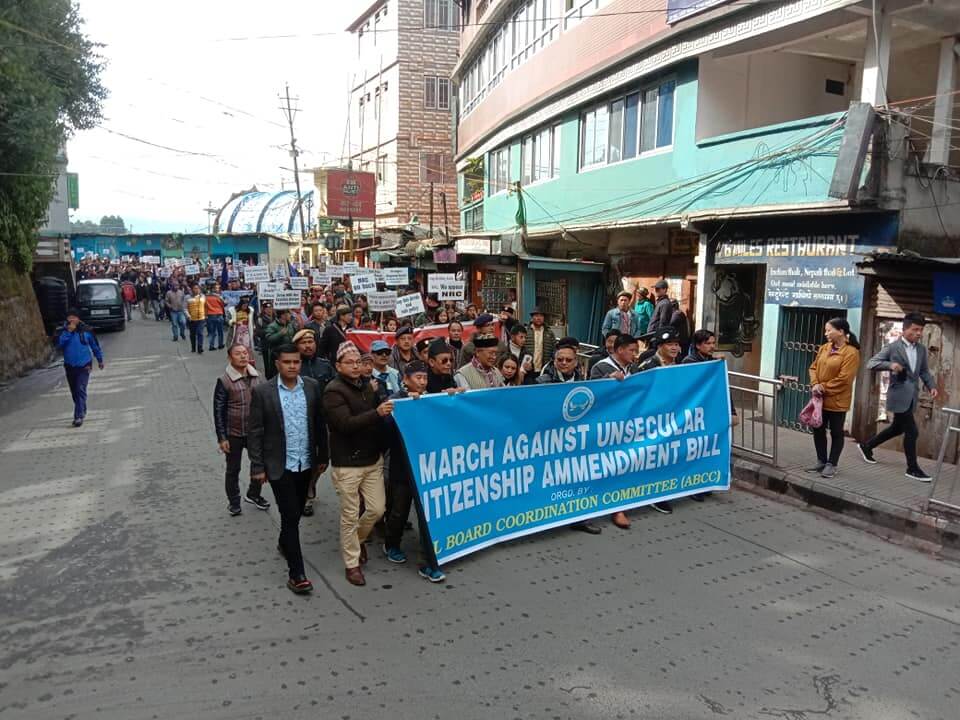
The Citizenship Amendment Bill makes it easier to implement the NRC across the country. Opposition parties are protesting strongly against it, and a dozen people have been killed in violent demonstrations across the country. The Indian National Congress and the Mamata Banerjee-led All India Trinamool Congress and the Marxist Communist Party are spearheading the protests, but many of the student demonstrations in universities have been spontaneous.
Protestors claim the bill undermines India’s democratic system and secularism. CAB has provisions to provide citizenship to Hindu, Christian, Sikh, Persian, Jain and Buddhist refugees who have fled persecution in the neighbouring countries of Pakistan, Afghanistan and Bangladesh, but denies Muslims the same facility. Many also fear that the bill endangers the identity, language and culture of the natives of Assam and neighbouring state, Tripura.