
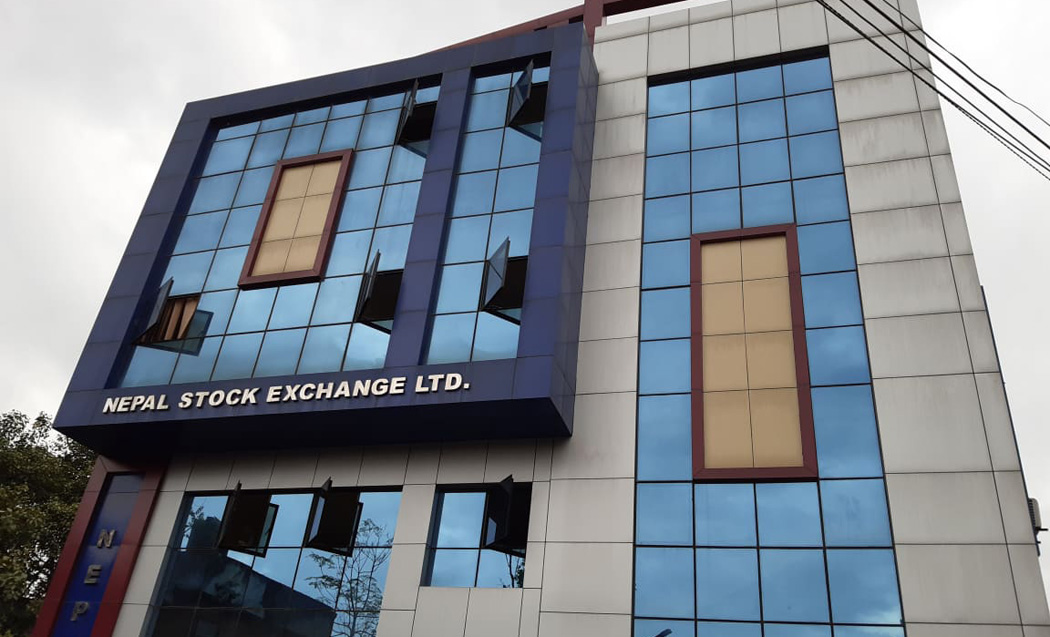
Nepal Rashtra Bank’s (NRB) tightness on share collateral, signs of a lack of liquidity and the opening up of other investment avenues post-lockdown are some of the factors behind the share market’s sharp decline of late.
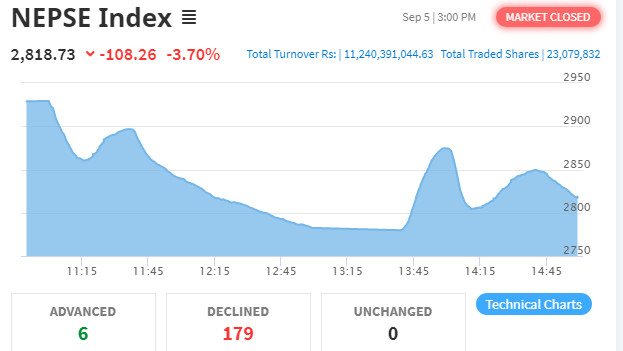
On Sunday, Nepal Stock Exchange (Nepse) recorded the highest-ever fall in its history after the market dropped by 5.03% in just the first two hours of trading. A 40-minute long circuit break was imposed, as 60 companies saw their share values decline by 10%, and the Nepse index to 2782.52 points.
A slight recovery was soon posted, but Nepse still fell by 3.7% from the previous day, losing 108.26 points from 2928.8 points to an end-of-day total of 2811.16 points. By day’s end, 31 companies lost up to 10% value on their shares.
Despite the fall in the index, there were as many if not more people trading shares and the volume of transactions were unaffected, with 23 million 79 thousand shares of 223 companies clocking in Rs11.24 billion in turnover.
The current dip in the share market is in sharp contrast to the boom during the lockdowns and prohibitory orders when other investment sectors remained shut, allowing big and small investors to trade from home with the online trading system flourishing unabated.
Bank interest rates also fell as the investment sector shrunk during the closures. As demand for credit in other sectors began to decline, banks also increased their investments in equity securities. As a result, the stock market traded at a record high with a turnover of Rs19.55 billion and Rs21.64 billion on 14 May and 15 July respectively.
However, since then with the reopening of other sectors, the demand for bank loans has increased. There are indications that the lack of investment capital will be repeated. As such, banks are preparing to raise interest rates.
The share market’s decline has been particularly concerning over the last week, falling from 3044 points to 2817 in five days. This has resulted in a loss of Rs1.5 trillion, down to Rs39.44 trillion on Sunday from last week’s Rs40.89 trillion.
Sunday’s fallout also prompted the Capital Market Reform Struggle Committee, led by investor Ram Krishna Dhakal, to demand the resignation of NRB governor Maha Prasad Adhikari for activities that have negatively influenced the share market.