
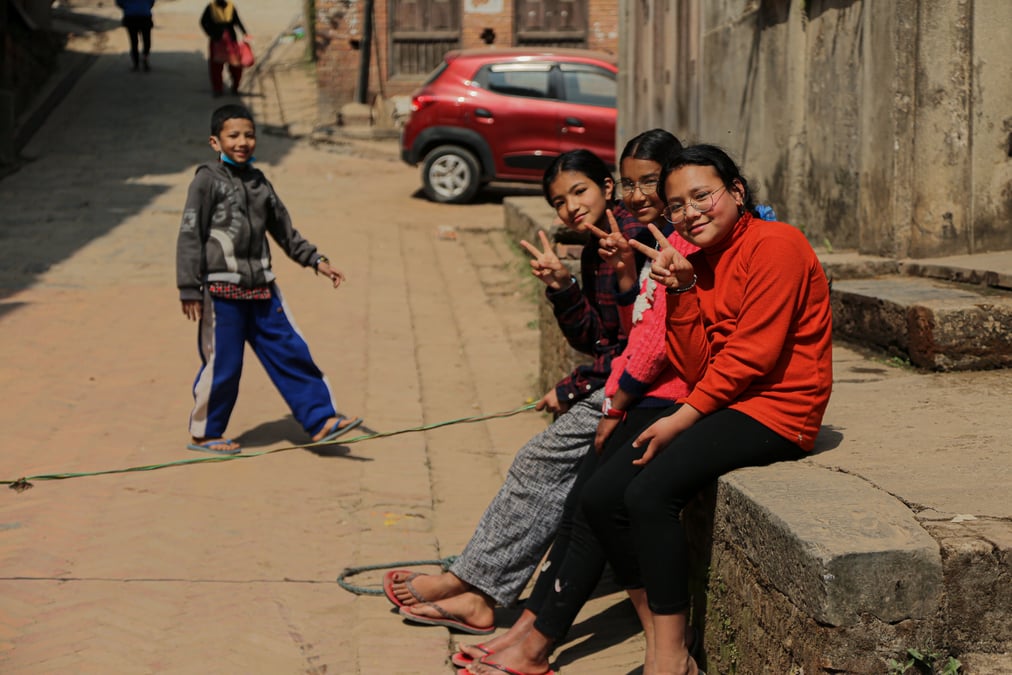
One of the greatest obstacles to better jobs and faster economic growth in Nepal today isn’t a shortage of natural resources, challenging geography, or limited access to finance. It is the unrealised potential of its people—not due to a lack of talent, resilience, or ambition, but because the country has not invested enough to unlock that potential.
Too many young Nepalis are growing up without the quality education, healthcare, and skills needed to succeed in the modern economy—especially those in poorer and more remote areas. As a result, much of Nepal’s human capital remains underdeveloped and underused, reinforcing inequality and holding back productivity, innovation, and inclusive growth.
This is not a challenge unique to Nepal. Around the world, successful economies are not those that only have abundant natural resources, but those that invest early and consistently in their people by ensuring access to quality education, healthcare, and nutrition. These are the building blocks for accumulating human capital.
When these foundations are strong, countries benefit from a more productive workforce, healthier communities, and faster economic growth. But when these investments are neglected, entire generations are left behind, trapped in cycles of low productivity and limited opportunity.
A new World Bank report—the Nepal Human Capital Review—finds that a child born in Nepal today is expected to achieve just 51% of their full productivity potential by age 18.
Limited access to quality education, healthcare, and nutrition means that half of a child’s productivity potential remains unrealised. This is more than a missed opportunity for the child— it represents a significant productivity loss for the country’s long-term growth.
Beneath this national average lie even deeper inequalities. Imagine two children born on the same day in 2020—one in the remote hills of Karnali, the other in the more urban and better-connected areas of Bagmati, near the capital.
The child in Bagmati is far more likely to attend a private school or benefit from better education and health services, thanks to higher household incomes and greater availability of providers. In contrast, the child in Karnali is more likely to rely solely on the public system, which remains under-resourced and overstretched.
The statistics are striking—a child born in Karnali is expected to reach just 46% of their productivity potential, which is well below the average for lower-middle-income countries. Meanwhile, a child born in Bagmati is expected to reach 58% —a level comparable to upper-middle-income economies.
These differences stem not just from geography, but from unequal access to quality services—whether public or private. They reflect a public system struggling to deliver quality services for all, and one that families with more resources are often able to supplement through private investments. These are not just numbers, they are life trajectories—shaped not by ability or ambition, but by the simple event of where a child is born and raised.
Even for those who manage to build their human capital, the labour market often fails to reward their efforts. Given the difficulties of finding a good job, a child born in Nepal today is expected to realise just 18% of their productivity potential—one of the lowest rates in the world. The reason is simple: there are too few quality jobs.