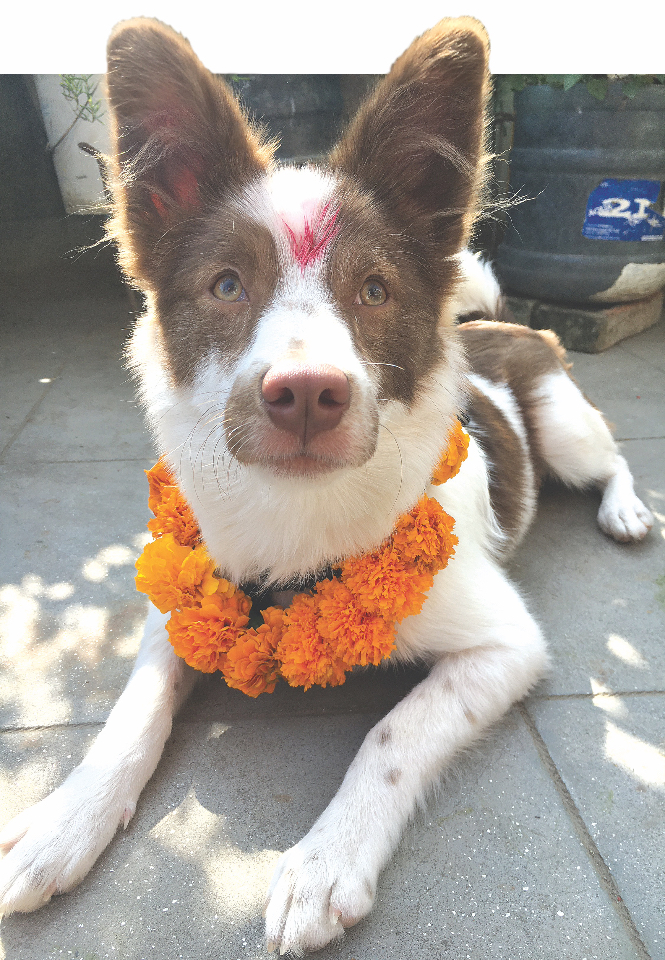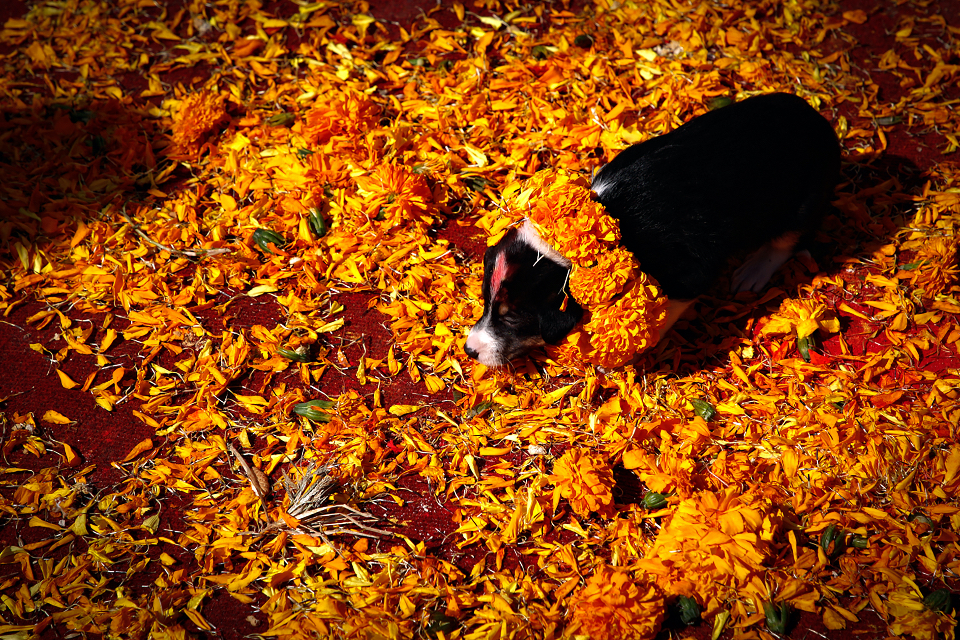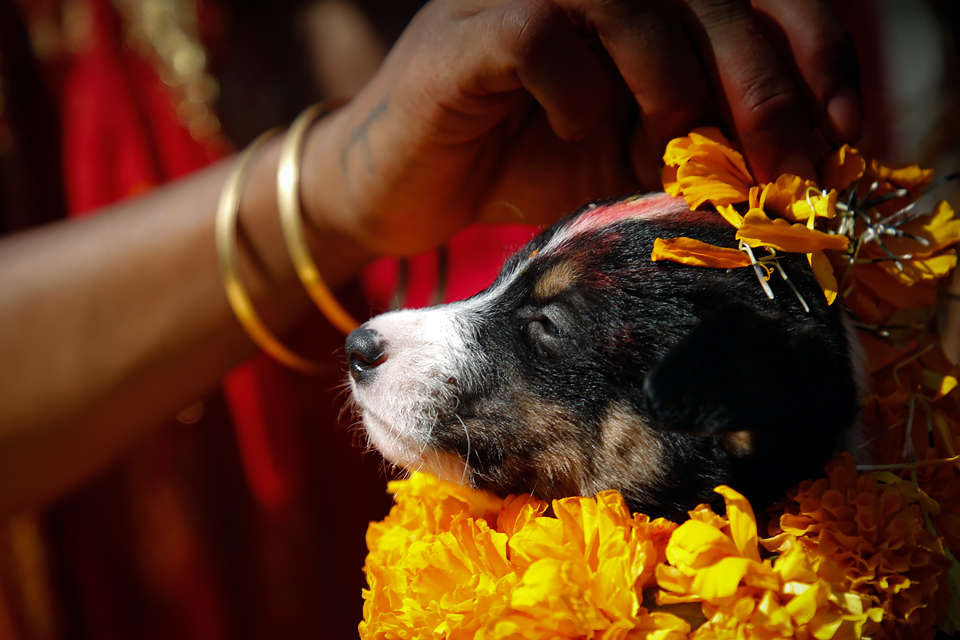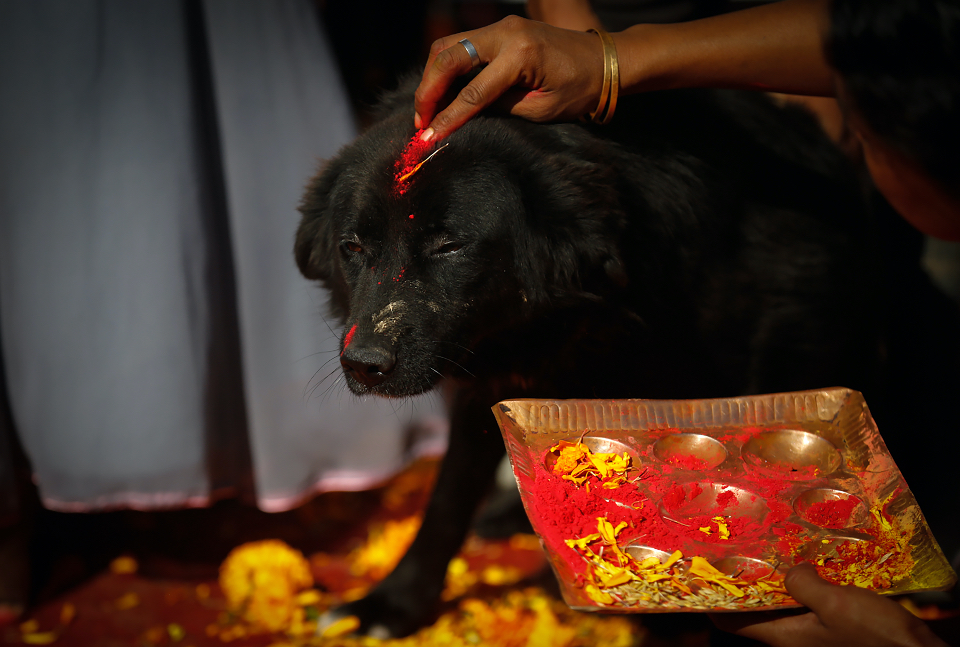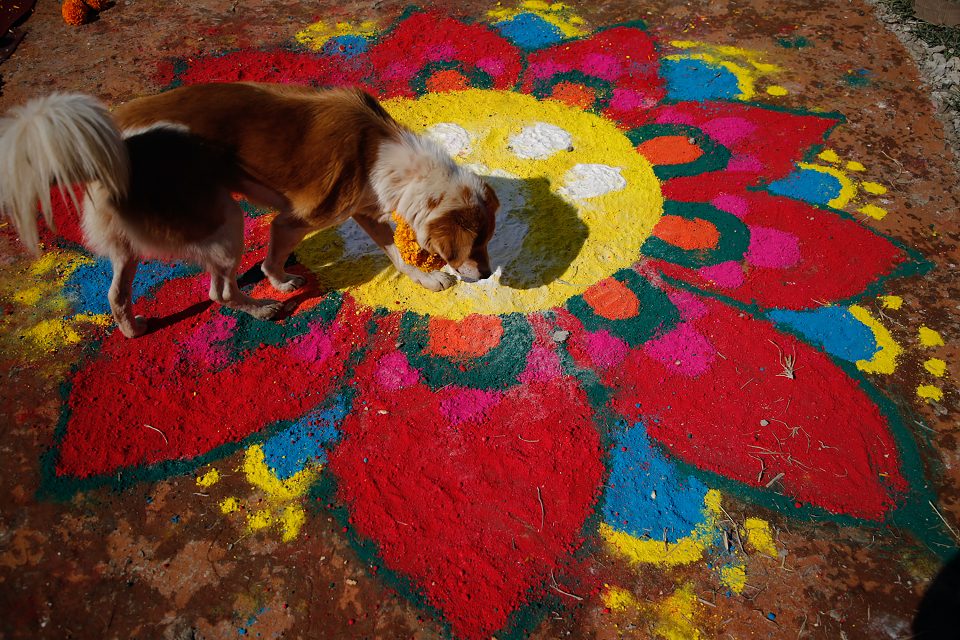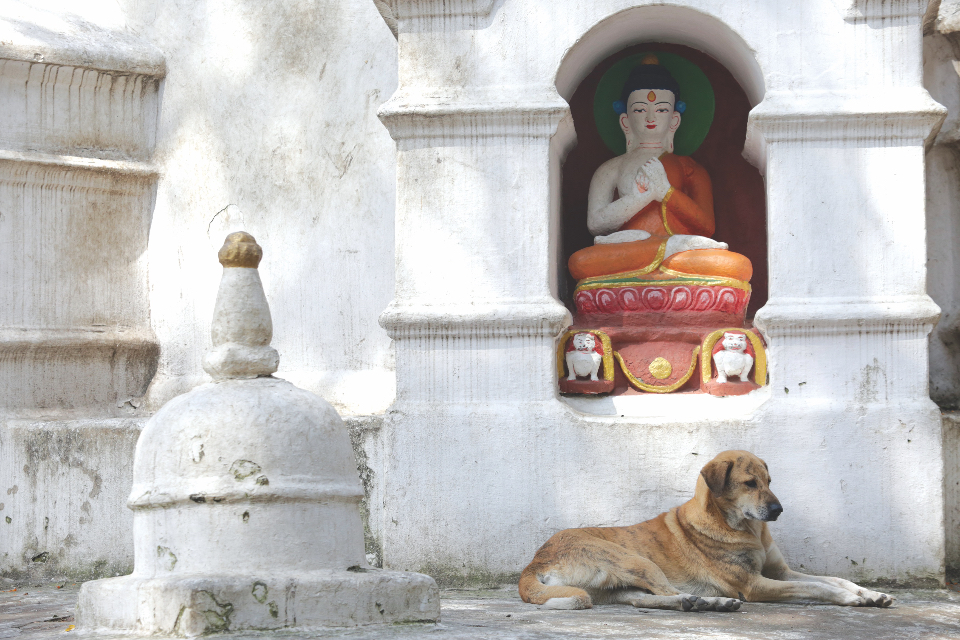
It is that time of the year again when we Nepalis worship various members of the animal kingdom. Cows and crows, bulls and dogs — all have a day this week dedicated to them.
So it is ironic that the very evening they are worshipped (this year Kukur Tihar is on 24 October), we scare the bejesus out of dogs with firecrackers. Our furry friends are traumatised, some travelling great distances to escape the noise. There have been stories of dogs that never make it back to their homes.
“We have a really wrong practice going on here, we worship dogs in the morning and frighten them at night,” says animal rights activist Sneha Shrestha who works with Sneha’s Care, which shelters homeless and abandoned animals from the streets of Kathmandu.
Shrestha has 170 rescue dogs in her shelter and says that every time there is a loud wedding party in the neighbourhood, they are terrified.
Read also: Saving Nepal’s last wild dogs, Yadav Ghimirey
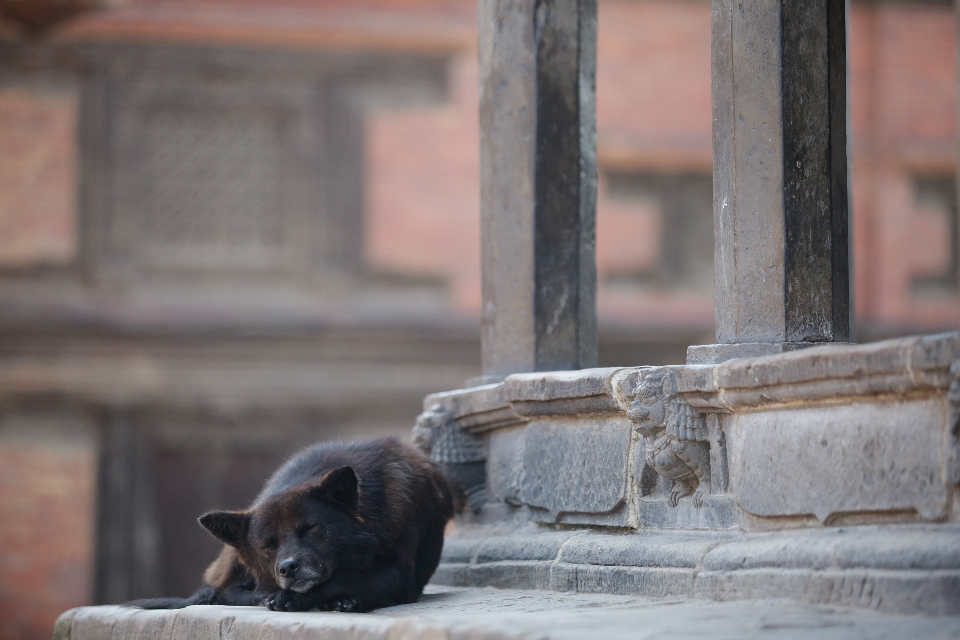
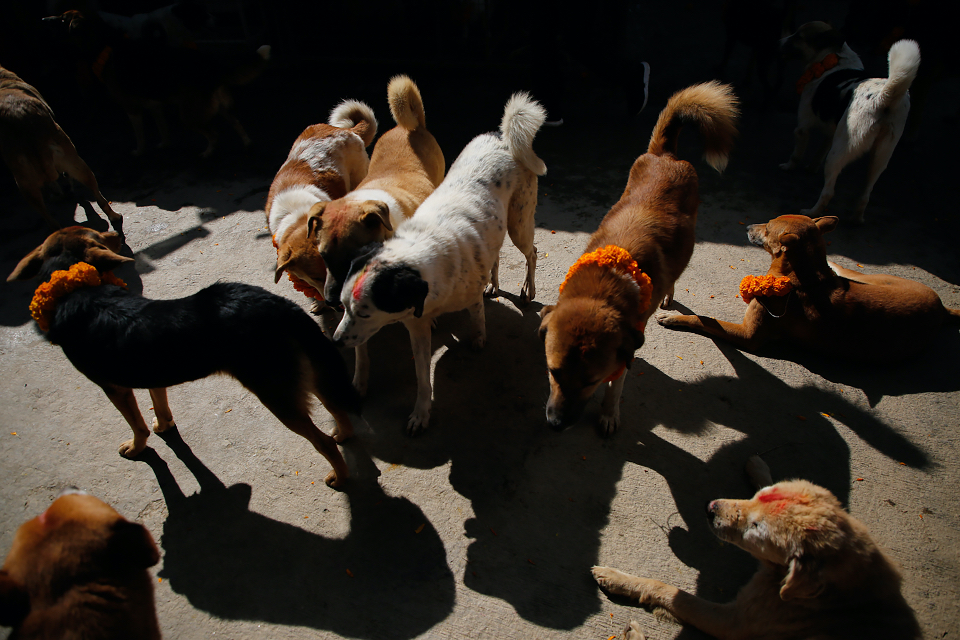
“Tihar is the worst because of the explosions of firecrackers, sometimes dogs which are out in the open without protection get heart attacks,” Shrestha adds.
Kukur Tihar is one of the most unique festivals in the world, and international documentaries have been made on the Nepali reverence for dogs. It has inspired 'Kukur Tihar Mexico' the same week as in Nepal. The least we can do, therefore, is to be kind to the dogs we venerate.
The good news is that more Nepali families are now inclined towards keeping dogs and letting their children grow up with pets, instilling in them virtues of kindness and compassion towards all living beings from a young age.
However, the way Nepalis treat strays and community dogs can be very different from pets at home. Dogs on the streets do not necessarily belong to individuals, but are part of the communities that they guard in return for food and (sometimes) lodgings.
But there have been horrific incidences of animal cruelty towards community dogs, including poisoning by city authorities in the name of culling populations, or preventing the spread of rabies. Animal welfare groups estimate that there are over 100,000 dogs that live on the streets of Kathmandu Valley alone.
Read also: Microchipping Nepal’s dogs, Aria Shree Parasai
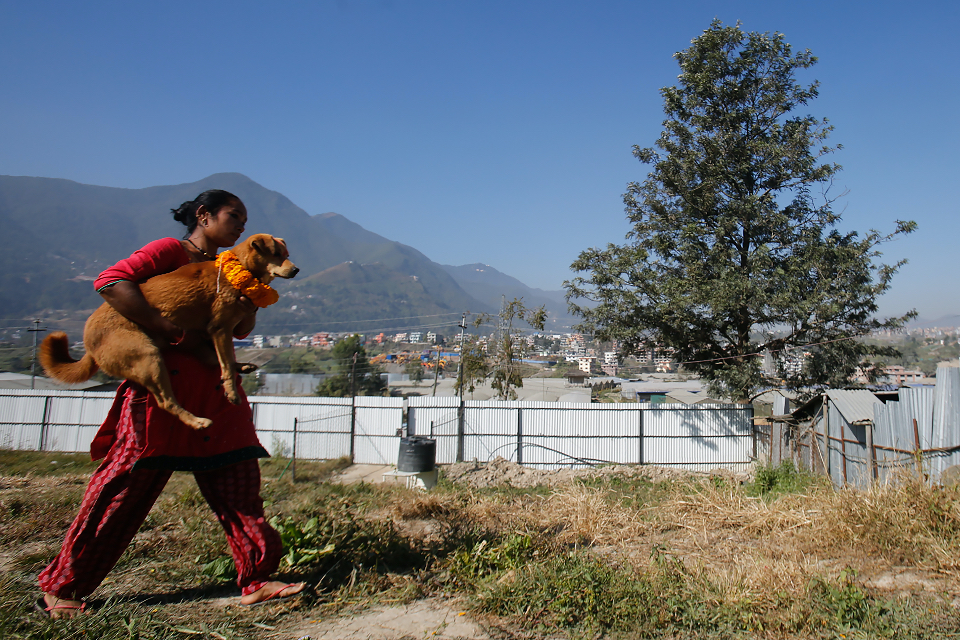
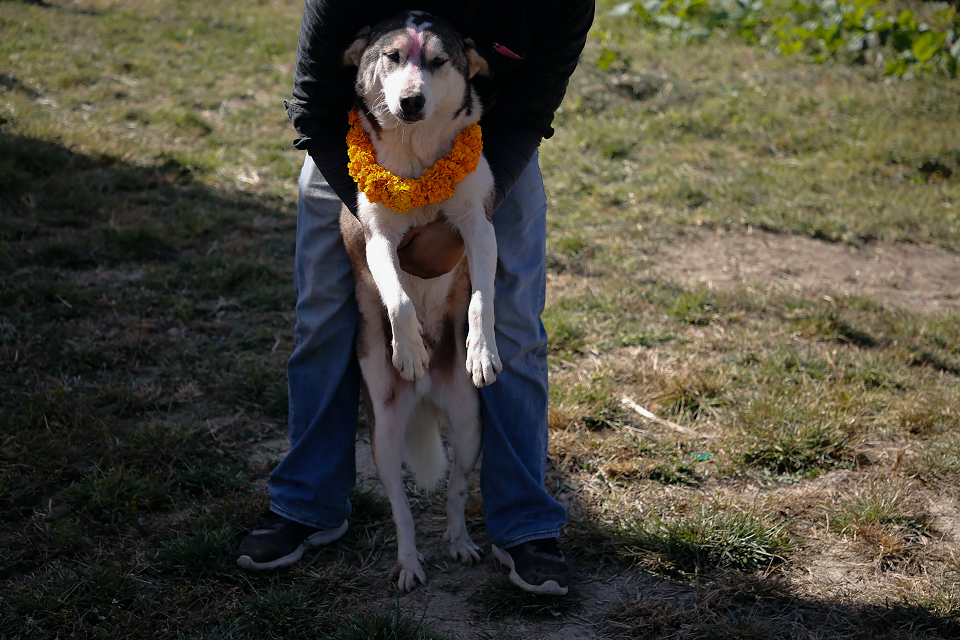
Families are now increasingly buying pups from kennels as status symbols, and an informal survey showed that Huskies have overtaken Golden Labs and German Sheperds as best sellers. However, there are still very few who adopt rescued street dogs from shelters.
“Getting a dog is still very much tied with our vanity. If we are really looking to love them, the breed should not matter,” says Shrestha. “In fact, if we Nepalis claim to be proud of our heritage and ancestry, we should be adopting more of our local breeds, they are not inferior to pure breeds in any way.”
Indeed, animal rights groups are promoting better treatment and welfare of strays and community dogs as well as providing them with loving families with the slogan: “Adopt, don’t shop.”
Animal shelters and welfare organisations as well as individual young rescuers have been crucial in spreading the message, primarily through social media. Influencers and celebrities with hundreds of thousands of followers could do more by adopting strays and setting a good example.