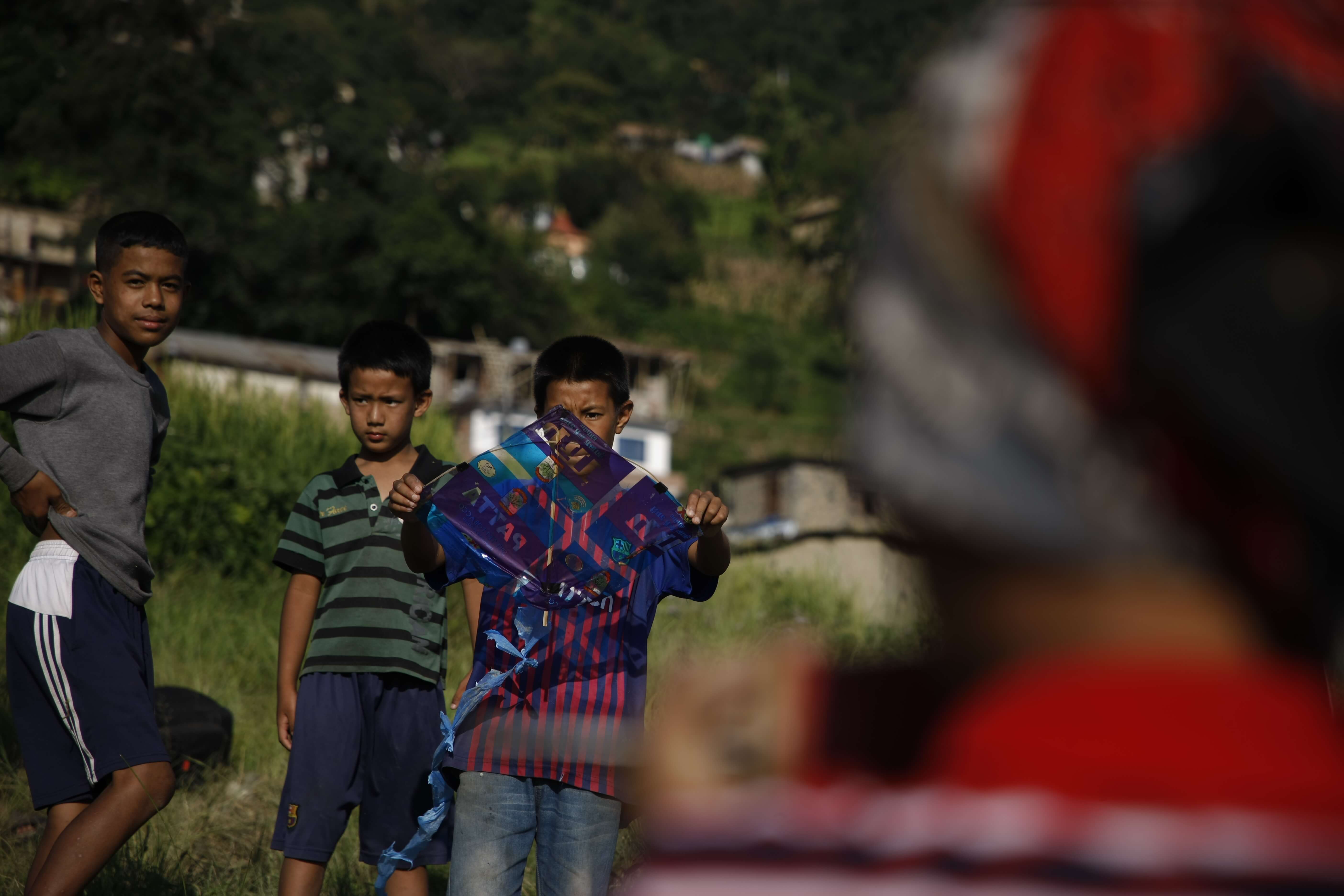
The monsoon has retreated, there is a fresh westerly afternoon breeze, the sky is blue, the mountains are out again. Nepal’s kite-flying season is here.
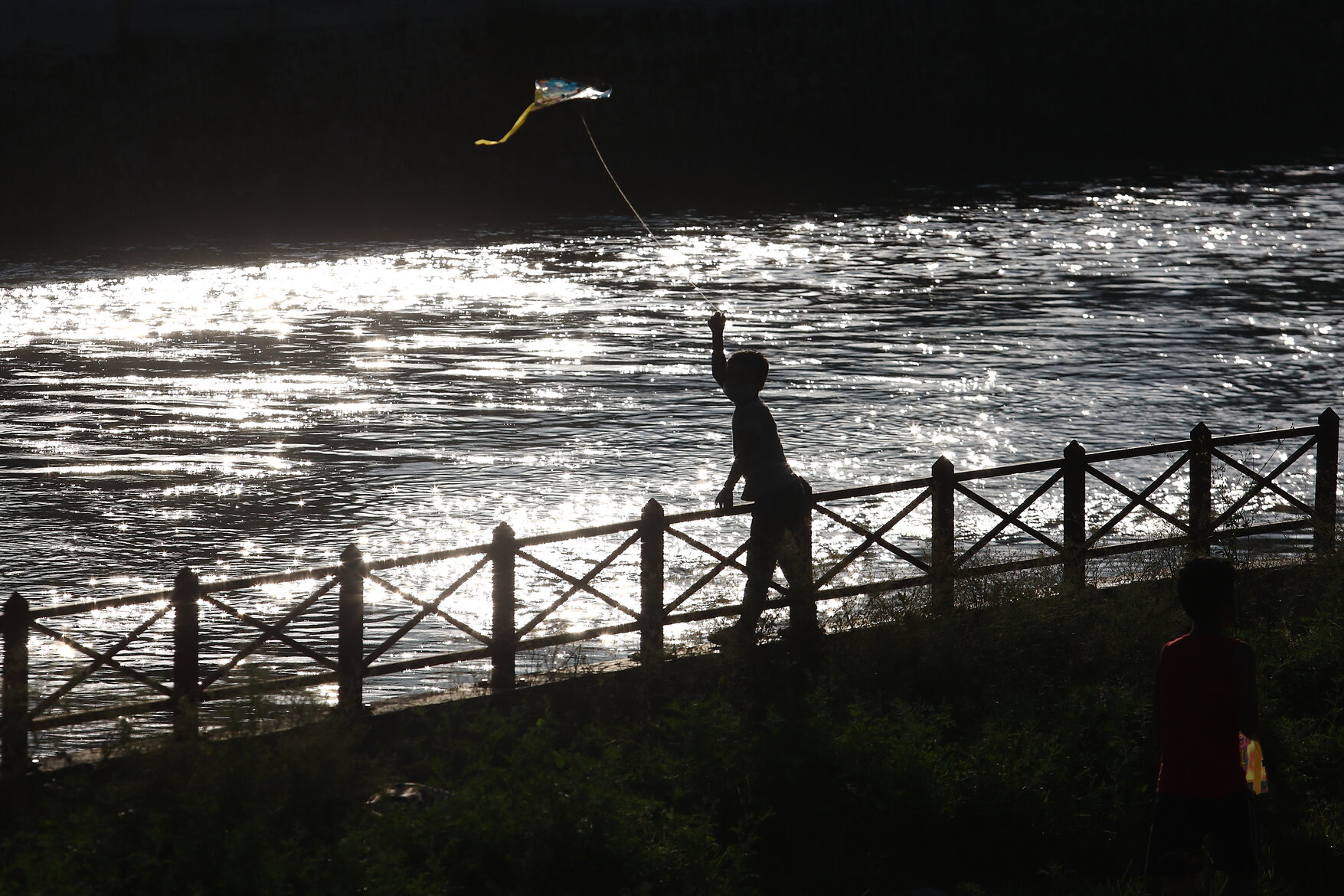
There was a time when the sky at Dasain was filled with colourful kites as almost every rooftop in Kathmandu Valley was flying kites. First it was movies on cable tv, then came mobile phones and the Internet, people were too distracted to fly kites anymore.
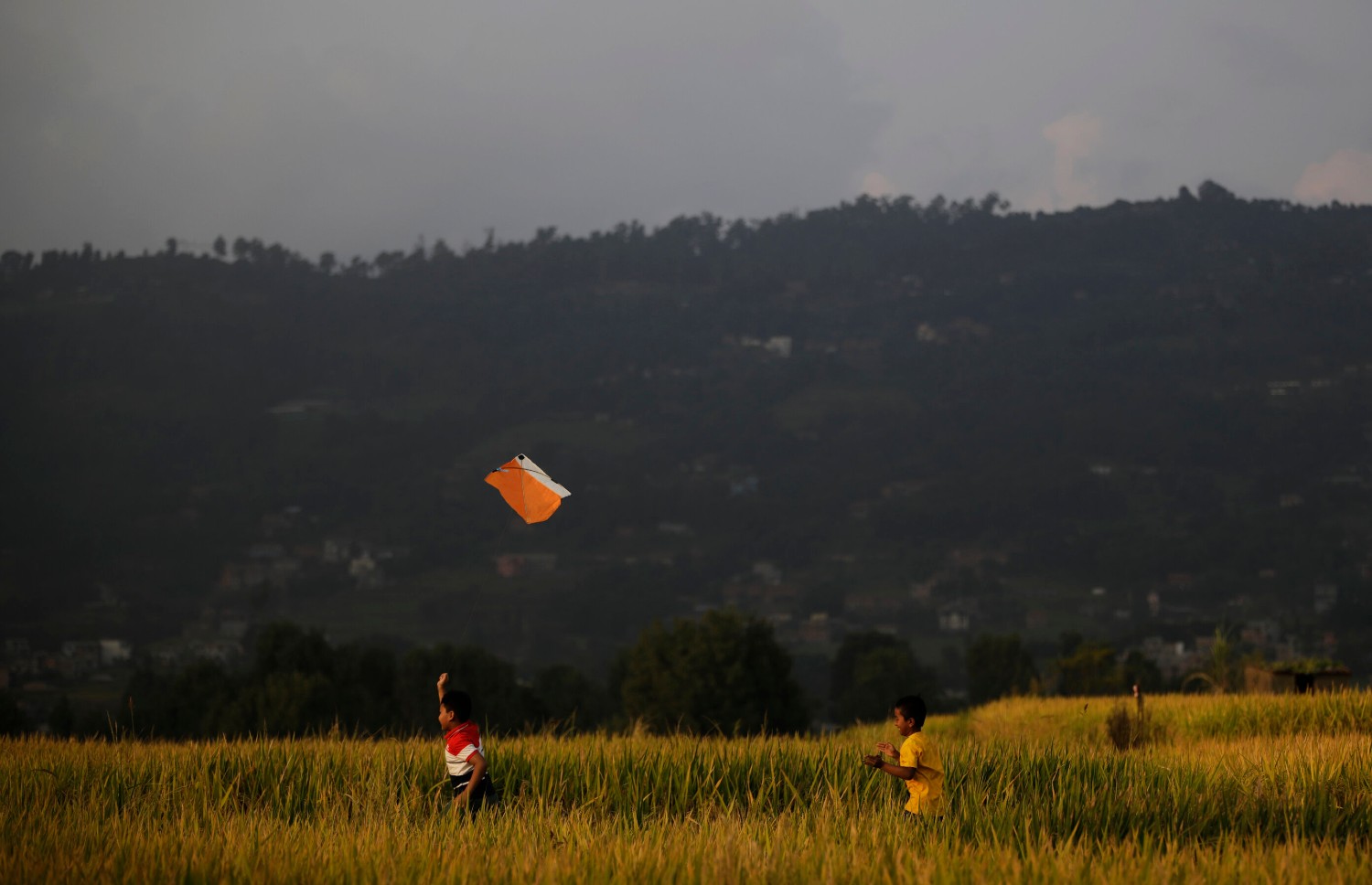
This year, though, because of the spread of Covid-19 in Kathmandu, families are confined to their homes and the kites are back. The roof terraces are once more filled with children, and even adults, conducting test flights for the Dasain jamboree.
In Kalimati, Sundar Man Manandhar, along with his father, brother and son run a small kite shop that has been in the family for generations. But business went down, as kite flying went out of vogue.
“We thought of shutting the shop for good, but it is surprising that this year probably because of the lockdown, there is new demand for kites, lattai reels and thread,” Manandhar says. “The business is back.”
History of kite-flying
Kites were invented 2,400 years ago, and came to China from Bali. They were used by the Chinese general Han Hsien in 170BC to measure distances and it was probably Marco Polo who took kite technology to Europe, just like he took Chinese noodles and called it pasta.
Marconi used a kite to lift an antenna for his first trans-Atlantic radio transmission from Newfoundland to Ireland. Benjamin Franklin made a static electricity experiment flying a kite during a thunderstorm. Avid kite flyers like the editor of this paper have flown kites at 5,800m at Makalu Base Camp in winds gusting up to 60 knots. (The kite survived because the air is so thin.)
Kites that fight
Whereas European and Chinese kites float lazily in the sky waving their long tails, in Nepal kite flying is a martial art. Here, a kite has to fight. The idea is to cut the enemy’s thread with your line. Which means the kite has to be able to flit in and out, be obedient and have a killer instinct.
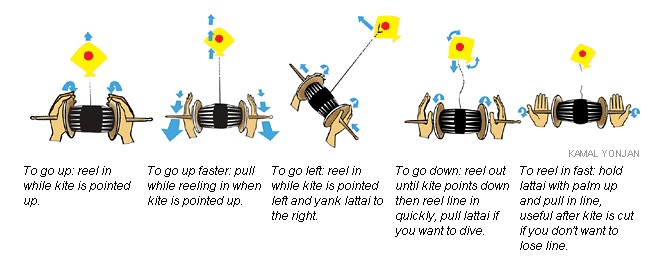
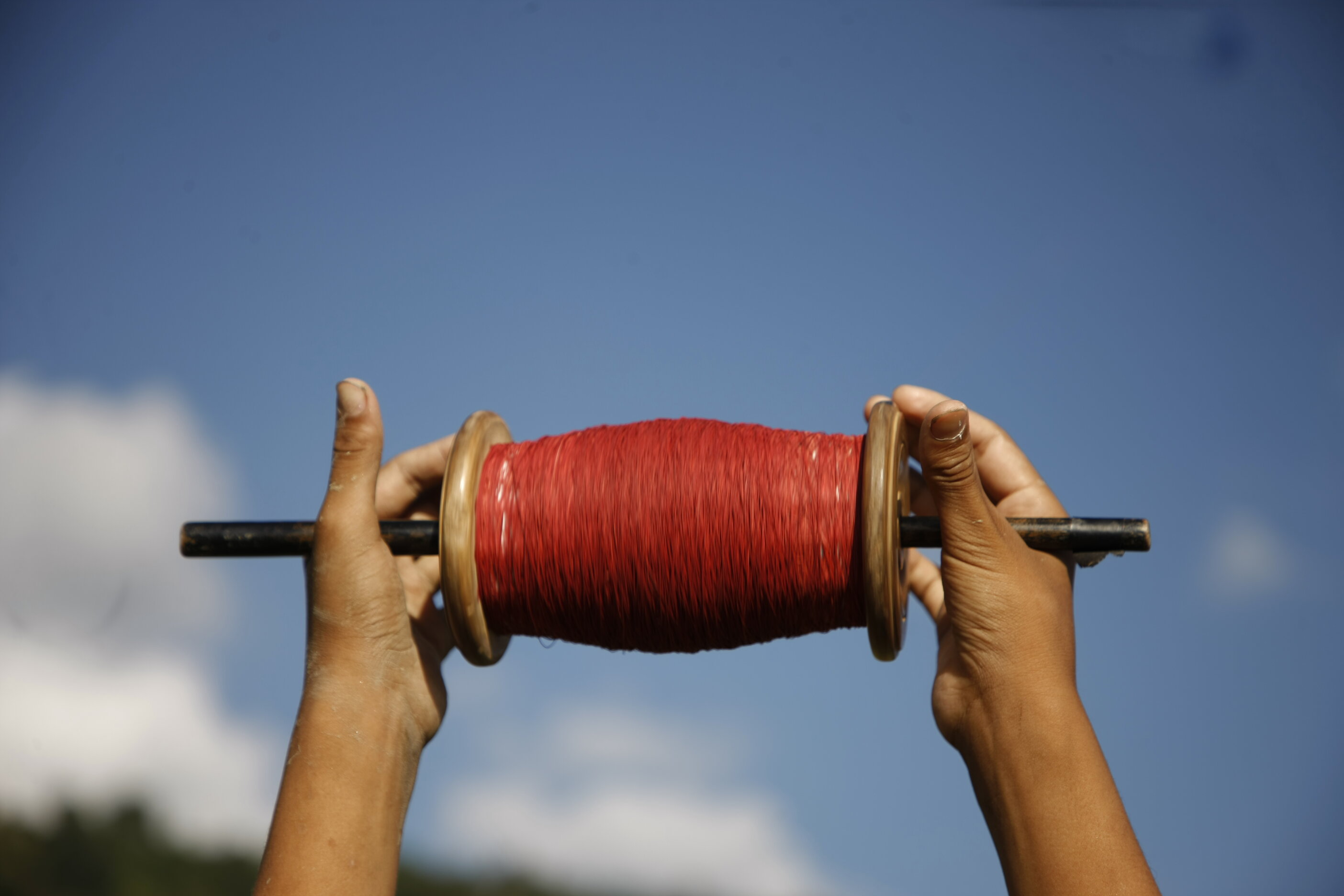
The thread has to look threatening, with red majha armour so it can slice through the adversary’s string. It is the lattai that gives a kite the capacity to reel in or out, and here speed is of the essence. A user’s airmanship is determined by proficiency in the use of lattai, and whether it can steer the kite left, right or up and down. Can the kite climb for a deadly dive, can it ride the wind so that the line can be used like a khukri?
Since the idea is to down enemy kites, you need every advantage you can get. Strong home-made majha made of snail slime or starch and powdered glass helps. It is the glass that gives the thread its sharp edge, but unless the thread is pulled fast by the kite, it will not be able to slice the enemy’s line.
Once the adversary kite is cut and is adrift, it is mandatory for the flight crew to emit a blood-curdling scream, “Chaiiiiiiit”, and then let the triumphant kite perform elaborate victory rolls.
Every neighbourhood has its own Top Gun, the kite aces with dozens of kills daily in ruthless dogfights. Then there are the vanquished, drifting unguided in the breeze trailing long untethered strings.
Types of kites
Traditionally, Nepali kites were made of hand-made lokta paper. They were heavy and took a stiff breeze to get air borne, and are rare now. But once up, they behaved like lumbering bombers – unlike latter day ‘Lucknow’ kites which were made of lighter paper and are more maneuverable. Although they do not come from Lucknow anymore, these versatile and fast kites are the Spitfires of the air.
The skills of Kathmandu’s kite warriors are passed down from generation to generation. Kite cadets learn to gauge the breeze, its direction and velocity. The take-off is the trickiest part, the timing has to be just right as you let it go in a tumbling motion riding on a gust of wind. Tumbling (ghumaure) makes the kite reel out faster than a side-by-side (tiktike) motion.
Kite tricks
Here is a military secret: if you are engaging another kite in a dogfight, the idea is to use altitude to your advantage by reeling in. When the enemy kite is below you, dive and reel out when the lines meet. The velocity of the line and its friction is what cuts the other fellow’s string. So, don’t ever reel in after the strings have made contact. Even the most lethal majha may not save you.