For the first two decades after 1990, Nepal took great strides in reducing malnutrition. But progress has stalled.
Nepal registered one of the most dramatic reductions in undernourishment among children and women after the government and international agencies took action in recent decades to reverse shocking statistics that showed half of under-5 mortality in the country was due to insufficient nourishment.
“Nepal is the best country to showcase how political will can implement a multisectoral nutrition program,” says Brenda Kellen, director of Scaling Up Nutrition (SUN), which is holding a global nutrition conference in Kathmandu this week.
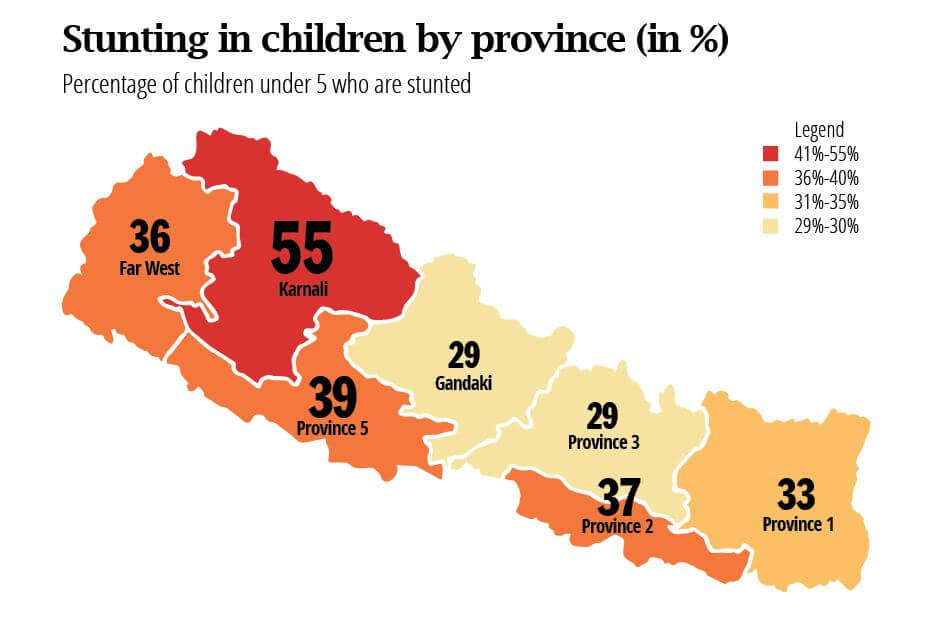
“From being one of the countries with the highest malnutrition in the 1990s, with stunting at 57%, to have reduced it to 36% -- Nepal can offer lessons for the rest of the world and its model can be replicated elsewhere,” says Kellen, who added that holding the fifth SUN global gathering in Kathmandu was recognition of this achievement.
Over 1,000 delegates from 61 countries are attending the conference to discuss the progress, challenges and priorities ahead to ending malnutrition by 2030, a target set by the United Nations’ World Health Assembly.
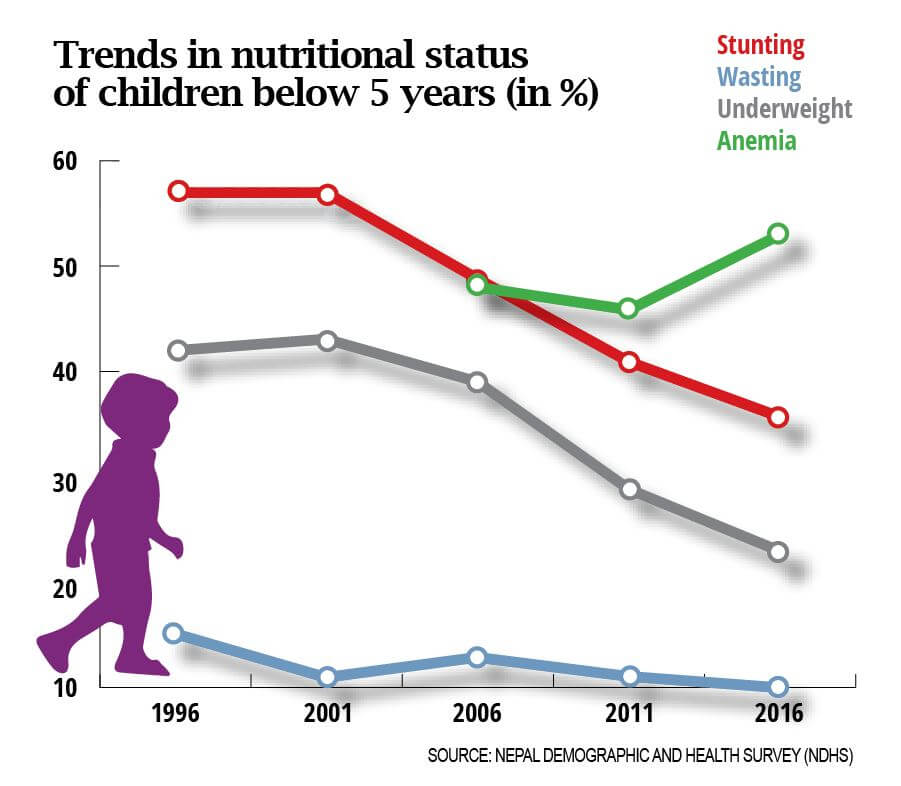
However despite initial progress, figures for stunting, wasting and anaemia in Nepal have plateaued. UNICEF’s report, State of the World’s Children 2019, released last month, stated that 43% of children under five in Nepal were malnourished.
“Malnutrition is still very much prevalent in Nepal, mainly among young children, adolescents and new mothers. We are not satisfied with the progress and there is still much to do,” says Anirudra Sharma at UNICEF Nepal.
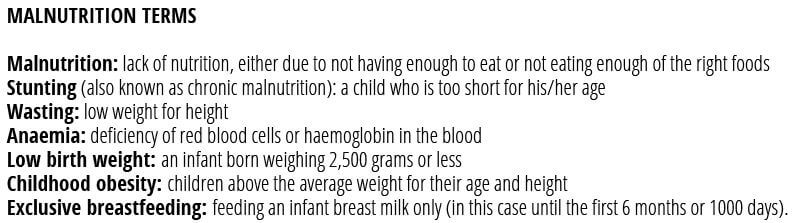
According to the 2016 Demographic and Health Survey (DHS) wasting (low weight for age) among Nepali children under 5 still hovers at 10% -- a mere 1% decrease from 8 years ago. The UN’s Sustainable Development Goals (SDGs) require Nepal to reduce wasting to less than 5% by 2030. Stunting needs to be well below 15% in 10 years to meet the global target -- it is about 36% now.
Says Swarnim Waglé, former vice-chair of the National Planning Commission who helped draw up Nepal’s Multi-Sectoral Nutrition Plan: “While a 20% reduction of chronic malnutrition in two decades is quite impressive, 36% stunting is still very high and unacceptable in this day and age. Conventional approaches will not help achieve targets.”
Anaemia among Nepali women has always been very high, but instead of declining it actually increased from 35% to 41% between 2011 and 2016. Anaemia in children below 5 rose dangerously in that period: from 46% to 53%.
Exclusive breastfeeding in the first 6 months also declined, and is now 65% against a target of greater than 90%. There has been no significant change in low birth weight either, which declined only 2%, to 27%, in five years. The SDG target is below 5%.
“Improvements in nutrition levels are stagnant because we have not reached the most vulnerable communities such as Dalits and people in remote far western Nepal,” says public health expert Aruna Uprety. “I see no reason to boast about our past achievements when the present level of chronic malnutrition is so serious.”
Nutrition levels are affected not just by food intake, but access to safe drinking water and education about the right selection of food. Underweight children in cities and the rise in obesity are a result of the proliferation of junk food replacing traditional nutrient-rich grains. Childhood obesity has decreased from 1.4% in 2011 to 1.2% but the figure needs to drop below 1% to meet the target.
An article in The Journal of Nutrition earlier this year found that infants in Kathmandu were getting 25% of their calories from junk food and instead of being fat, those who consumed the most junk food were on average shorter than their peers.