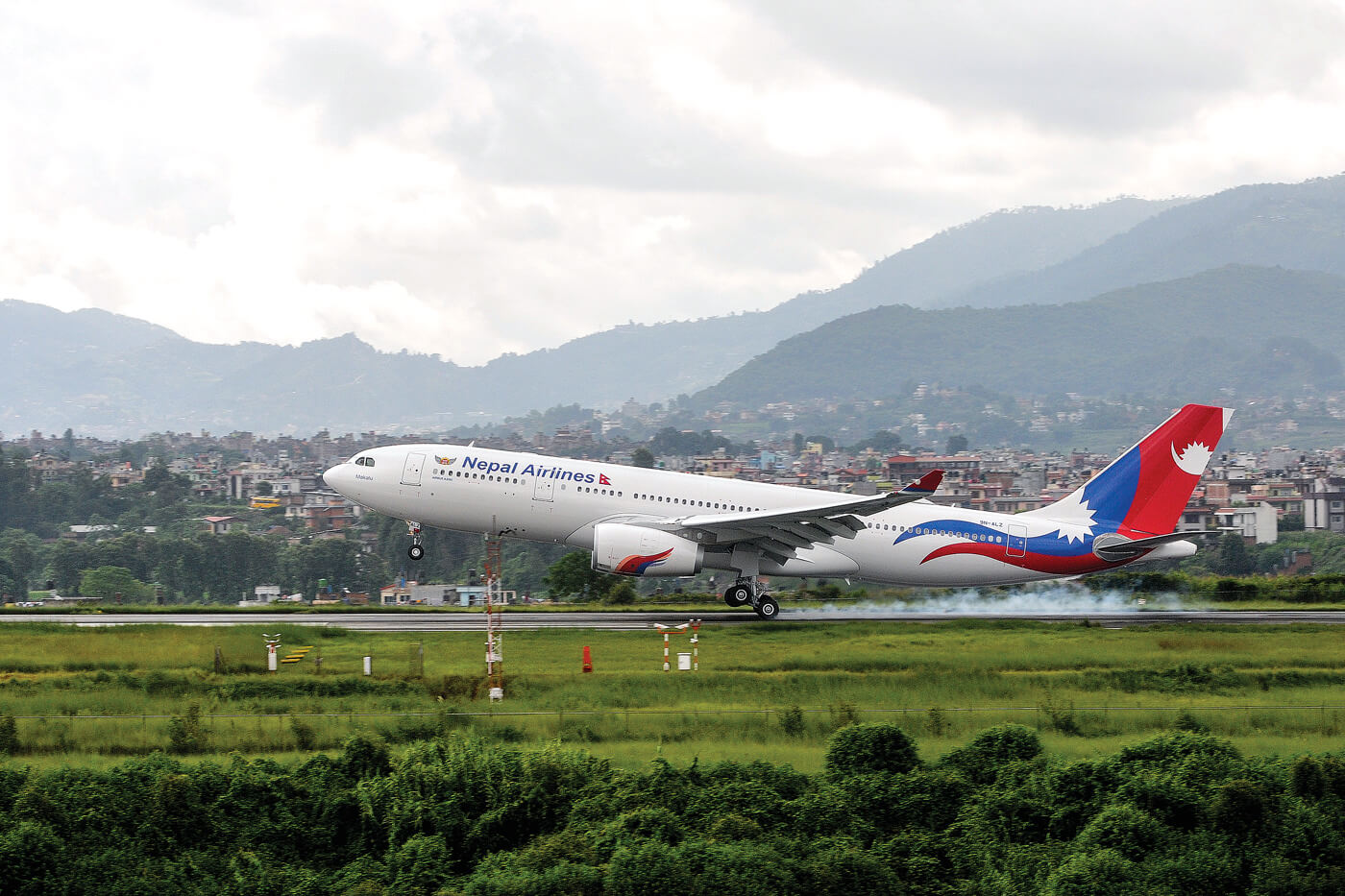
The woes that plague state-owned Nepal Airlines Corporation (NAC) are not new: mismanagement, political interference, incompetence and inability to compete internationally. Instead of improvements after the addition of four new jets in the past two years, however, the crisis has worsened.
The airline’s two Airbus 330s and two 320s added a whopping debt burden of nearly Rs30 billion, forcing the carrier to look for government bailout. Most of its domestic fleet is grounded, the airline has not been able to sell off its two Boeing 757s, and air route permits to Incheon, Kansai and Guangzhou have all been delayed.
Last month, Prime Minister KP Oli warned management: “If the airline is not run properly, the government can step in. We cannot keep pouring Rs37 billion into a bottomless pit every year.”
Oli appointed loyalist Madan Kharel as executive director of NAC in October last year, but there was confusion over his responsibilities and those of Managing Director Sugat Ratna Kansakar, who later resigned. Kharel promised to make the airline’s domestic fleet airworthy in three months, launch flights to Guangzhou by March, and use the 330s on other long-haul routes.
Nearly a year later none of that has happened. NAC is three months behind on payments of Rs3.39 billion to Citizen Investment Fund and Provident Fund, on loans.
PM Oli summoned Kharel to Baluwatar two weeks ago, asking him to present a plan to take the carrier into profit. But Kharel begged for a subsidy, and Oli was said to be livid, stating that the government would rescue the airline only if it came back with a new business plan.
Kharel went into panic mode. NAC senior management recently spent two days at a retreat in Godavari to come up with a break-even strategy, and Kharel has issued requests for proposals to contract out the operations and engineering departments.
But even the airline’s own employees have doubts. Achyutraj Pahadi, a member of NAC’s operations committee, says staff will not cooperate with outside contractors, and a better option would be to find a strategic partner.
Read also: Keeping Nepal Airlines airworthy, Sharad Ojha
Kharel argues that putting in place a strategic partner would take too long. Indeed, Lufthansa was selected as a strategic partner in 2016 but the Finance Ministry sank the deal. There has been no international interest in a new call for proposals made in December.
Buddhisagar Lamichhane of the Ministry of Tourism and Civil Aviation says a strategic partner is not a panacea: “Bringing in an airline with expertise in the aviation sector would help, but only if the airline was on a sounder financial footing already.”
In his defence, Kharel says he was saddled with huge loans for the new planes: “When I took over, we had new planes but no plans to fly them. Now we are ready to fly new routes, but we need capital injection from the government.”
Kharel has submitted his breakeven plan to the ministry, which includes starting flights to Osaka, Riyadh and Guangzhou and increasing the fleet utilisation. To be fair, it is not entirely the airline management’s fault that long-haul routes have not panned out. Nepal is still on the EU black list, (see box) and some countries are reluctant to allow flights.
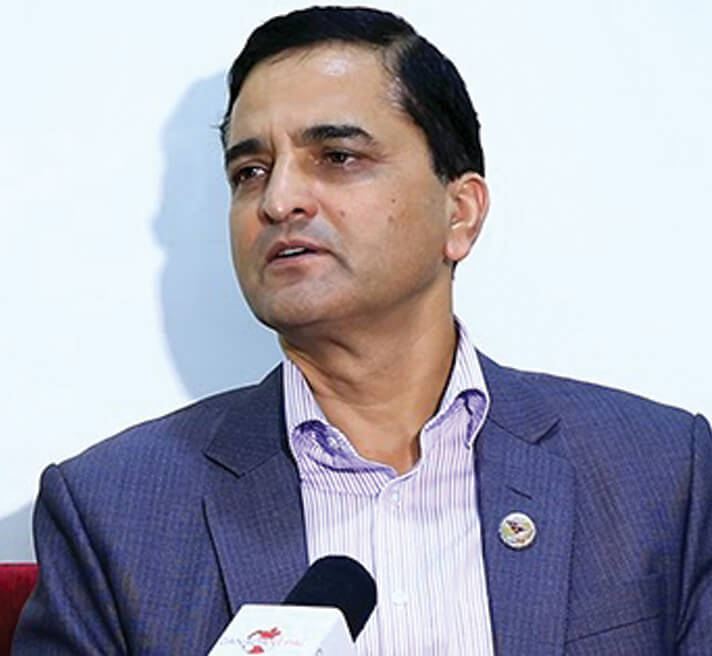
This week, airline staff saw a glimmer of hope in Oli’s appointment of Yogesh Bhattarai as Tourism and Civil Aviation Minister (pictured, left). He is seen as a can-do politicians in the mould of his predecessor Rabindra Adhikari who died in a helicopter crash in Taplejung in April.
“My goal is to make Nepal Airlines profitable, I have heard it is mismanaged and will have to study the company. But I want to make it an airline Nepal can be proud of,” Minister Bhattarai told Nepali Times.
NAC has announced discounted promo fares for its thrice-weekly direct flights to Osaka from 29 August, revival of a route Nepal Airlines used to operate. But proposals to fly to Seoul are delayed because the Koreans are insisting on a safety audit.