Nepal has been elected to a second term on the United Nations Human Rights Council (HRC) in Geneva despite opposition from activists who have accused the ruling Nepal Communist Party (NCP) of dragging its feet on is out transitional justice, failure to address violence against women and Dalits and efforts to curtain freedom of expression.
This time, Nepal was one of the candidates for four seats in the HRC together with Pakistan, China, Uzbekistan and Saudi Arabia from the Asia-Pacific region. But Saudi Arabia was not elected.
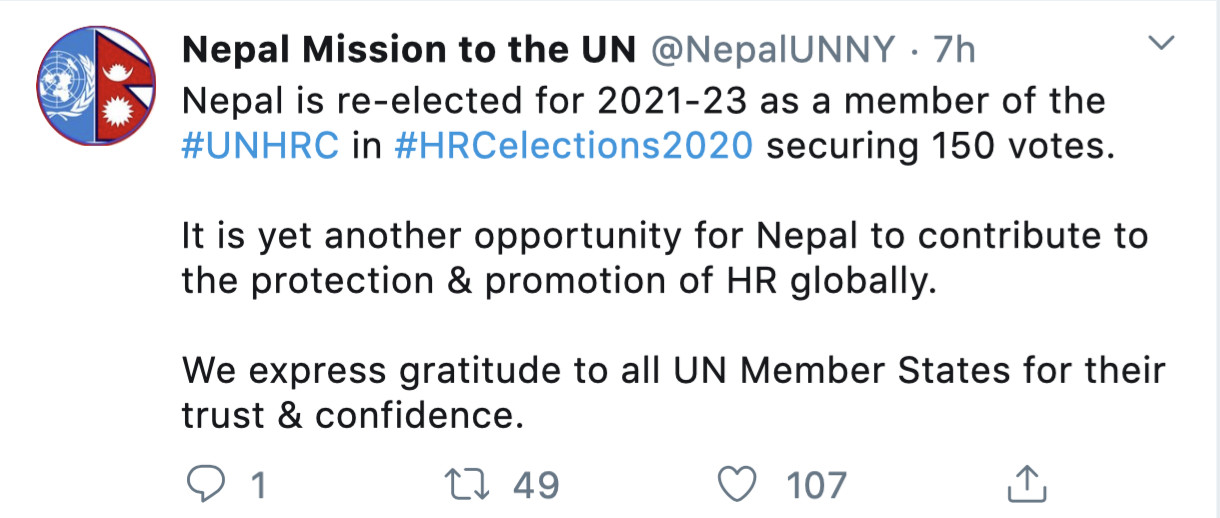
The election with 150 out of 193 votes at the UN headquarters in New York gave Nepal a new term from 2021-23. Nepal’s Permanent Mission at the United Nations tweeted: ‘It is yet another opportunity for Nepal to contribute to the protection & promotion of HR globally.’
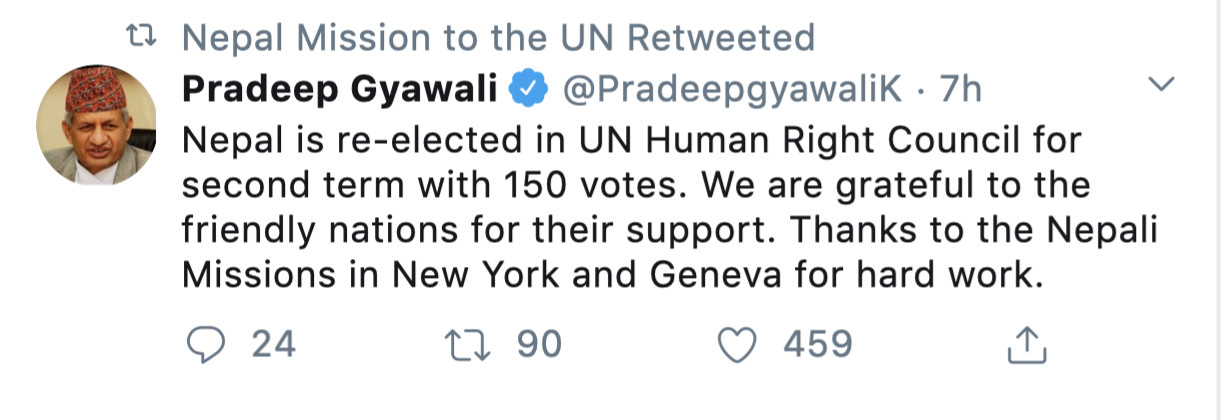
Foreign Minister Pradeep Gyawali also tweeted: ‘We are grateful to the friendly nations for their support. Thanks to the Nepali Missions in New York and Geneva for hard work.’
However, many human rights group said Nepal did not deserve to be re-elected because it had not fulfilled pledges it made in 2017, including implementation of the transitional justice process, make the National Human Rights Commission (NHRC) more effective, and promoting rights to free expression.
Not only are these promises unfulfilled, they say, but there has been a worrying rise in deaths in detention while not been enough effort has gone into investigating and prosecuting those responsible for violence against Dalits and women in Nepal.
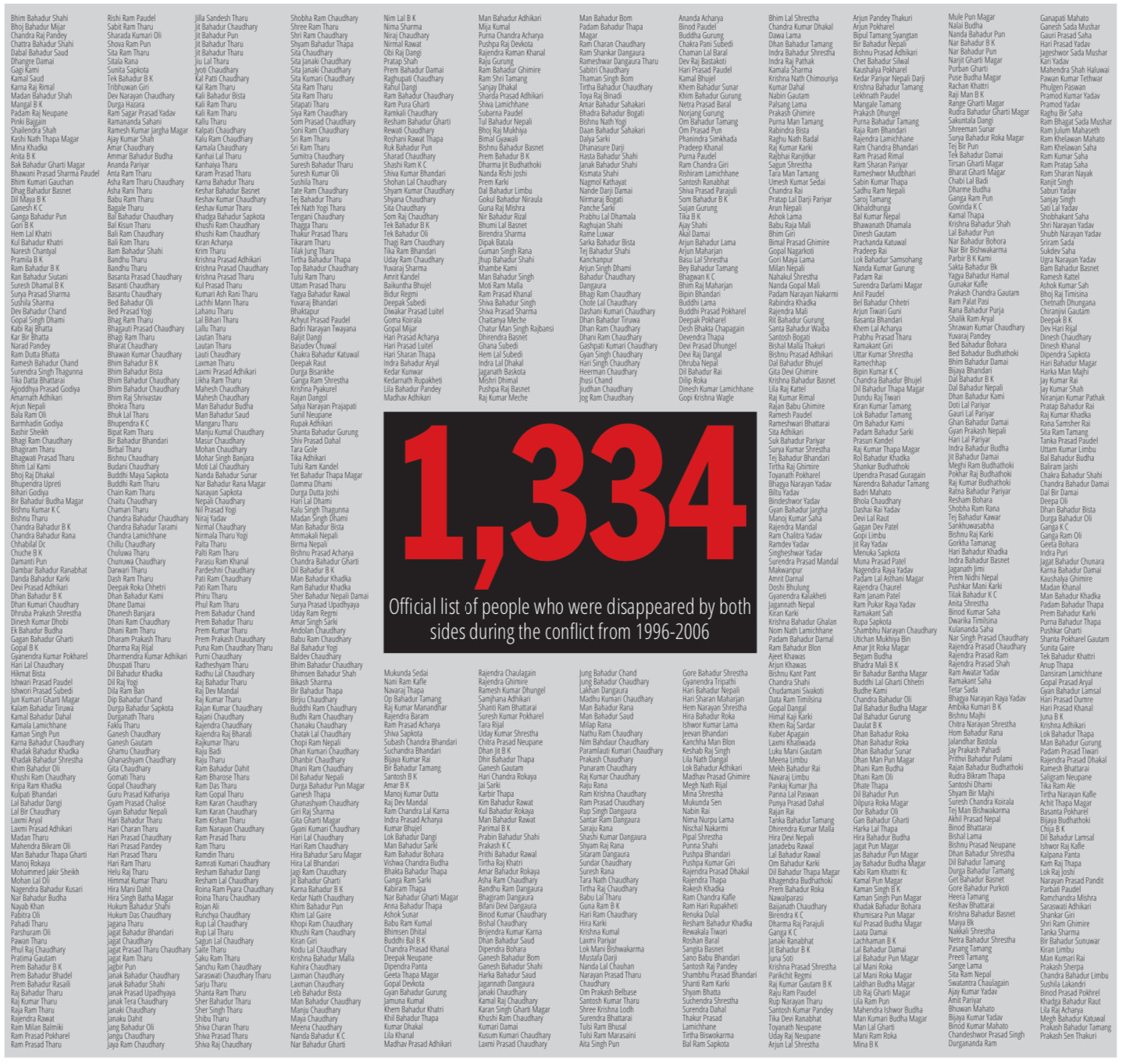
In April, Nepal’s Supreme Court rejected a government appeal of the court’s 2015 decision that ordered amendments to the Transitional Justice Act because it allowed pardon for heinous crimes during the 1996-2006 Maoist conflict.
The Commission on Truth and Reconciliation and the Commission on Enforced Disappearances have languished because of the lack of political will by both former adversaries who now make up the Nepali state to address them.