
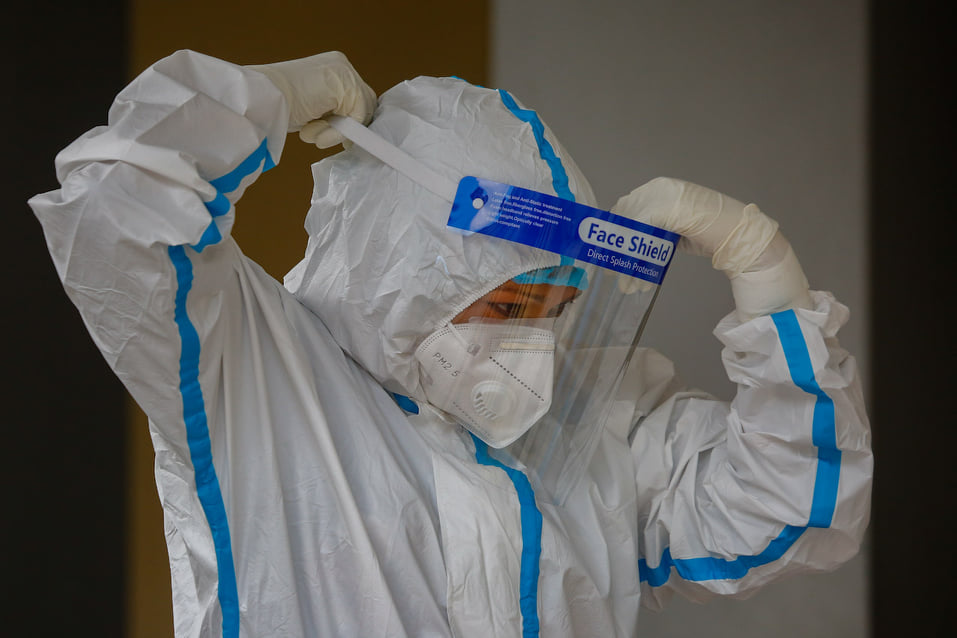
A 25-year-old female nurse employed at a private hospital in Nepal has been experiencing back pain and shooting aches. She is exposed to viruses, fungi, and organic dust at work, and has developed allergies and skin disease due to exposure.
She is also at risk of radiation exposure as the hospital, has not implemented adequate safety measures to protect the workers except for the use of shielding walls. This is now affecting her mental health, causing sleep and eating disorders.
Job risk for health workers increased during the Covid-19 pandemic, but their burden of work-related accidents and illnesses around Nepal is still significant.
Nurses, doctors and other medical workers face a unique set of occupational hazards compared to other professions due to the nature of their work, which often involves direct contact with patients and exposure to various types of health and safety risks.
Some have back injuries from frequently having to lift patients, biological and chemical hazards and mental stress and burnout.
A recent study published in the International Journal of Community Medicine and Public Health found that back pain was the most common injury experienced by healthcare professionals around the world, with 64.8% of the 247 respondents reporting this condition. Over half of them were also afflicted by needle prick, a sensation of uncomfortable tingling or prickling in arms, legs, hands, or feet.
The study also highlighted the prevalence of workplace hazards with over 80% of the participants viewing them as a potential cause of injury or adverse health effects. While many workers were aware of the hazards in the hospital environment and recognised the importance of protecting themselves a significant number had not received any training to do so.
Over half of the respondents cited biological hazards as the biggest threat, with 87% of healthcare professionals reporting exposure to chemicals, 88% to biological risk, and 66% to viral dangers.
The study also found that work experience, employment status, and job type can impact the likelihood of facing hazards, with radiologists being a particularly high-risk group.
Although the measurement of radiation exposure among healthcare professionals can be challenging, almost half of the respondents reported constant exposure to radiation.
In Nepal, after the earthquake of 2015, radiation was found to have leaked from 18 hospitals in Kathmandu Valley. A joint study by NAST, the National Academy of Medical Sciences (NAMS), and Teaching Hospital found that this leakage posed a risk to public and medical professionals' health.