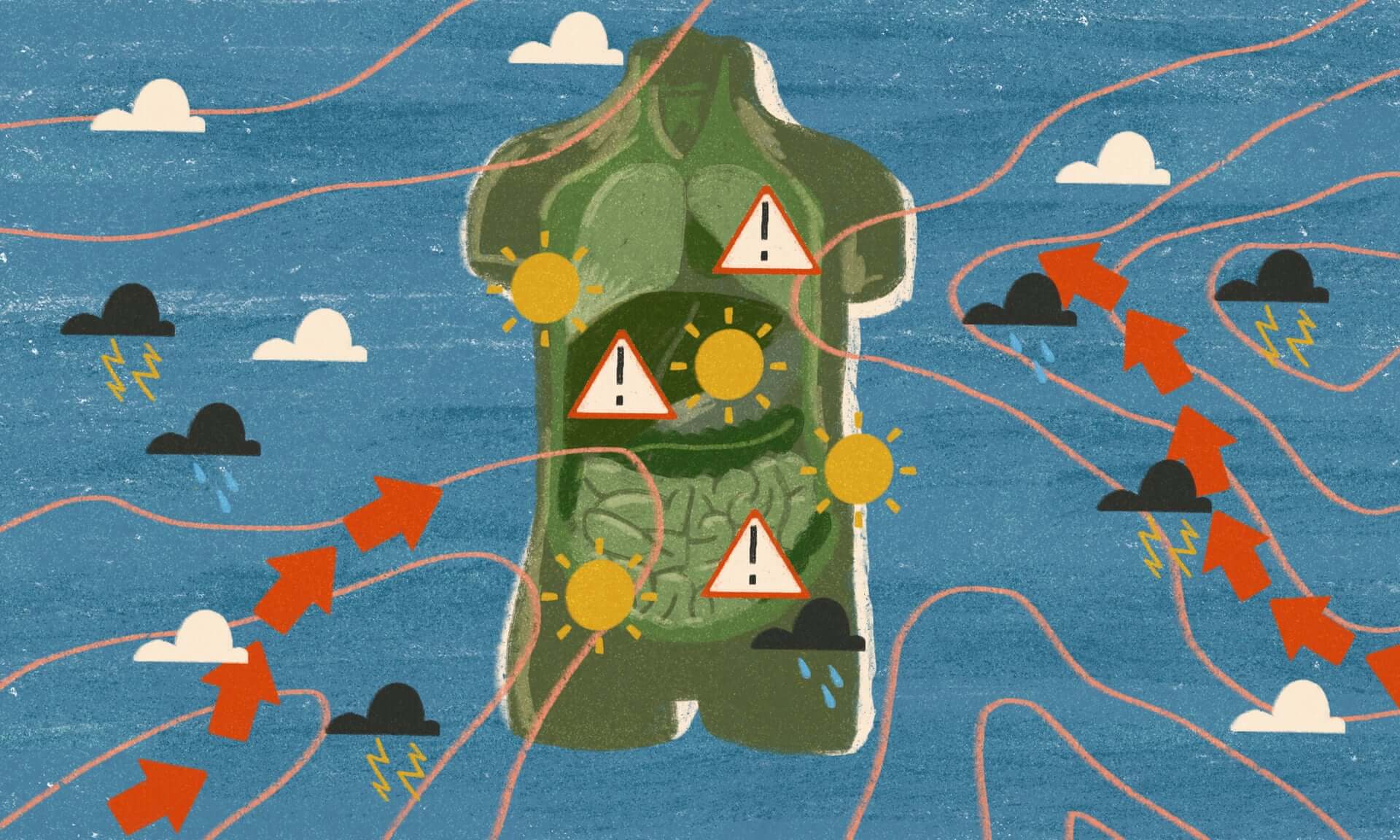
The climate crisis is making people sicker – worsening illnesses ranging from seasonal allergies to heart and lung disease.
Children, pregnant people and the elderly are the most at risk from extreme weather and rising heat. But the impact of the climate crisis – for patients, doctors and researchers – is already being felt across every specialty of medicine, with worse feared to come.
“There’s research suggesting that our prescription medications may be causing harm because of changing heat patterns,” said Aaron Bernstein, a pediatric hospitalist who is the co-director of the Center for Climate, Health and the Global Environment at Harvard University.
Read also: Mosquitoes move up the mountains as the earth warms, Sonia Awale
“There’s evidence that extreme weather events are affecting critical medical supplies so we can’t do things as we normally would do because IV fluids aren’t available.
“And there’s evidence that extreme weather events are knocking out power more and more, and that is a huge issue for providing care in healthcare facilities.”
In a recent example, a study in the Journal of the American Medical Association found that lung cancer patients undergoing radiation were less likely to survive when hurricane disasters disrupted their treatments.
An August article in the New England Journal of Medicine lays out dozens of similar studies to show how the climate crisis affects each practice of medicine. Renee Salas, a co-author of the report, who teaches emergency medicine at Harvard Medical Schoolsaid: “The climate crisis is impacting not only health for our patients but the way we deliver care and our ability to do our jobs. And that’s happening today.”
Read also: 'Like a sunburn on your lungs': how does the climate crisis impact health?, The Guardian
Allergies
Climate change makes allergies worse.
As temperatures increase, plants produce more pollen for longer periods of time, intensifying the allergy seasons. Increased concentrations of carbon dioxide in the atmosphere can make plants grow more and cause more grass pollen, which causes allergies in about 20% of people. Carbon dioxide can also increase the allergy-causing effects of pollen.
Neelu Tummala, an ear, nose and throat specialist at the George Washington Medical Faculty Associates in Washington DC, said she sees many patients with allergic rhinitis, or inflammation of the nasal cavity, congestion and post-nasal drip.
“It used to be that tree pollens were only in spring, grasses were just in summer, ragweed was just in fall,” Tummala said. “But the timing of those is starting to overlap more.”
One of Tummala’s patients, Kelly Kenney, had minor seasonal allergies as a child but now suffers from year-round from sinus pains, ear pressure and congestion.
“The last four years, my symptoms have gotten increasingly worse,” Kenney said.
Pregnancy and newborn complications
Pregnant people are more vulnerable to heat and the air pollution that is being made worse by climate change.
Bruce Bekkar, a San Diego-based obstetrician gynecologist who stopped practicing six years ago to spend more time as a climate activist, has compiled 68 studies from the continental US on the association between heat, smog and the tiny particles of pollution that come from fossil fuels and how they are connected with premature birth, low birth weight and stillbirth.
More smog forms when it is hot, and some research suggests particulate matter also increases with the climate crisis, although the data is less robust.
Bekkar said he and his co-authors found a significant association in 58 of the 68 studies. The body of research covers 30m births in the US.
Bekkar said doctors should talk to their patients about how heat waves could lead to premature births and how staying away from air pollution can help them keep their children healthy.
“We’re finding that we have increasing numbers of children born already in a weakened state from heat and air pollution. That’s a totally different story than thinking about climate change as the cause of hurricanes over Florida … It’s a much more pervasive and ongoing impact.”
In the developing world pregnant people can also suffer from food and water scarcity. Insect-borne illnesses – such as the Zika virus, which was spread by mosquitoes – are also a hazard to developing fetuses.