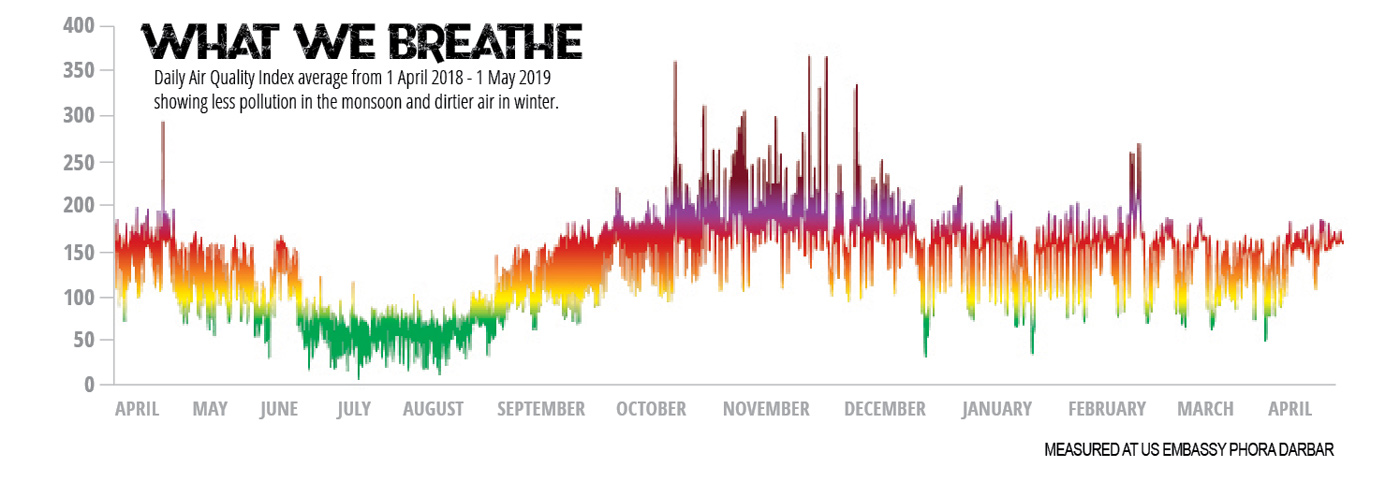
Despite public awareness and relentless media coverage, Kathmandu’s air quality has worsened in the past two years. But public outrage does not seem to translate into action to clean up the air.
A road-widening spree, earthquake destruction and delays in fixing streets dug up to replace water mains has turned the Valley into a dust bowl. There has also been a 25% increase in the number of vehicles on the roads.
The theme for World Environment Day (5 June) is #BeatAirPollution. China will be the host nation and will showcase its dramatic progress in cutting pollution.
In Nepal, 35,000 people die annually due to illnesses caused by polluted air. Average life expectancy is reduced by at least four years in the worst-affected areas like Kathmandu Valley, Chitwan and other parts of the Tarai.
“Air pollution is a silent killer and while it is difficult to quantify its heath impact, hospitalisation due to serious respiratory diseases has increased sharply in recent years,” says chest specialist Raju Pangeni at HAMS Hospital in Kathmandu. “It is now causing heart attacks, kidney diseases, osteoporosis and dementia. Air pollution is more dangerous than smoking cigarettes.”
Read also:
#Beat Air Pollution, Editorial
Solution to pollution, Pallavi Pant and Anobha Gurung
Non-smokers in Kathmandu are now suffering from diseases that you would expect to see afflicting chain smokers. And residents of the capital who smoke get a double whammy.
“Controlling tobacco in Nepal is already such a big challenge, but Kathmandu’s degrading air quality has doubled the disease burden,” says health activist Shanta Lall Mulmi.
Ironically, World No Tobacco Day falls on 31 May, just four days ahead of Environment Day.
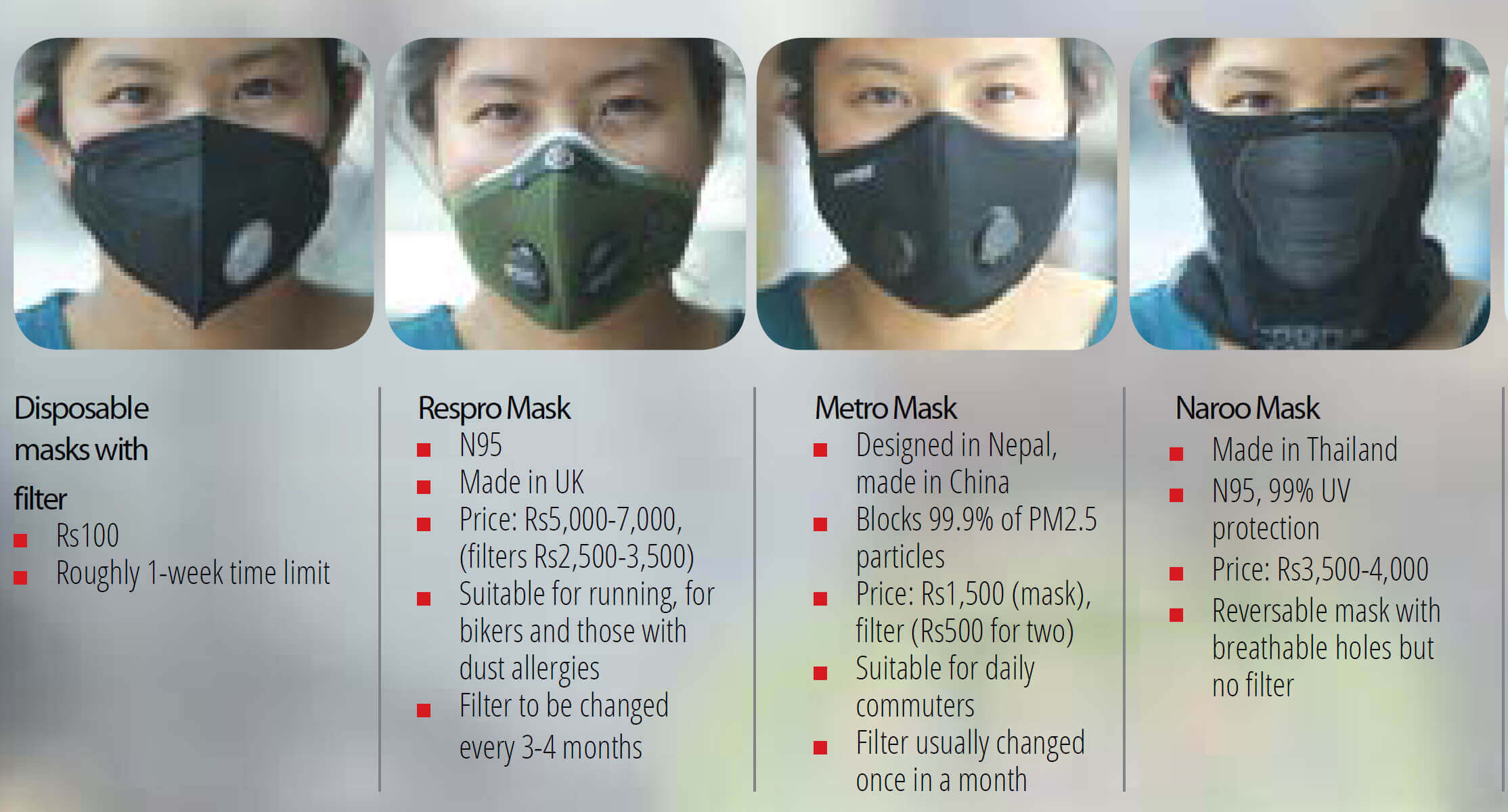
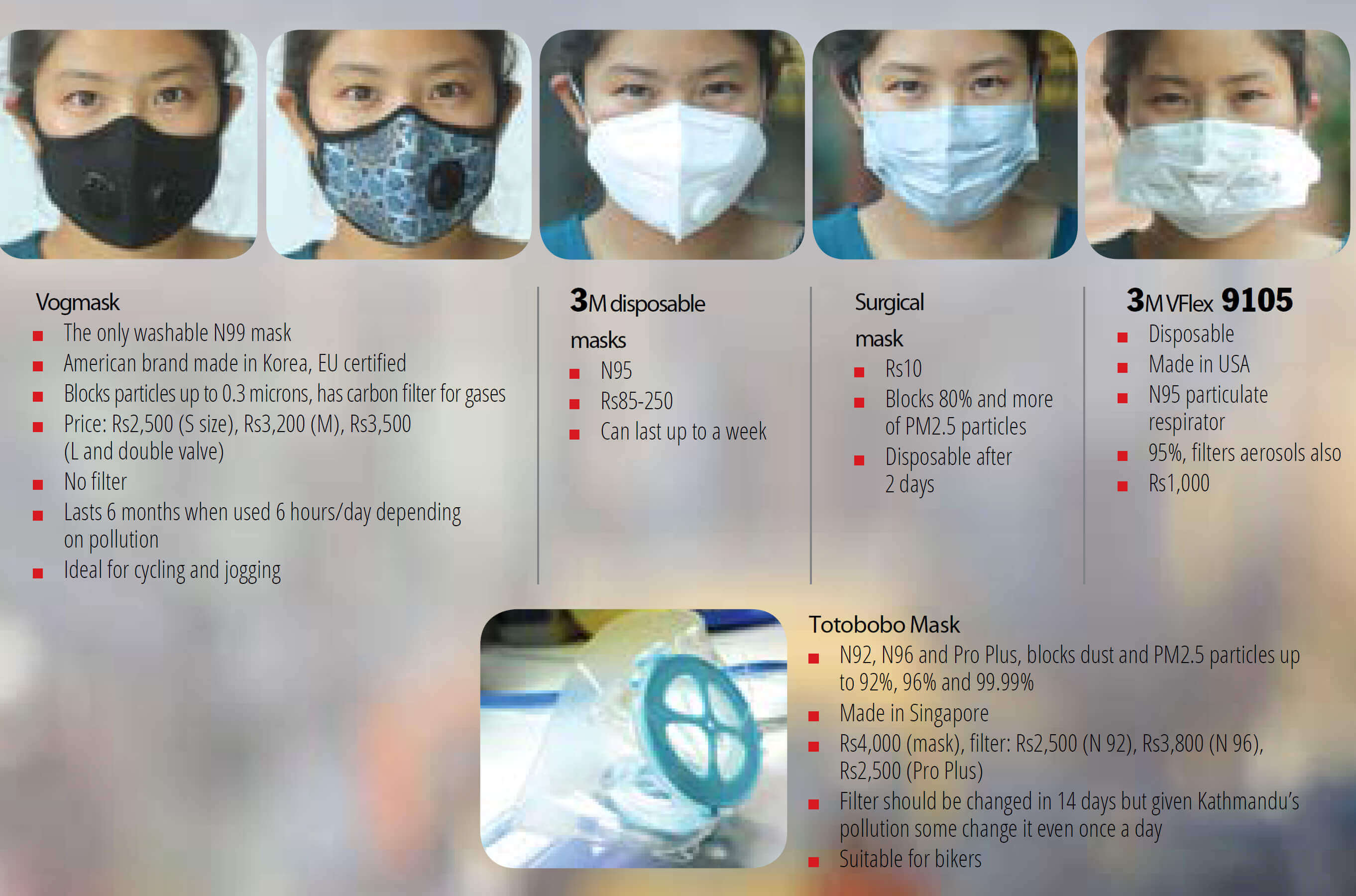
Because Nepal’s national government and municipalities have done little to reduce risk, citizens have adopted their own methods of personal protection: wearing masks, installing air purifiers at home and office, cancelling morning walks, and monitoring air pollution levels on apps before allowing children to play outside.
There are dozens of varieties of masks available in the market, along with air purifiers that cost more than Rs130,000. But public health specialists discount their efficacy and stress that the best solution is to reduce air pollution at sources.
Read also:
Toxic bubble, Ajaya Dixit
“A mask at best is a temporary solution and does not block harmful gases. Their effectiveness also varies depending on the work place, environment and fitting. Because indoor air pollution levels are also high, ideally you would have to wear a mask 24 hours a day,” says Pangeni.
Air pollution is also the main environmental risk factor for non-communicable diseases like cancers and lung diseases, concludes a recent report by the NCD Alliance and the Forum of International Respiratory Scientists: ‘The challenge is great, but the cure is straight-forward... it must be met by national, regional, local and personal responses. Collective action from many sectors is needed to assure that everyone can breathe clean air.’