

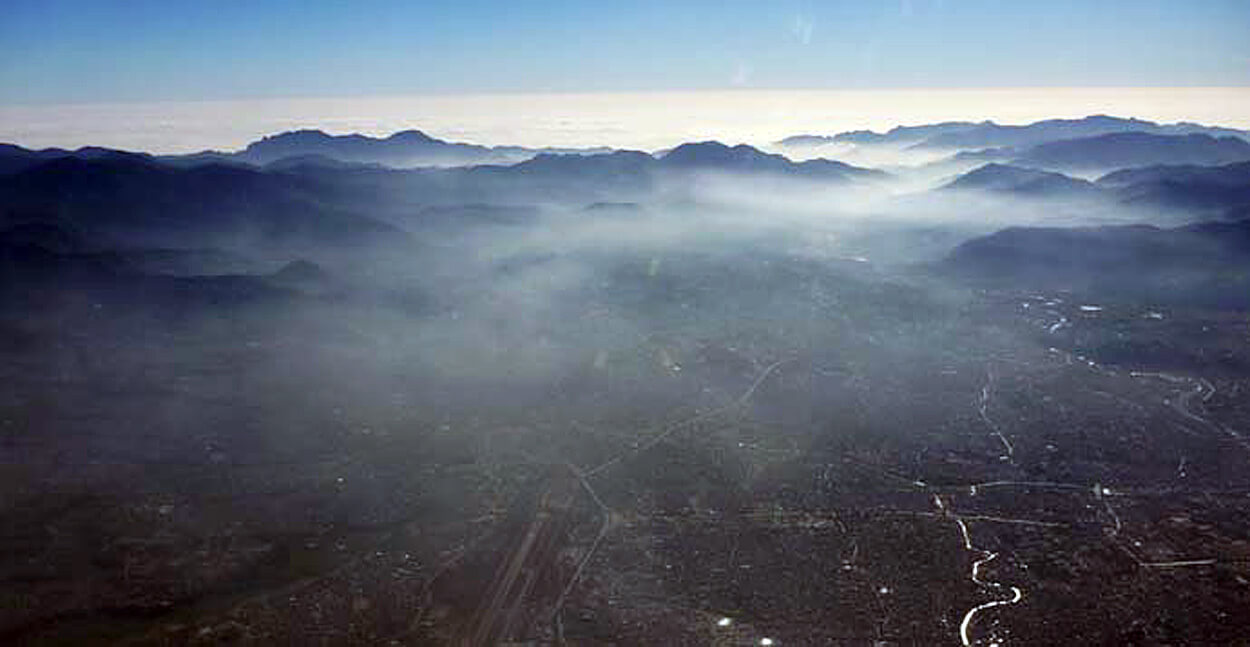
The global theme for this year’s World Environment Day on 5 June is air pollution — very apt in a year that saw the release of three major reports that together clarify that the causes and solutions of air pollution and climate change are intricately interconnected.
This information helps citizens, researchers and policy makers perceive ‘one atmosphere’ within which short-lived climate pollutants and longer term carbon dioxide impact the air we breathe. It is within this one atmosphere also that these pollutants aggravate climate change.
The flip side of the climate action coin is that air pollution worsens our climate crisis. Black carbon, ozone and other climate-impacting pollutants contribute to additional temperature increase beyond that caused by long-lived carbon dioxide. Our glaciers are melting faster because of air pollutants. Pollutants also profoundly impact the monsoon, and several recent severe flooding events in both of Nepal’s neighbouring countries have been attributed to air pollutants modifying clouds, changing how much rain fell where and when.
Read also:
Air pollution is more dangerous than smoking, Sonia Awale
#Beat Air Pollution, Editorial
The IPCC’s Special Report on Global Warming of 1.5 Degrees, released in October 2018, raises the alarm that concerted and rapid action is needed to avoid the catastrophic impacts of climate change that will occur if global average temperature increase exceeds 1.5C. This is the report that inspired Greta Thunberg and other students to go on climate strike demanding that climate emergencies be declared. As those strikes articulate, climate action must occur over the next decade or it will be too late. This will require reducing not just carbon dioxide emissions, but also short-lived climate pollutants.
The Hindu Kush Himalaya Assessment released in February 2019 by ICIMOD, summarises the current state of knowledge about changes, vulnerabilities and risks faced by the Himalayan region, as well as opportunities in clean energy and other sectors. High mountain areas warm faster, so even a 1.5C global average temperature increase implies a 1.8C-2.2C increase in the Himalaya, with a loss of one-third of glacier volume.
The Himalaya is often called the ‘Third Pole’ because it is the world’s third largest store of frozen water. But that store is dwindling rapidly, which in turn impacts water and food security. The report also describes the affects of extreme air pollution on people’s health, as well as on surface temperature, agriculture and the monsoon rains.