

Kathmandu is the centre of everything in Nepal: power, administration, public education, tourism, hospitals. Till the late 1970s, the Valley’s built-up areas coalesced around historical settlements. After the 1990, the cities saw exponential growth, a process accelerated by war and declining agriculture in the countryside. Lack of jobs drove Nepalis first to Kathmandu and then overseas. The remittances that workers abroad sent back in turn fuelled the Valley’s real estate boom.
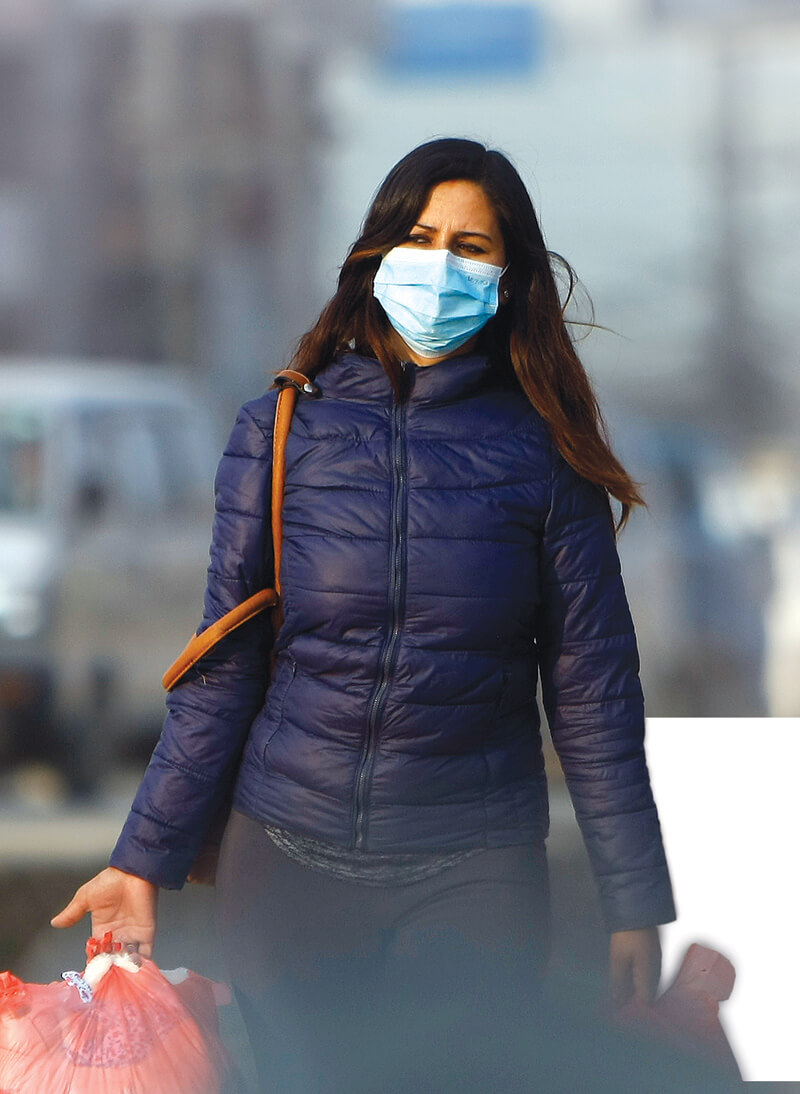
Urbanisation, unplanned growth, lack of public transport and endemic corruption have enveloped Kathmandu Valley in a smog blanket most days. Nearly 38% of this air pollution is from vehicle emissions; other sources include dust from roads, excavations, debris of demolished buildings, construction sites, brick kilns, open burning of plastic and solid wastes, inefficient hospital incinerators, rice husk/coal/wood-burning industries, crushers and mixers, asphalt plants and metal and automobile repair units.
Read also:
Green sticker = green light to pollute, Sonam Choekyi Lama
How to clean up Kathmandu’s air, Anil Chitrakar
The World Health Organization says the mean annual and 24-hour concentration of PM2.5 (particles smaller than 2.5 microns in diameter) in the air should be less than 10µg/m3 and 25µg/m3 respectively. In Kathmandu Valley, both parameters are much higher year-long, and the capital is among the top 10 most polluted cities in the world.
Air pollutants also blow in from north India, making the problem a transboundary one. Exhaust from commercial jets and short-haul aircraft contribute too, but is overlooked. Once inhaled, the fine particulates are carried via the bloodstream to our cells, where they can cause strokes, dementia, mental retardation, pulmonary disease and cancer.
The pollution is directly related to poor governance — procedural lapses, almost non-existent regulation and enforcement, and a system of national, provincial and municipal governments either incapable or too steeped in greed to deal with it.
Read also:
One Atmosphere, Arnico Pandey
#Beat Air Pollution, Editorial
The overall outcome has been the growth of a concrete jungle without any form, aesthetics or character, with polluted water, land and air as by-products. Not only does Kathmandu have a serious air pollution problem, but its summer days are now urban heat islands because open spaces have been built over.