
The United Nations General Assembly is convening just six weeks ahead of the UN’s COP26 climate conference in Glasgow, and follows a stark warning from the United Nations last week that the voluntary Nationally Determined Commitments (NDCs) by countries is not at all enough to stop cataclysmic climate collapse.
The UN collated the pledges by the world’s 191 countries and projected that the earth’s surface would be 2.7 Celsius hotter by 2100. This warning is even starker than the report to governments by the Inter-governmental Panel on Climate Change (IPCC) last month that laid out a best-case scenario in which despite reduced greenhouse gas emissions, global average temperature was still set to exceed 1.5°C by the turn of the century.
This means countries must not only have more ambitious targets in their NDCs, but richer countries must do more, and giants like India and China have to wean themselves away faster from fossil fuels. What they have committed to so far is just not enough.
Some of this is the subject of a meeting of 40 world leaders in New York this week co-chaired by UN Secretary General António Guterres and British Prime Minister Boris Johnson ahead of the Glasgow Climate Summit. Guterres told the General Assembly that the world needed to reduce carbon emissions by 45% by 2030 to stabilise the climate.
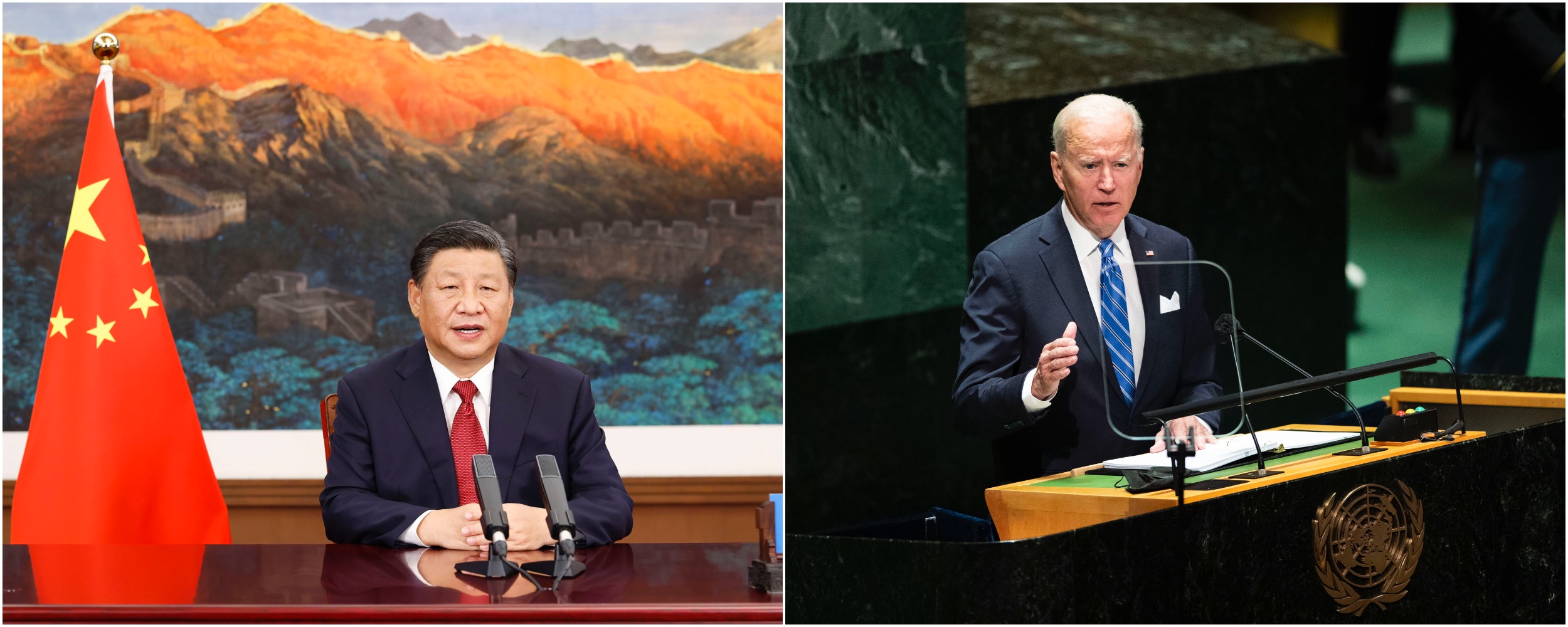
On Wednesday, Chinese President Xi Jinping pledged that China would stop building more coal-fired power plants abroad, the US President Joe Biden promised $11 billion to help developing countries adapt to the climate crisis.
Nepal, being one of the most vulnerable countries in world to a hotter world, the tenor of the discussion in New York this week will literally determine our future. Not only are our mountains melting in front of our eyes, but erratic weather means more floods, landslides and droughts that have dried up springs. Scientists have said that the Himalaya will get hotter faster than other parts of the world, and could warm by 1.8-2.2°C by the turn of the century.
Adapting to a hotter Himalaya will need money for climate resilient agriculture, lowering flood risk of glacial lakes, and help to transition to renewable energy. But when Nepal’s delegate at the General Assembly gets up to speak in New York next week to ask for more pledges for adaptation, it will carry very little moral authority if the government back home is backtracking on its own NDC commitments.