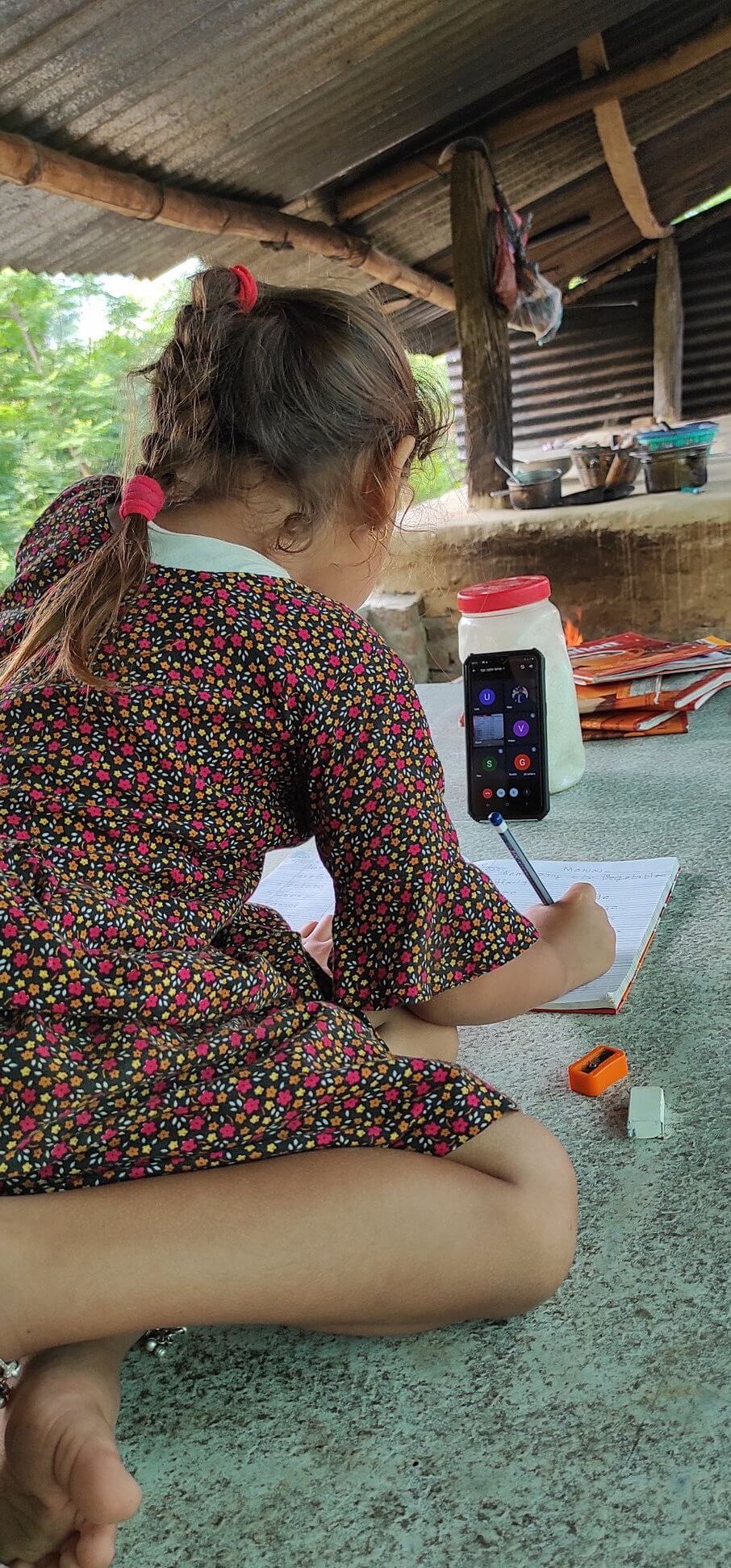
Third grader Sona Lama lives in the uplands of Rasuwa and has not been to school for more than a year. But since Nepal Telecom built a cellphone tower on a nearby peak, there is now 3G connection — enough for her to attend class on her mobile phone.
Her teachers have partnered with a school in Kathmandu that offers volunteers to guide students like Sona to use Google Classroom or Zoom, and also offer tuition so they can catch up with school work.
“This is no substitution for going to an actual school and meeting friends and teachers face-to-face, of course, but at least the online classes partly make up for the disruption, and has introduced the students to new technology,” says Samata Regmi, a Grade 12 student herself, who is a volunteer mentor for Sona and others like her.
Regmi lists many challenges: the network often goes off in the middle of class, video uses too much bandwidth, the children are frequently distracted by household chores.
“Many of the parents are out of work, so the children have to help at home, and it is difficult to get them to concentrate. They have very short attention spans on screen,” adds Regmi, who despite the challenges, is glad to be helping children in remote areas with remote learning.
Sona Lama shares her mobile with three other older siblings, and since the tower brought data internet it is now in high demand for browsing TikTok videos and Facebook as well. She is still luckier than most Nepali children — a recent survey showed that 80% of students have neither been to school since March 2020, nor do they have access to classes online or by radio/tv.
There was a class divide among Nepal’s 6 million school students even before Covid-19. But there is now also a digital divide that has widened the gap between private and government schools. While most urban private schools have been conducting classes quite smoothly, government schools have had less success because their students are from poorer families.
Still, distance learning is catching up and where young students are logging on for online classes, the process has made them more tech-savvy and more confident with digital technology.
In Mangal Prasad School in Nepalganj has been encouraging its children to get online so they can catch up with missed school. Says teacher Sandhya Sharma: “Those who are attending digital classrooms are doing well, we are happy with their progress. But I am sorry to say that there are many who have just not been logging on.”