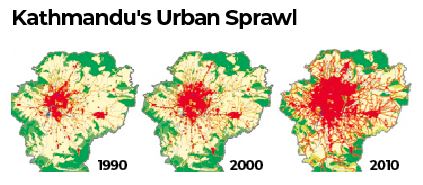
Nepal may have defused the population bomb, but its cities and towns are bursting at the seams.
Federalism was supposed to improve rural living standards through more accountable governance. Failure to achieve this has accelerated rural outmigration.
The 2021 census showed that Nepal’s population declined by 10% in the last decade. The total fertility rate has fallen below the 2.1% replacement level, and that could be a problem in the future. But for now, it is the continuous emptying of mountain districts that is assuming crisis proportions.
None of the three levels of government seem to have internalised the gravity of this situation, let alone devised a strategy to reverse the trend.
Most internal migration is to the Tarai, which already has 54% of Nepal’s population. Another 21% lives just in Bagmati Province which includes Kathmandu Valley.
Read also: Letter from Sikles, Kunda Dixit
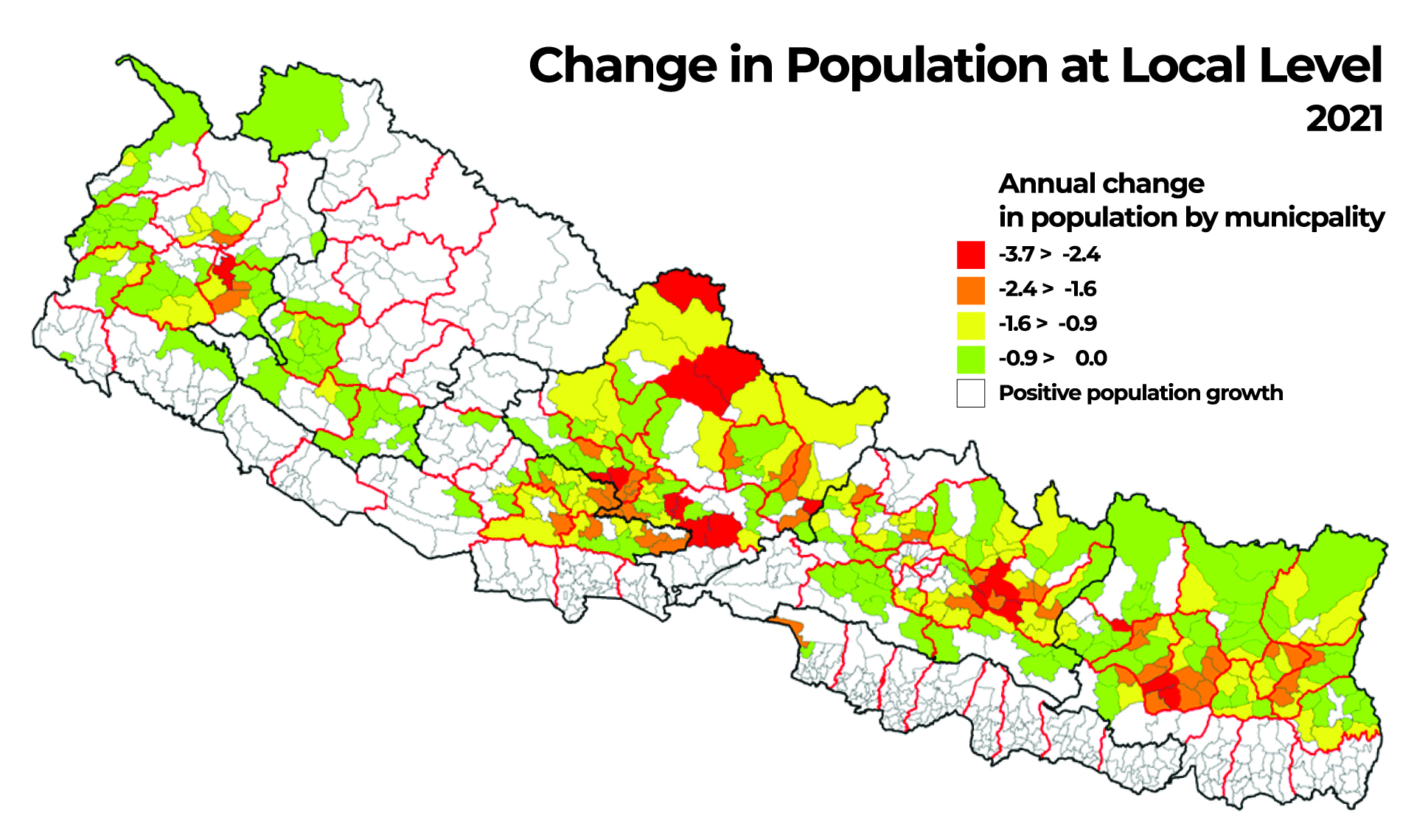
One-third of Nepal’s population is in rural municipalities, and two-thirds is in urban centres. Three-fourths of Nepalis live in just four of the seven provinces: Kosi, Bagmati, Madhes and Lumbini.
The trend is even more alarming if we look at the data at district and rural municipality levels. Nearly all hill and mountain districts have seen sharp population declines. Some towns have not just added population from the hinterland, but also sucked up its resources.
Municipalities have not been able to keep up with demand for jobs, quality education, affordable healthcare, or water supply.
After the first federal elections to local governments in 2017, there was finally hope that local candidates would be held more accountable because of their proximity to the electorate. The campaign slogan of ‘Singha Darbar in every village’ raised hopes that democracy would finally deliver genuine local development.
Some city dwellers even returned to their ancestral villages. But hopes were soon dashed because grassroots governments once again failed to deliver. Feeling let down once more, people moved from villages to cities, from the mountains to the plains, and from there many continued abroad.
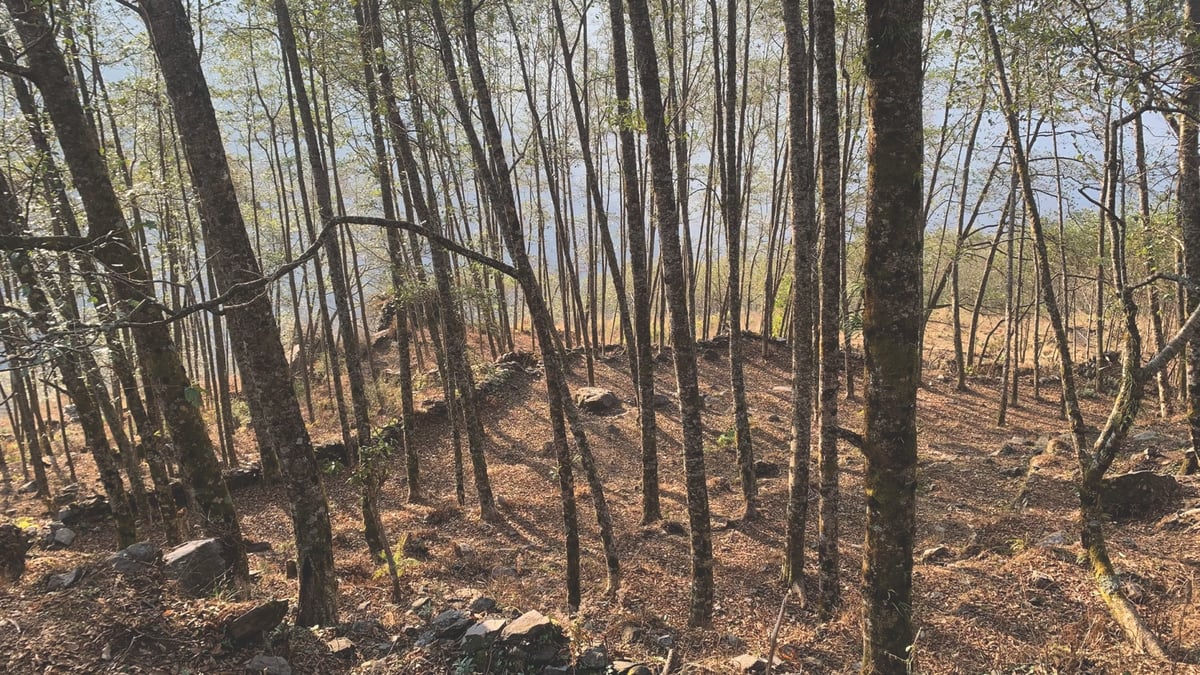
Migration patterns have changed. It is not just young males who are leaving for the cities, entire families are. Houses are padlocked, villages are empty, fields are fallow.
Read also: Eastern Nepal’s depopulating mountains, Gopal Dahal

Elected representatives in fancy new municipality offices have not responded appropriately to the enormity of the demographic change taking place.