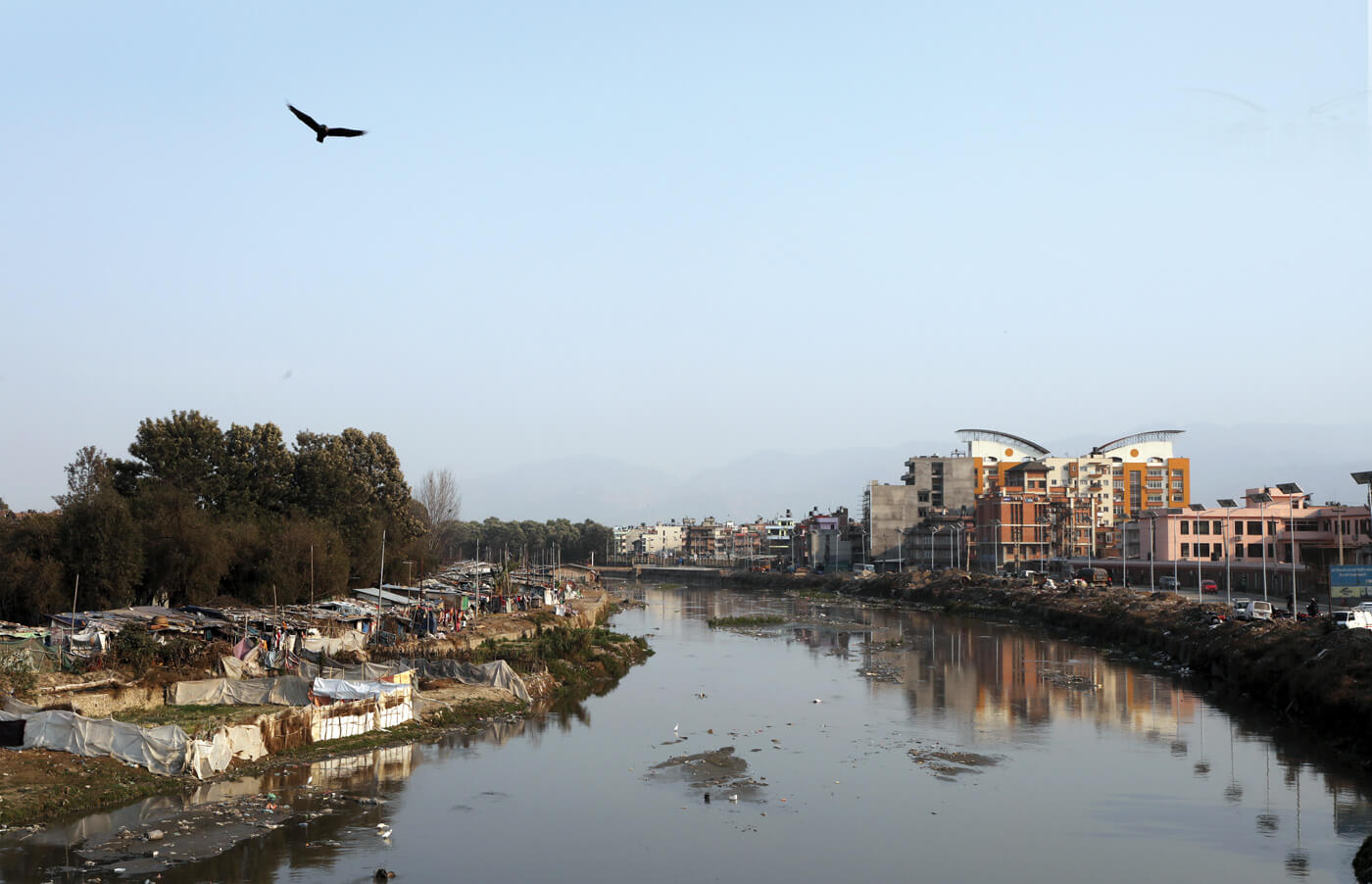
It may seem like a contradiction: Nepal’s poverty rate has dropped from 42% to 21% in two decades, but the gap between the richest and poorest Nepalis has widened considerably.
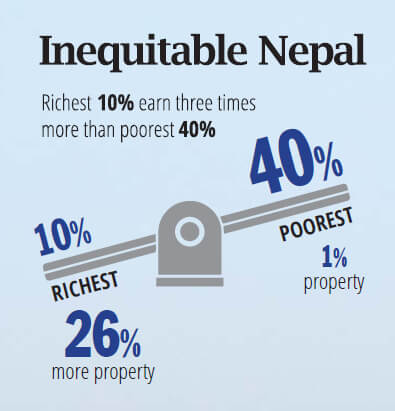
While remittances from Nepali workers abroad has helped reduce overall poverty, 10% of rich Nepalis now own property worth an astounding 26 times more than the 40% of the poorest. The income gap has also become wider: earnings of the top 10% of richest Nepalis has grown three times more than the poorest 40%.
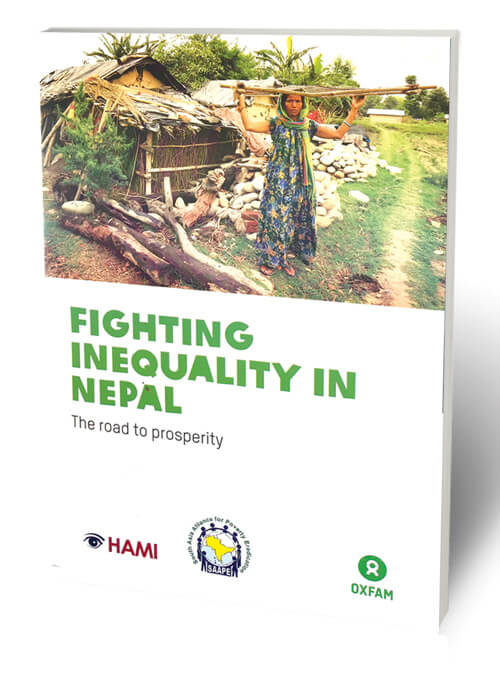
These and other statistics are part of Fighting Inequality in Nepal: The Road to Prosperity report released last month by Oxfam Nepal, Humanitarian Accountability Monitoring Initiative and South Asia Poverty Alleviation Forum.
Read also:
Mind the Gap, Editorial
Some are more equal than others, Anil Chitrakar
Removing poverty with jobs, David Seddon
It’s a rich man’s world, Ramesh Kumar
“The findings are very worrying, it is dangerous for the rich to keep getting richer and poor to remain poor,” says economist Dilli Raj Khanal.
To be sure, it is impossible to make everyone rich, and there will always be inequality in society because of individual capacity and ability. But an unnatural imbalance in wealth and income can lead to resentment, and be a precursor to social conflict.
Nepal’s Maoists waged an armed struggle from 1996-2006 arguing that the ‘objective conditions’ for revolution were ripe due to inequality, social injustice and discrimination. However, 13 years after the war ended, and with the former guerrillas having been elected to government multiple times, Nepal is more unequal than ever.
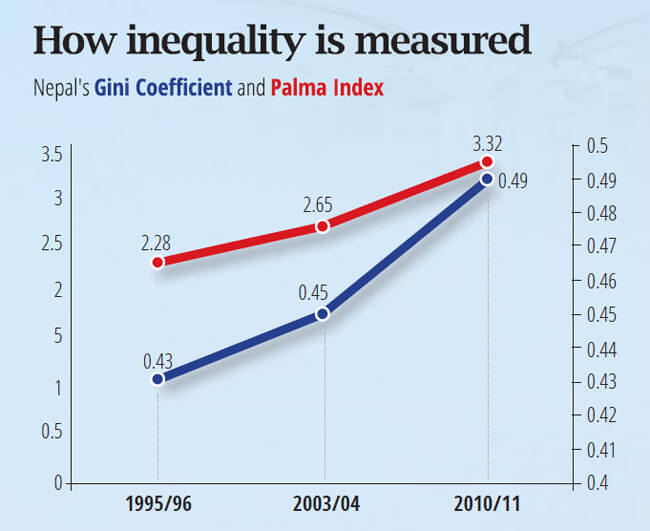
Nepal’s Gini index (see graph) was 0.43 in 1996 and increased steadily to 0.48 by 2011. Economic professor Kamal Raj Dhungel warns: “If Gini exceeds 0.5 it means a society is in an explosive state. We are nearing that tipping point.”
Indeed, as far back as 2001 the then South Asia head of the World Bank Meiko Nishimizu in an interview with this paper had described Kathmandu as ‘an island of prosperity in area of poverty’. The only change since then is that gap between rich and poor has got wider. The last livelihood survey in Nepal conducted in 2011 shows that the benefits of economic growth has flowed to a few already-privileged sections of society.
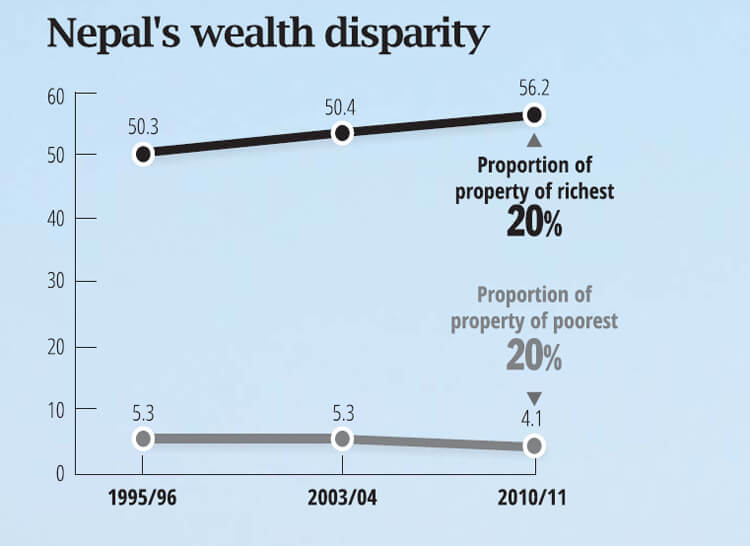
According to the report, only 5% of Nepalis saw their income increase in the period between 2003-2011. Urban dwellers enjoyed double the income of the rural population. The top 20% of Nepalis own 56% of the wealth, and the bottom 20% own only 4%. In fact, the gap in ownership of land and property is even starker than income disparity between rich and poor.
There are many reasons why Nepali society is becoming more and more unequal. Some of it is historical: since the feudal Rana period royal families and their courtiers divided up the spoils among themselves, leaving little for the others. This inequality is still reflected in the gap in ownership of land. Oxfam also blames the neoliberal economic policy of governments since the 1990s that weakened regulatory interventions to keep inequality in check.