
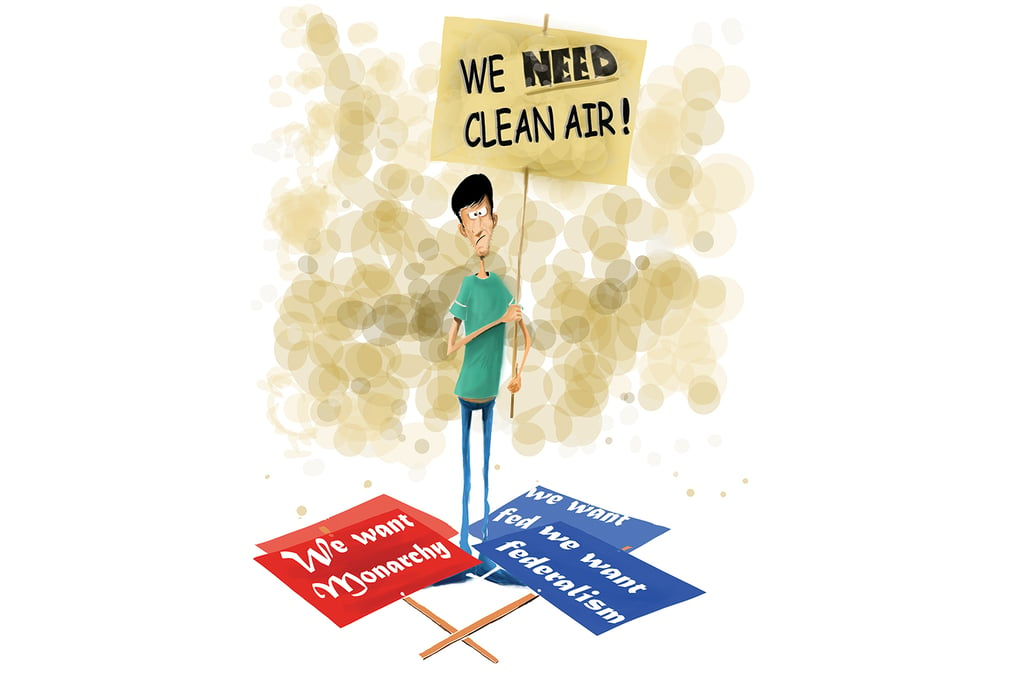
On Tuesday, leader of the monarchist RPP once again gathered on Kathmandu’s streets to deliver fiery speeches, but this time there was no arson and looting and no need for riot police to fire live rounds or tear gas.
RPP leaders demanded the release of their members including vice-president Rabindra Mishra and MP Dhawal Shamsher Rana were arrested during the violent 28 March protests at Tinkune which left two dead.
They denounced the current leadership of the main parties, demanding the restitution of Nepal as a Hindu kingdom. They also said the government was responsible for the fatalities on 28 March because it provoked its rally with a tear gas attack even before it started.
It has now been revealed that the police fired at least 100 live rounds from high powered assault rifles at the crowd. Twenty-one of the 120 injured received bullet wounds, and most of them were bystanders and people trying to reach home.
Tuesday protest on the Ring Road in Balkhu was much more subdued, and comparatively fewer RPP supporters showed up. The arson and vandalism in the previous protest appears to have cost some support for former king Gyanendra especially for the anointment of medical tycoon and bank defaulter Durga Prasai as ‘commander’ of the Tinkune rally.
Some monarchists acknowledge Gyanendra’s mistakes when was king 2001-2008, but say he has had a lot of time to reflect on his shortcomings and seems more disciplined and committed. His supporters have tried to build on nostalgia among some Nepalis for domestic stability and international respect that the monarchy commanded.
“Nepalis were promised better service delivery, opportunities for the underserved, as well as better, more honest use of state resources, but the people in leadership have not been able to deliver on their commitments,” says RPP leader Prakash Chandra Lohani. “The gap between their rhetoric and reality has widened, the people feel betrayed, and the respect Nepali people had previously had for them has changed to revulsion.”
Indeed, many commentators have warned the three main parties and their serial prime ministers who have ruled Nepal for much of the past 30 years should address rising public anger with them, and see the writing on the wall.