

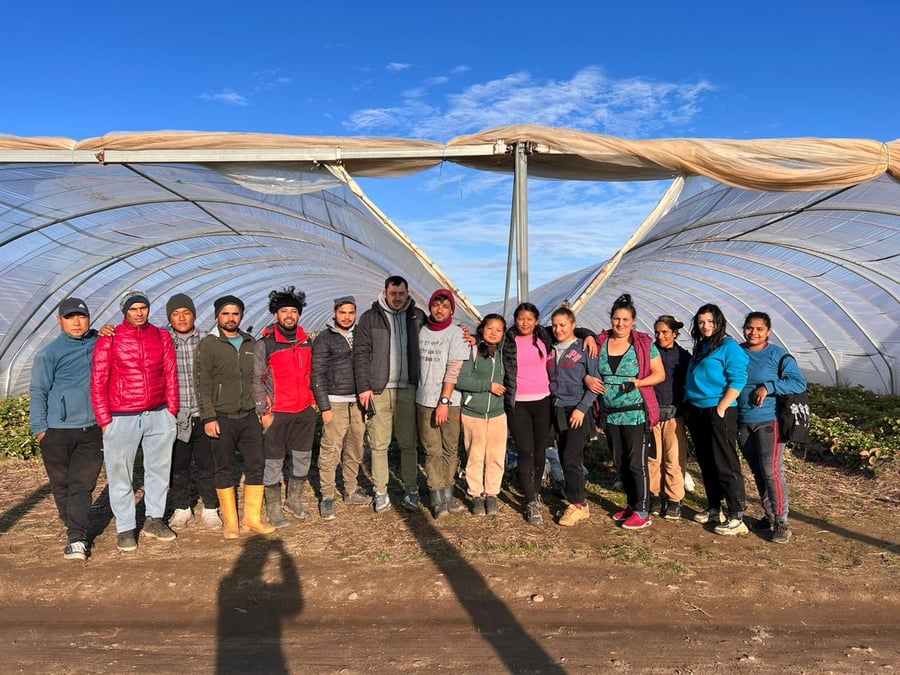
Manoj was an agricultural seasonal worker in the UK. He is back in Nepal, having saved £8,000 in just five months picking berries (pictured above).
An estimated 3,365 Nepalis worked under seasonal work visas in Britain in 2021-22, but last year that number dropped to zero. UK-based farm operators stopped hiring from Nepal after media exposed Nepali workers being charged exorbitant recruitment fees.
It is critical to expose stories about fraudulent recruitment and employment conditions that often trap workers. However, employers pulling out from the Nepal labour market in response is not a desired outcome -- especially not for migrant workers and their families.
It deprives them of income, since seasonal jobs offer wages that are many times higher than what Nepalis can earn in Nepal, or in the Gulf and Malaysia where workers also have to pay recruitment costs.
Such decisions also overlook the good actors in Nepal’s labour mobility industry. As elsewhere, good and bad entities coexist in Nepal's recruitment sector, a distinction that needs to be made before the whole labour market is tarred with the same brush.
Nepal’s recruitment industry actually has innovative home-grown responsible practices that offer
relevant for the industry globally.But why should employers care?
Closing the door to Nepali workers does not save scheme operators from similar reputation risks and penalties like getting their licenses revoked, because workers elsewhere are also vulnerable to abuses including high recruitment fees.
Media exposés showed similar abuses of workers from Indonesia and Bangladesh. Research by Focus on Labor Exploitation (FLEX), showed 72% of the 396 workers interviewed including from Kyrgyzstan, Ukraine, Belarus, Moldova and Uzbekistan also had to borrow money to pay for the costs of coming to the UK.
A better solution for hiring companies would be to instead be more selective about the recruiters they partner with regardless of the migrant origin country. Nepal has examples of good recruitment actors and innovative practices which have not got global attention, and which are worth showcasing.
Ensuring responsible recruitment in practice requires
that go above and beyond those prescribed in documents, but are products of trial-and-error and multiple iterations to win the confidence of aspirants. Recruiters travel to villages to bypass fraudulent middlemen.They conduct one-on-one counseling and investigation at various stages of the recruitment process to ensure that workers have, in fact, not paid any fees. The goal of these safeguards is to collectively help workers understand that refusing to pay for jobs will not cost them their job.
It is not surprising that seasonal workers in the UK from Nepal, Indonesia or Bangladesh paid high fees for jobs in an attractive destination which makes it easier for unauthorised intermediaries to manipulate and cheat them.
Employers also play a critical role in influencing the behaviour of recruiters. Due diligence and monitoring before and during the recruitment process, and a credible threat to recruiters of losing future business in case of non-compliance are part of a responsible recruitment arrangement. Then there are concerns about employment conditions in some of the farms, including worker safety, accommodation, pay and unrealistic daily targets.

Good migration can be transformational when it is transparent and responsible with the right players involved. Research has shown the potential gains of reducing migration barriers are in the trillions of dollars.
Evaluation of New Zealand’s Recognized Seasonal Employer (RSE) has shown how migrants from the Pacific Islands benefited from higher incomes, asset accumulation, and improved children’s school attendance after working in New Zealand’s horticulture and viticulture industries.