
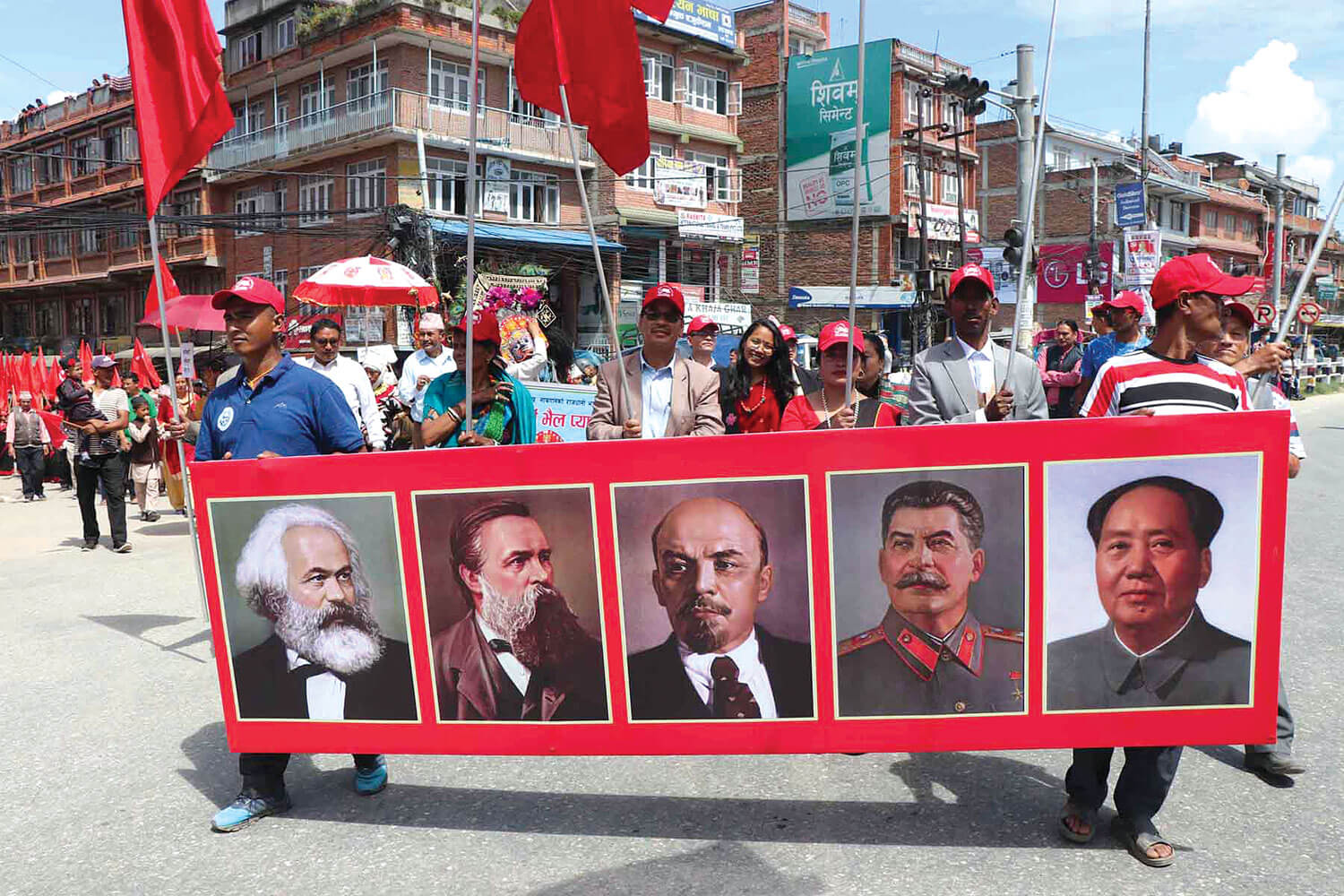
Throughout the state visit to Nepal by Chinese President Xi Jinping last weekend, Marxism-Leninism-Maoism ideology was scarcely mentioned — even though both countries are governed by monolithic Communist parties.
The irony could have been lost on supporters of the Nepal Workers Peasants Party (above) that has traditionally governed Bhaktapur, who carried portraits of Marx, Engels, Lenin, Stalin and Mao during a rally to mark the party’s convention just before Dasain.
While Nepal’s politics still takes its inspiration from philosophers and leaders from the last century, the optics of the Xi visit was all geopolitical symbolism. Proposals about connectivity, the Belt and Road Initiative, trade and infrastructure — just about everything was mooted except the ideological underpinnings of the proposals.
President Xi timed his state visit to Nepal after an informal summit with Indian PM Narendra Modi in southern India. His message was that India is too important a trading partner for China to jeopardise those ties over Nepal. Chinese leaders since Mao have advised Nepal’s past kings, prime ministers and party leaders not to antagonise New Delhi.