
With two-month to go for the 2022 FIFA World Cup in Qatar, human rights groups have urged FIFA’s sponsors to compensate workers involved in building stadiums and other infrastructure.
From 20 November, football fans across the globe will be glued to their tv screens but few viewers will be aware of the human cost to migrant workers mainly from South Asia.
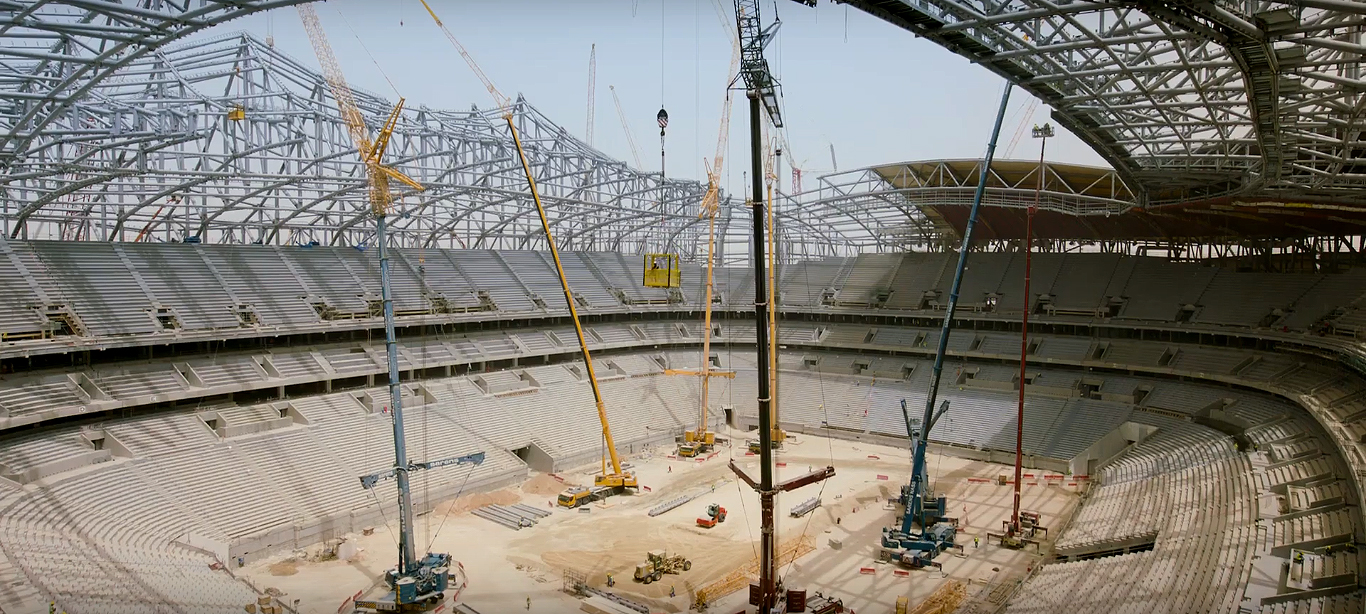
The eight stadiums where the games will be held are built with the blood, sweat and tears of tens of thousands of migrant workers, including from Nepal. Many migrants have suffered injuries or lost lives to unexplained causes, and many more have been victims of wage theft and illegal recruitment fees.
On 20 September, Human Rights Watch, Amnesty International and FairSquare called on all of FIFA’s corporate partners and sponsors of the World Cup to press the football association and the Qatari government to compensate migrant workers and their families who suffered while preparing for the tournament.
Read also: #PayUpFIFA campaign launched, Nepali Times
This call, uniting players, fans, workers and activists, comes as a new global opinion poll shows that 66% of those surveyed, and 72% of those likely to watch at least one World Cup match, said that corporate partners and sponsors should publicly call on FIFA to compensate workers.
The poll was commissioned by Amnesty International, carried out by YouGov, and surveyed 17,477 adults in 15 countries including Argentina, Germany, Kenya, Mexico, Morocco, UK and the USA.
Human Rights Watch, Amnesty International and FairSquare wrote to FIFA's 14 corporate partners and World Cup Sponsors in July, urging them to call on the football body to compensate workers whose wages were stolen, who were injured, and to families of those who died building stadiums and hotels, roads and the metro rail necessary for the world’s largest sporting event.
Four partners -- ABInBev/Budweiser, Adidas, Coca-Cola and McDonald’s -- have stated their support for financial compensation and to explore how best to build upon the progress being made in Qatar to further expand access to effective remedies for migrant workers.
Read also: The workers’ football, Upasana Khadka
The other ten, including Visa, Hyundai-Kia and Qatar Airways, have offered no public support and have not responded to written requests to discuss tournament-related abuses, despite their policies to respect human rights and environmental, social, and governance standards in their operations and business relationships, says the statement.
“Brands buy rights to sponsor the World Cup because they want to be associated with joy, fair competition and spectacular human achievement on the playing field — not rampant wage theft and the deaths of workers who made the World Cup possible,” says Minky Worden, director of global initiatives at Human Rights Watch (HRW).
But with only two months until the tournament, she adds sponsors should use their considerable leverage to press FIFA and Qatari authorities to fulfill their human rights responsibilities. FIFA has not yet committed to remedy abuses maintaining that it is still considering the proposal.