On a recent morning students at Darbar High School in the centre of Kathmandu were gathering for morning assembly. Excited chatter rose above the din of traffic outside the school gate.
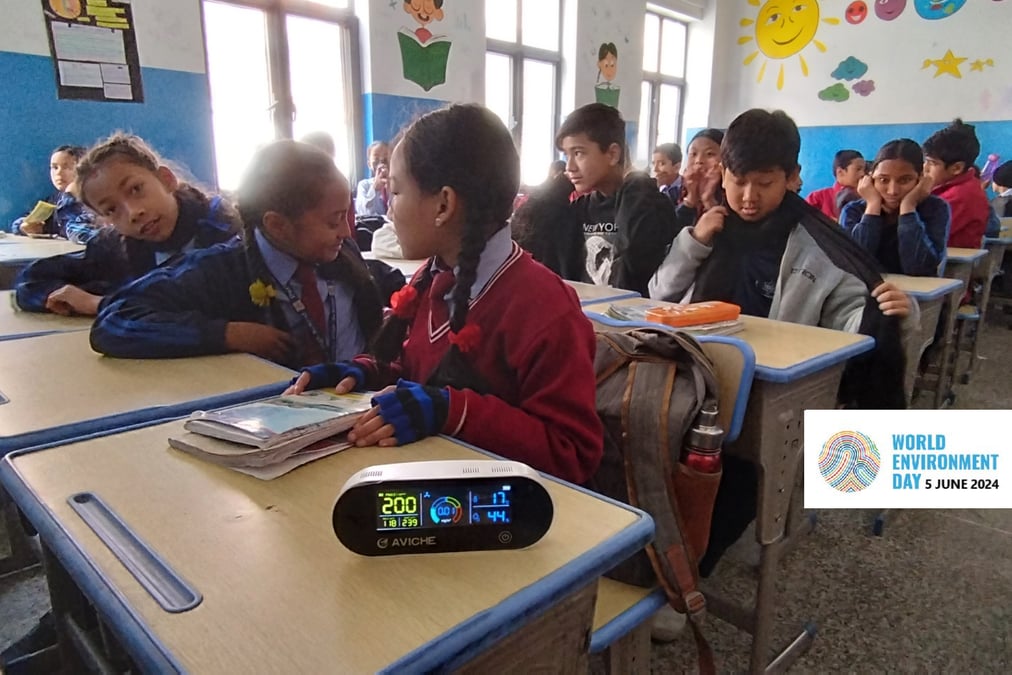
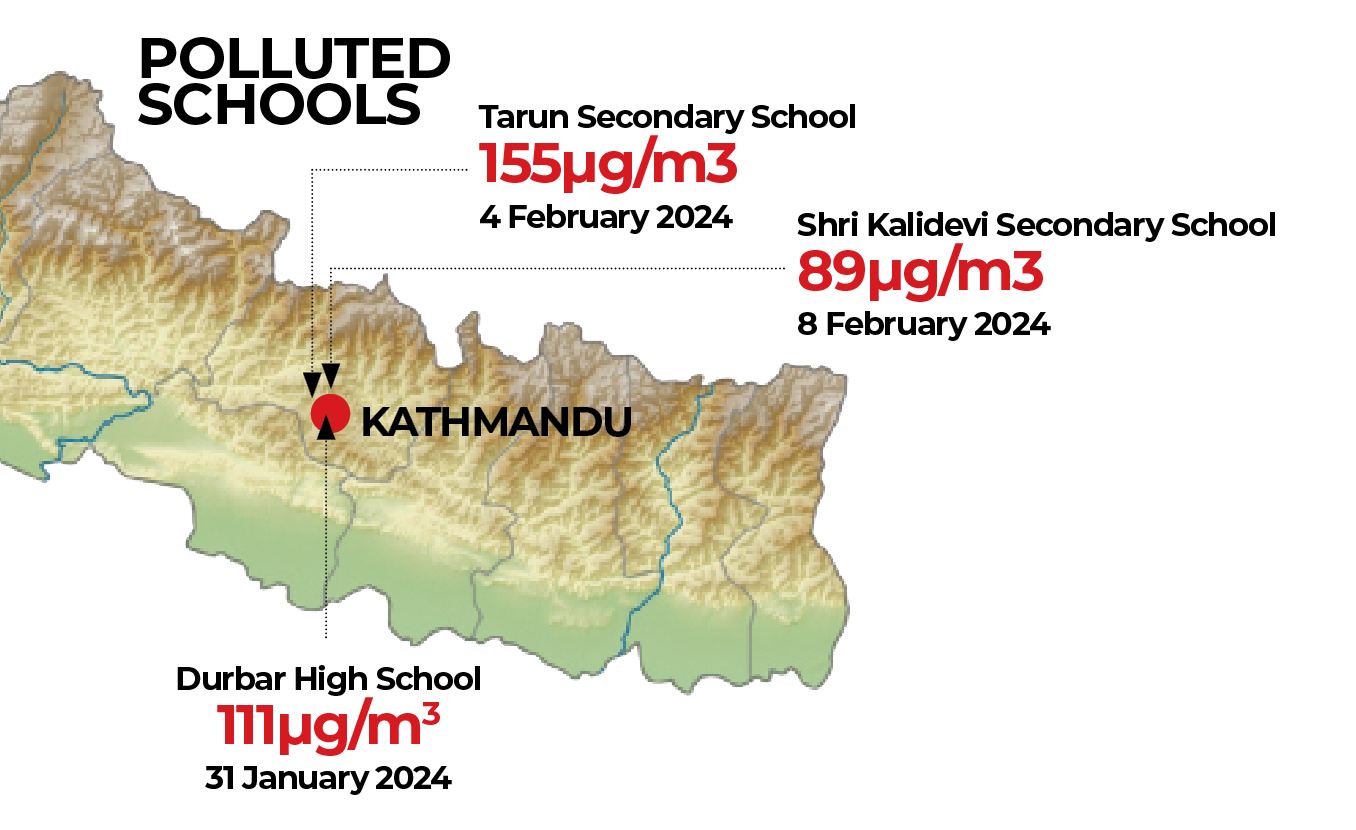
Nearby, pollution monitoring equipment found the concentration of suspended particulate matter smaller than 2.5 microns (PM2.5) in the school that morning at 211µg/m3. Inside classrooms, the monitor read 126µg/m3 on average all day.
“I get at least three pupils every day with lung problems, it is worse in winter,” says Bhavna Ojha Joshi, a nurse at the school infirmary.
Nepal’s National Ambient Air Quality Standard considers PM2.5 concentration of 40µg/m3 in 24 hours as ‘healthy’. But the World Health Organization says it must not exceed 15µg/m3 , and says anything over this is unsafe. At the adjacent Ratna Park measuring station, the Air Quality Index (AQI) that morning was 179µg/m3 .
Darbar High School is 123 years old, and collapsed in the 2015 earthquake. It has been rebuilt and is located at the busiest intersection in the city centre. All day long, students here breathe poisonous air that affects their health, learning ability, and physical and mental growth.
Six km away at the northwest corner of the Ring Road, students are also gathering for morning assembly at the Shree Kali Devi Secondary School. The PM2.5 concentration there measured 89µg/m3, and it dropped to 35µg/m3 during the course of the day since vehicular emission is blown away by afternoon breeze from the west.
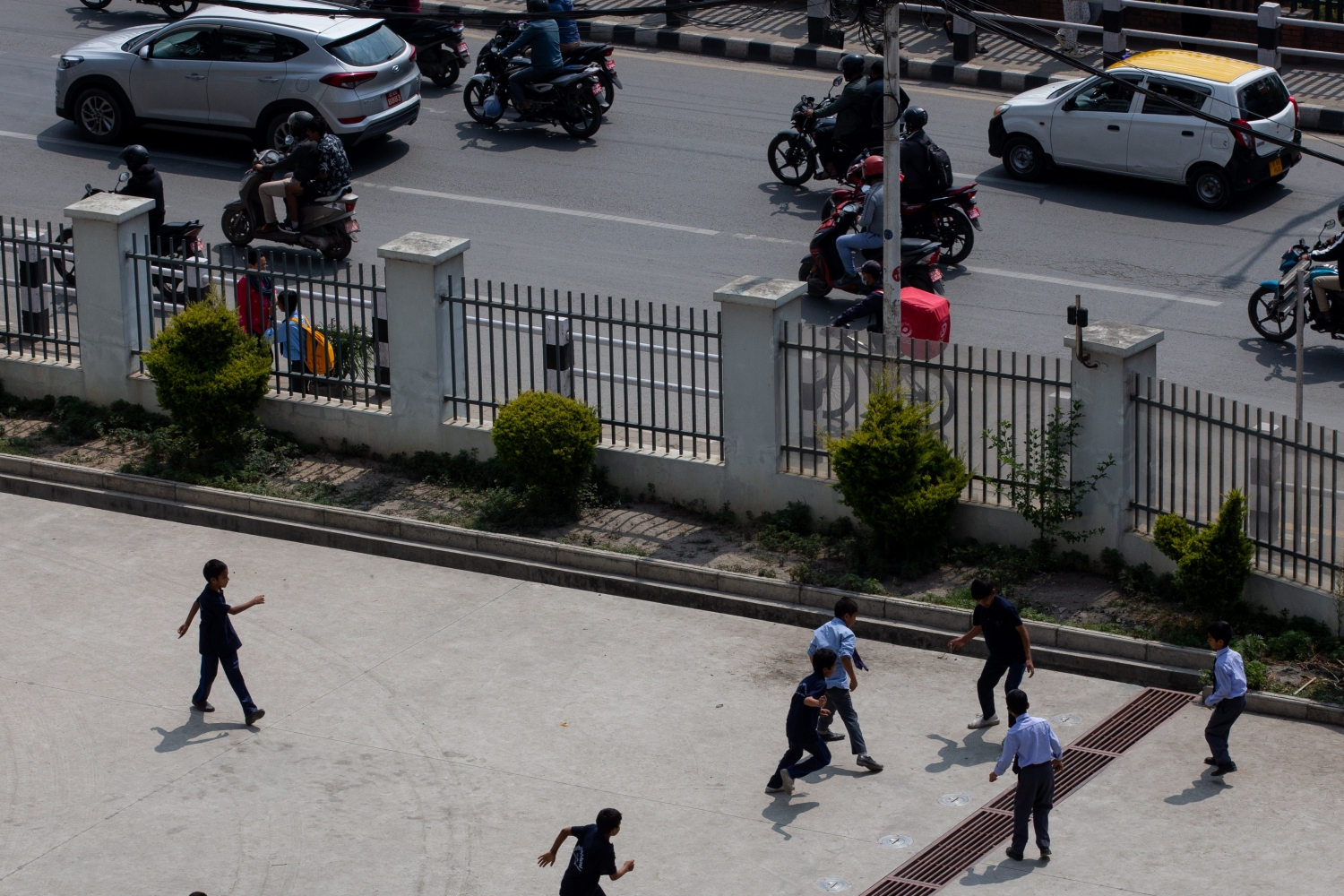
It is not just diesel and petrol cars, smoke from wildfires burning out of control all over Nepal made Kathmandu the most polluted city in the world in the IQAir list for several days in a row in April. Kathmandu ranked 11th in a list of 114 capital cities with the worst air.
Diesel exhaust, smoke and dust are visible, but suspended particles smaller than 2.5 microns are most dangerous since they can cross the blood-air barrier in the lungs.
“The particles enter the bloodstream and affect vital organs,” says infectious disease specialist Anup Subedee. Toxic air is harmful to all, but especially for children and the elderly.
Because their lungs, brain, organs, and immune systems are still developing, children have weaker immune systems and are more affected by air pollutants.
Moreover, while people over 18 breathe up to 20 times a minute, younger ones breathe 30 times, absorbing more particles. Pollutants also cause allergic reactions in the respiratory tract, which change the structure of their airways, causing chronic asthma.
“Continuous exposure to toxic air in children is not limited to colds, headaches and shortness of breath, but can extend to chronic heart and lung disease as well as cancer,” warns paediatrician Ganesh Kumar Rai, former director of Kanti Children’s Hospital.
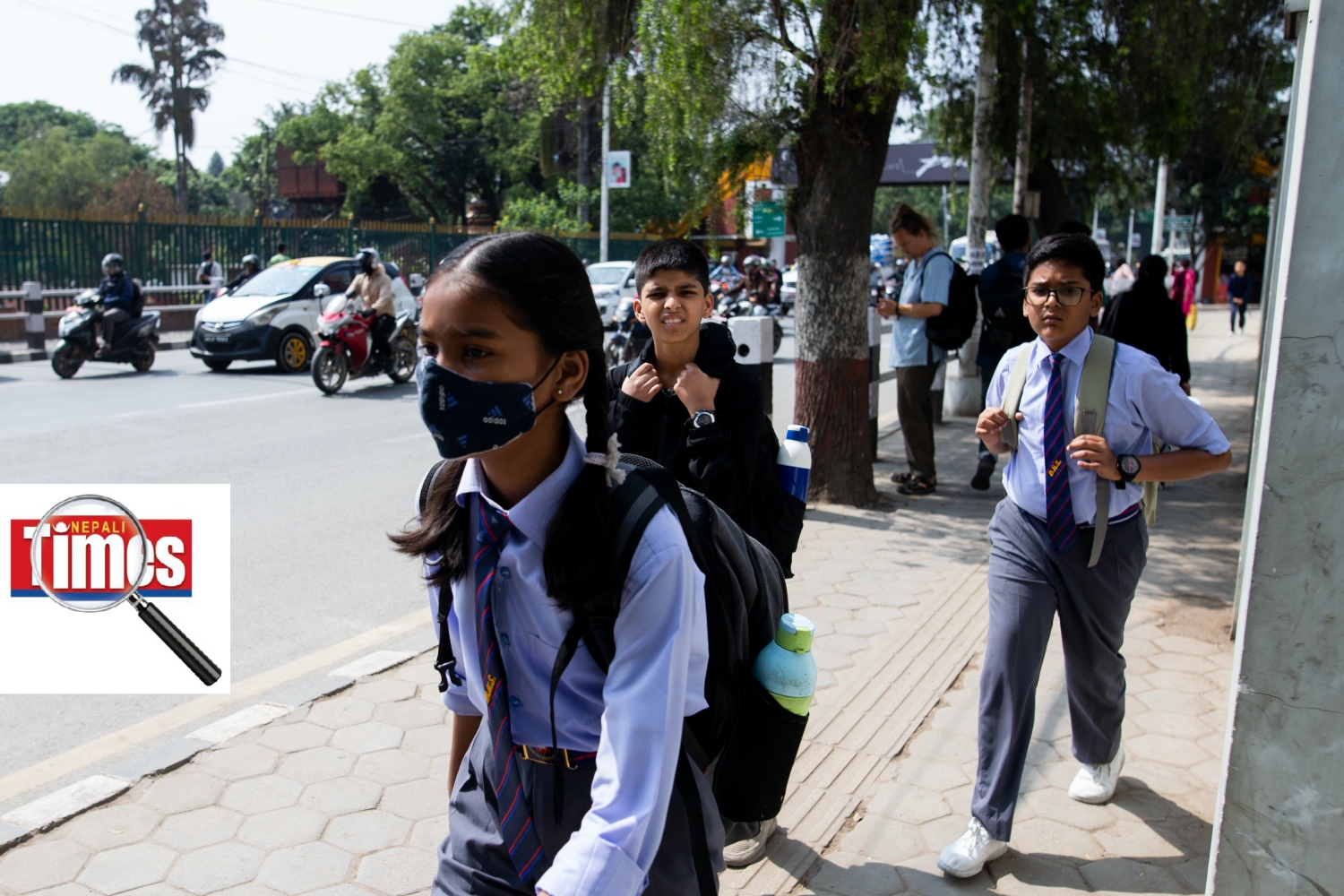
At Tarun Secondary School, 500m outside Balaju on Kathmandu’s Ring Road, the PM2.5 concentration was 155µg/m3 in the morning as fifth grader Pramisa Bardeva was walking to school along a dusty road. She has a chronic cough, and wears a flimsy mask.
“My daughter’s studies have suffered because she is sick so often,” says Pramisa’s mother Manju. “They say she is sick because of the dirty air, and the hospital bills are piling up.”
There are some 650,000 school-going children in Kathmandu Valley, of which 362,000 are students below Grade Five. Kathmandu has 1.6 million vehicles of which 80% are motorcycles. Most of these ply within the Ring Road, which means nearly 200,000 of the youngest students are exposed to the worst pollution all day at school. In 2023, the Ratna Park monitoring station recorded that only 8% of days are ‘clean air’ days, mostly during the monsoon.
Environmental scientist Uttam Babu Shrestha returned to Nepal with his family from Australia four years ago. His son, now seven, has chronic asthma.
“Although we worried about his health, his respiratory issues worsened after we came back due to the pollution here,” says Shrestha. His son has to regularly use an inhaler. Paediatricians said that a quarter of the children they see have asthma, whereas 20 years ago the most common ailments used to be diarrhea or typhoid.