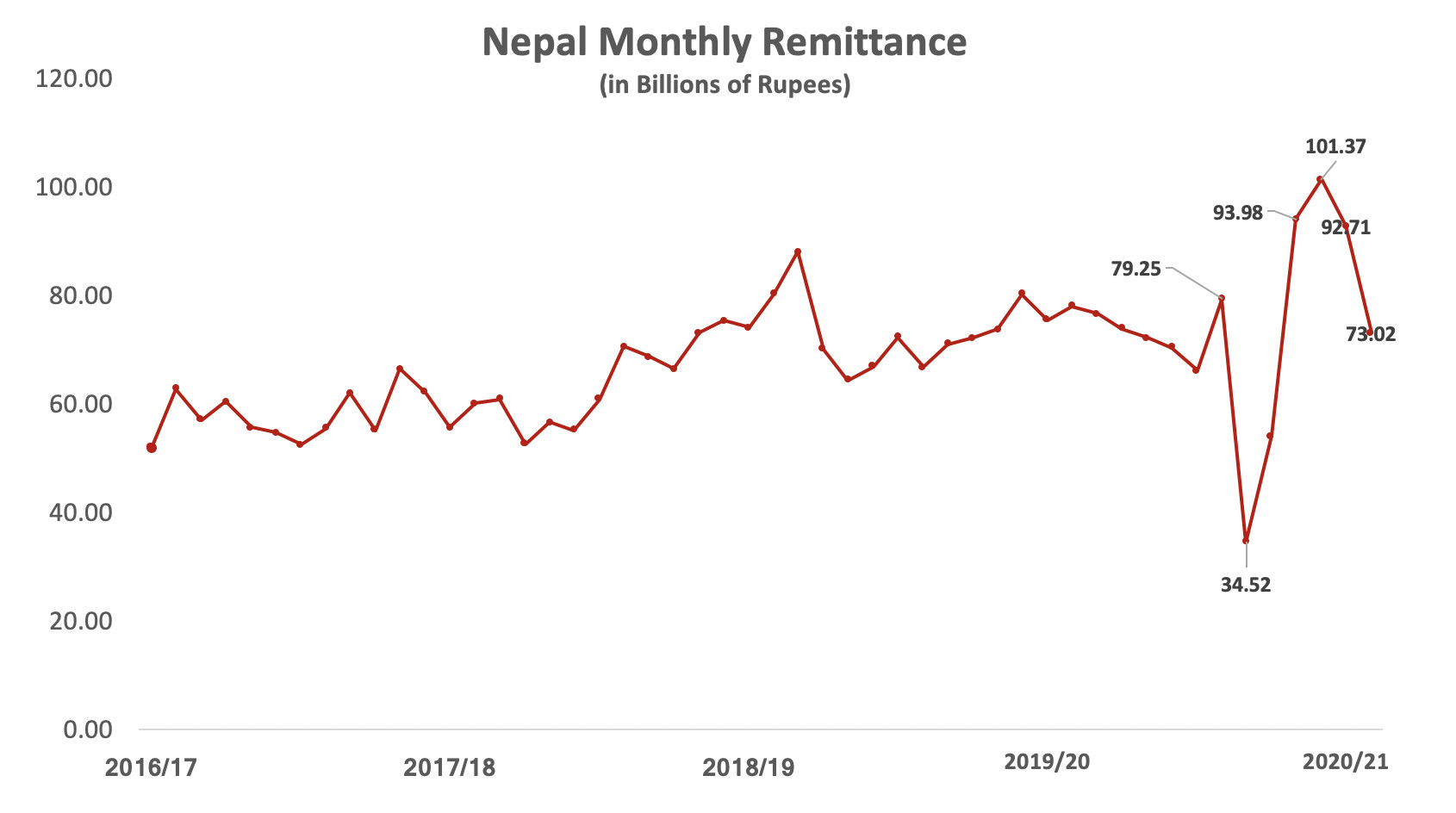
Contrary to most predictions that remittances Nepali workers send home would fall with the Covid-19 crisis, the inflow has actually risen compared to last year.
Figures from the Central Bank for mid-July to mid-September show that Nepalis overseas sent back Rs165.73 billion, an 8.1% increase compared to the same two months of the previous fiscal year. Even in US dollar terms, this was $1.39 billion – a 2.6% growth.
This defied the prediction of huge drops in remittances due to the pandemic by Nepal’s Central Bureau of Statistics (18%), Asian Development Bank (28.7%) and the World Bank (14%).
In the last fiscal year, remittance inflows actually dropped to Rs 875 billion from the preceding year. And this year, economic slowdown in countries where Nepalis work had led many to presume that their earnings would drop.
Migration experts attribute the growth this year to many factors. Many migrant workers in essential sectors have continued to work and earn right through the pandemic, while others have been drawing on their savings to remit to their families, especially during festivals back home.
As of the third week of October, 111,549 overseas migrants have returned via air, and an estimated 700,000 Nepalis returned from India, carrying their savings with them. Although many workers did go back to India because of the lack of jobs in Nepal, and the worsening Covid-19 situation here.
Other reasons for the growth in remittances are the channeling of informal transfers to formal transfers due to travel disruptions, and the devalued Nepali rupees against the US dollar. While the post-festival period may give a more real picture of the trend in remittances, the persistence of the remittance has provided respite to Nepali families across the country.
World Bank has already revised its April estimates in its Migration and Development brief released this week. Unlike the earlier outlook that indicated a sharp decline in 2020 followed by a modest recovery in 2021, the forecast for remittances now indicates a more gradual but prolonged decline continuing into 2021.
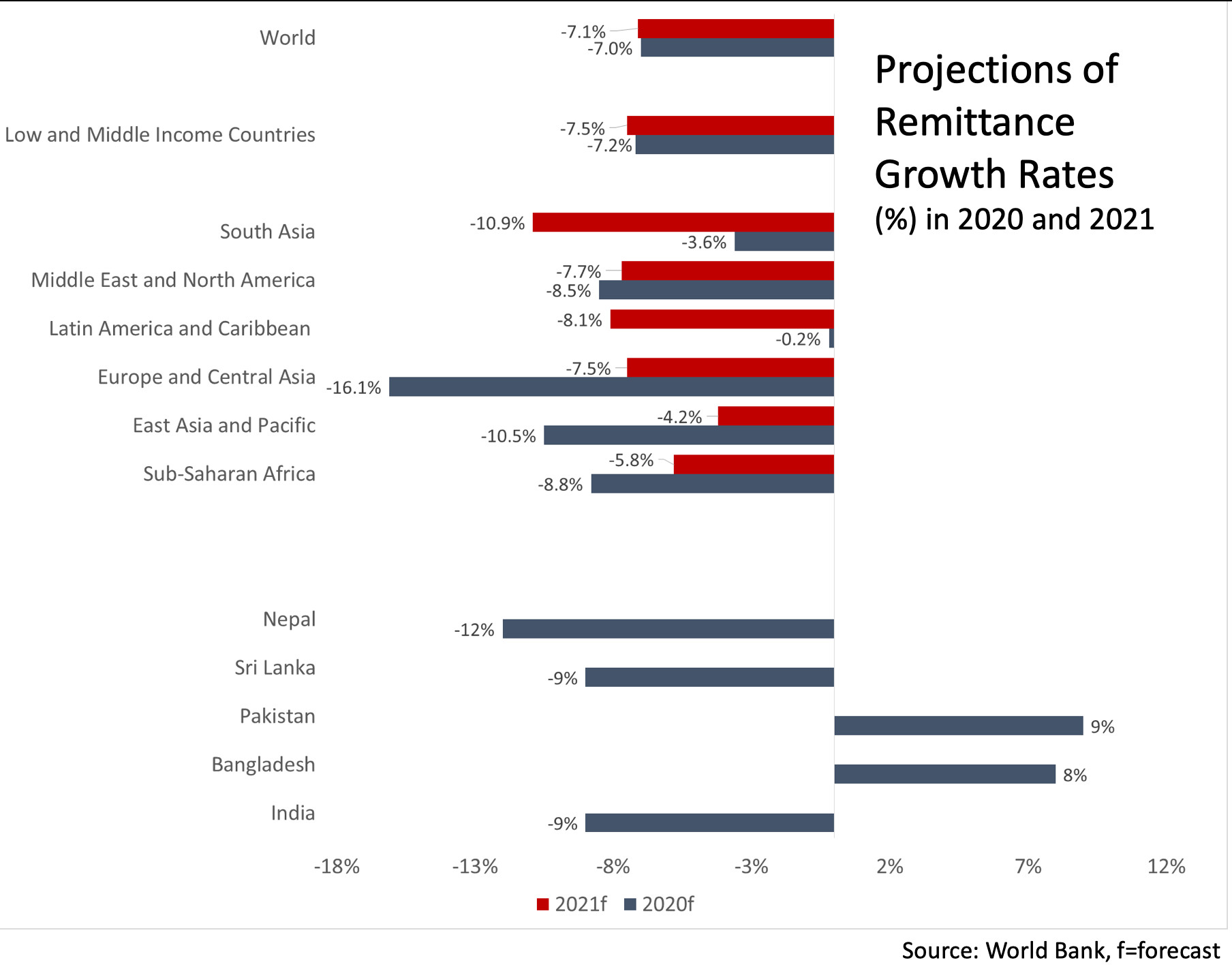
The April outlook projected remittances to low and middle-income countries (LMICs) decline by 20% to $445 billion in 2020, whereas the revised estimates project remittances to fall by 7.2% to $508 billion in 2020 and 7.5% to $470 billion in 2021.
The decline is attributed to weak economic growth that will dampen employment and earning prospects for migrants, weak oil price, and exchange rates of the currencies of remittance‐source countries against the US dollar.