The COVID-19 pandemic has exposed the fragility of Nepal’s economy, especially in falling agricultural production and the reliance on migrant workers sending home remittances.
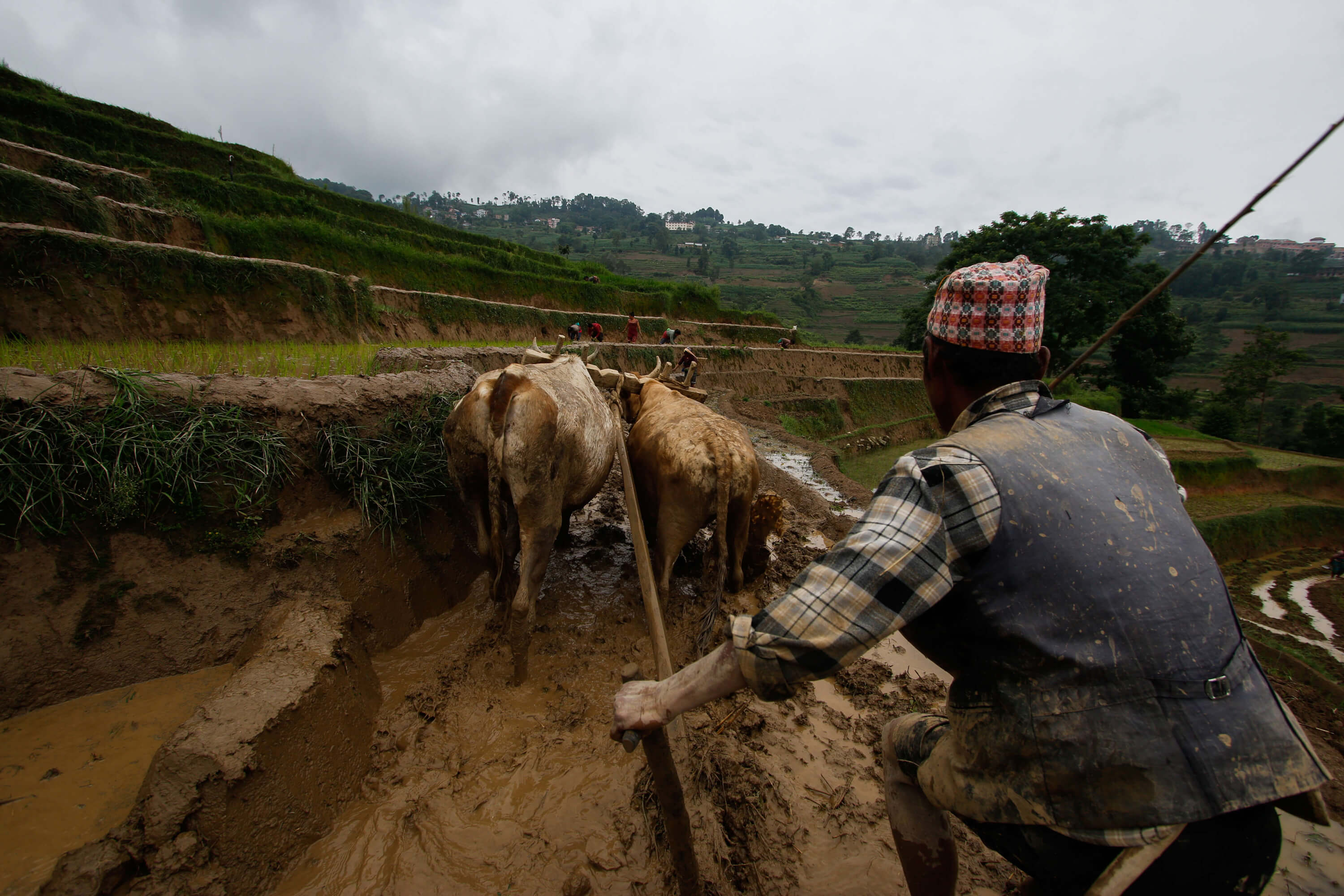
The pandemic has exposed the links between farming and migration, as well as food insecurity and remittances, as nothing before. Low productivity, lack of market support and the reluctance of educated youth to work the land drove them to seek jobs abroad, but the COVID-19 crisis has brought many of them home.
The pandemic therefore also provides an opportunity to engineer changes in the agricultural sector while re-evaluating the country’s dependence on migrant labour.
Crises often lead to a positive shift from a stagnant status-quo, and a chance to break away from factors that resisted change in the past. As the socio-political standing of those who benefit from the status-quo is weakened by the current disruption, the impetus for change becomes stronger. The COVID-19 pandemic could be just such a watershed moment.
Over the past decades, the contribution of agriculture to Nepal’s GDP has gradually declined while its migration component has increased. There has been a rapid increase in the import of basic food commodities. Over the past ten years alone, the import of vegetables from India has seen an almost 8-fold increase.
This is largely due to the dismal state of infrastructure. Despite improvements in roads access to market centres, finance still remains a barrier for many farmers, affecting productivity.
Furthermore, a shortage of cold storage facilities means that farmers have to sell their harvest quickly - often at a low price – because of the risk of spoilage. This also leads to a deficit of seasonal food crops beyond the post-harvest months, a deficit that is readily filled by produce from across the border.
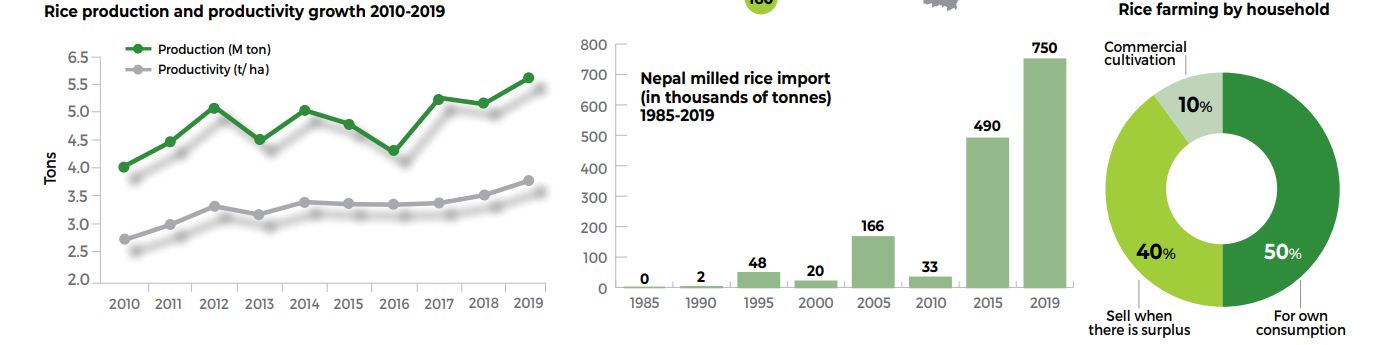
Nothing underlines Nepal’s faltering agricultural production as the gradual increase in the import of rice from abroad. Rice forms a staple of Nepalis, yet in 2019 the country Nepal imported milled rice worth $309 million. A recent report by the Asian Development Bank (ADB) on food security amid the pandemic says this dependence on external supply chains for a dietary staple makes Nepal vulnerable to food insecurity from trade disruptions.
And while food imports increase, the income to pay for them is in decline due to the drop in earnings for Nepali workers abroad caused by the global recession, and the return of many migrant workers.
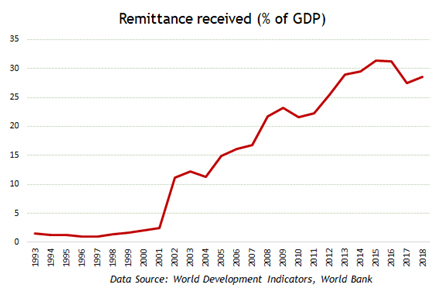
In 2018, remittance contributed to 28.6% of Nepal’s total GDP, a figure smaller than only a handful of other nations in the world. This extreme dependence on remittance inflow makes Nepal vulnerable to external shocks, such as the COVID-19 pandemic. According to a study by the Foreign Employment Board in early May, 127,000 migrant workers were expected to return to Nepal immediately, with another 407,000 to follow in the coming months.