

Just as outmigration of Nepali youth is a safety valve that lets the government off the hook to find jobs for them at home and the money they send home is the country’s economic lifeline, this year’s elections served as a political safety valve.
Economic frustration can easily turn into political unrest, and the election of various independent, excluded and previously outlawed individuals has helped release some socio-political tension.
There were many ups and downs with implementation of the 2015 Constitution, but it did channel accumulated grievances through political representation for those left out in the past.
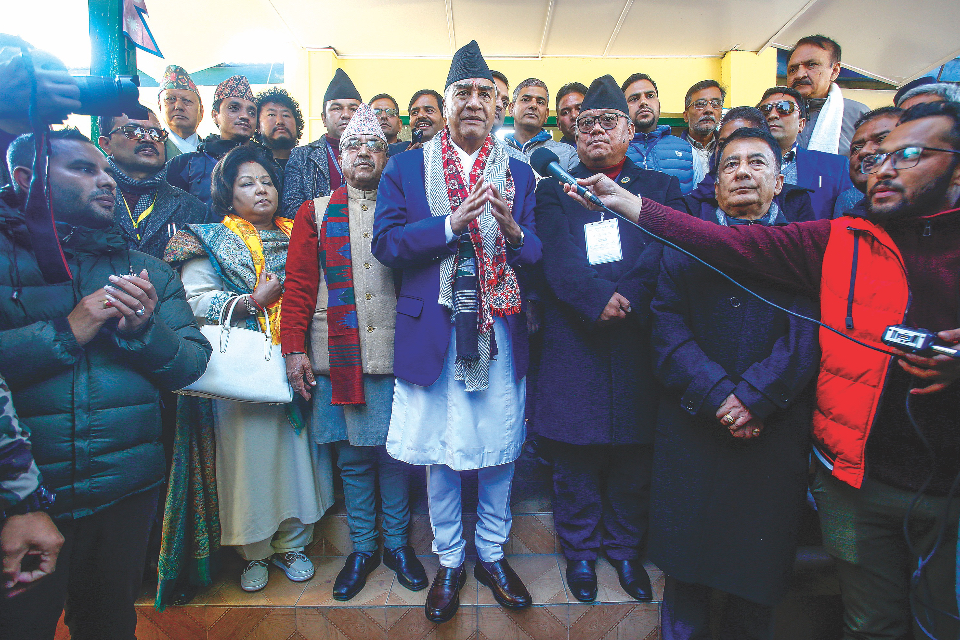
To be sure, the established parties still hold sway. Proof of this was the election of Sher Bahadur Deuba as leader of the Nepali Congress (NC) parliamentary party, which paves the way for his sixth term as prime minister.
But the elections in 2022 also allowed Nepali voters to vent their fury, and bring in the likes of Balen Shah in Kathmandu and Rabi Lamichhane in Chitwan.
Read also: Government of the leaders, for the leaders, by the leaders, Shristi Karki
The polls have even provided new political space for former Madhes separatist C K Raut, and for the indigenous Tharu community of the Tarai to carve a separate political identity for their Janamat Party.
Just the presence of these personalities and parties will not be enough to bring meaningful change, but their representation is the first step in righting past wrongs.
The Constitution may be flawed and incomplete, but it has recognised Nepal’s ethno-cultural diversity to a limited extent. There is a difference between diversity and division. Nepal’s ethnic, linguistic, and religious mosaic is in fact our nation’s social capital, our cultural wealth.
The role of elected representatives now is not to try to meld, but manage this medley. Nepalis are now politically astute, and cannot be pushed around. The goal of the new Parliament must be to broaden this awareness so it translates into inclusive and equitable progress.