Ten days after Nepal held parliamentary and provincial polls, the last of the election results are trickling in.
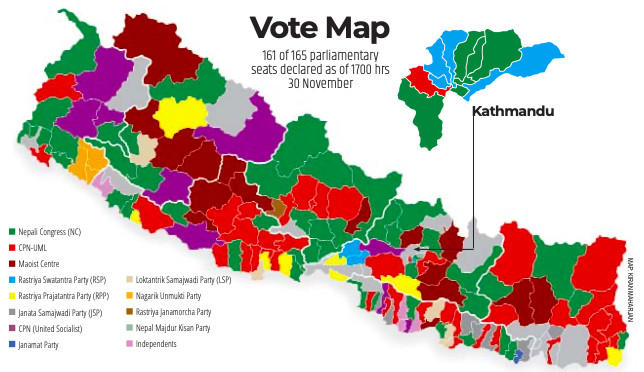
With ballots in 161 out of 165 constituencies now counted, the NC leads in first past the post (FPTP) with 54 seats, the UML is second with 44, the Maoist Centre is a distant third with 17 seats, followed by Madhav Kumar Nepal’s CPN (Unified Socialists) who have won 10 seats.
Meanwhile, the monarchist Rastriya Prajatantra Party (RPP), which won only 1 seat in 2017, has emerged with 7 wins this time. The Madhes-based Janata Samajwadi Party (JSP) — which formed an electoral alliance with the UML at the last minute — has won seven seats overall, while the LSP — which sided with the coalition — has four seats.
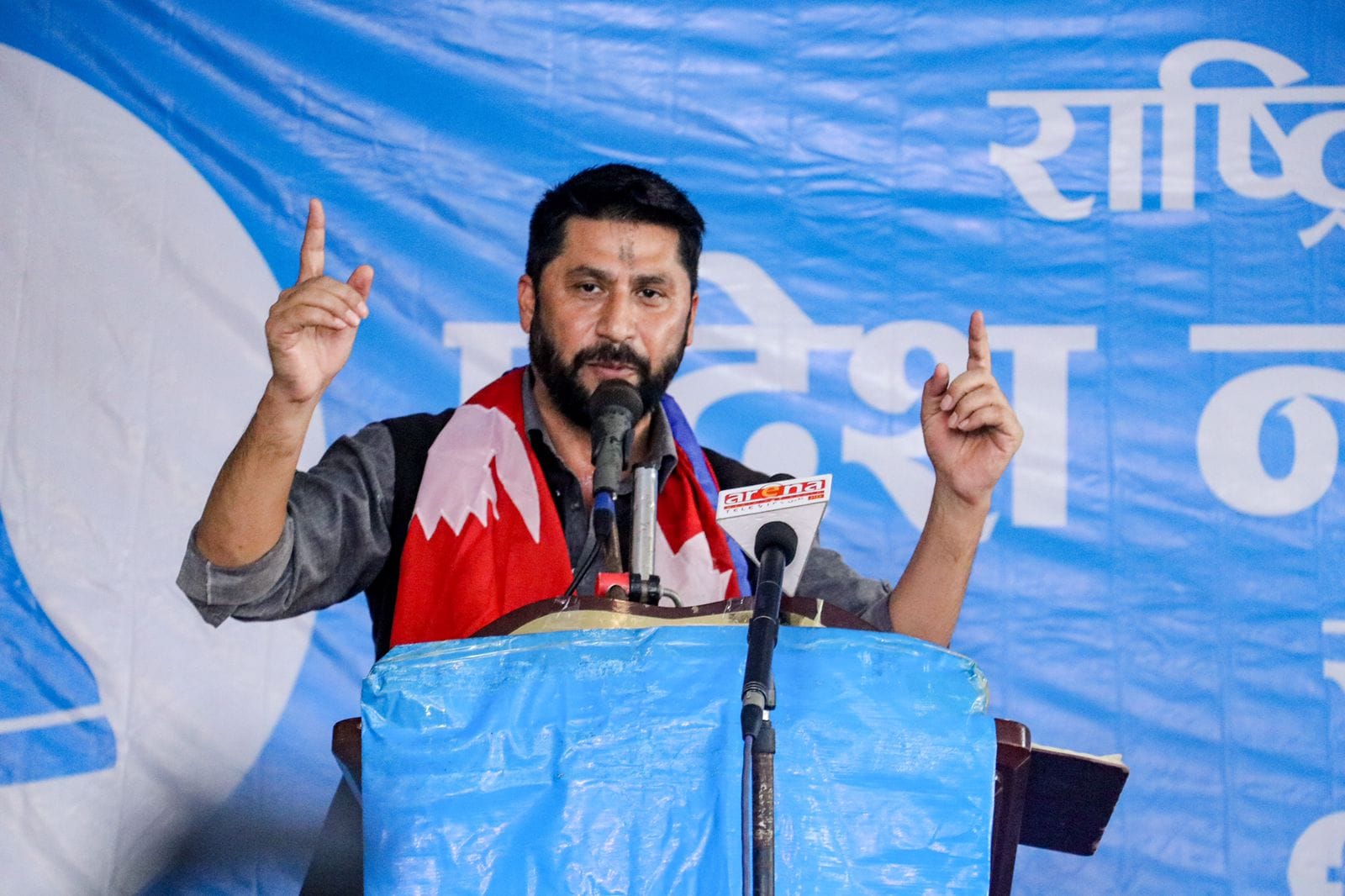
Rabi Lamichhane’s new Rastriya Swatantra Party (RSP) has emerged with seven young MPs, while five independents have also bagged direct seats. Coalition partner Rastriya Janamorcha, former Madhes separatist CK Raut’s Janamat Party, and Nepal Majdur Kisan Party have obtained one seat each. Nagarik Unmukti has won three seats in the western Tarai.
Read also: The Nepali people have spoken, Sonia Awale
Nepal’s two biggest political collectives, the five-party coalition led by the NC and opposition UML both fall short of the 138 out of 275 parliamentary seats they need for an outright majority.
While NC leads in the direct elections, the opposition UML is ahead in the proportional representation (PR) ballot count with more than 2.7 million of the over 10 million votes counted. The NC is in second place with more than 2.5 million popular votes, followed by the Maoists with over 1.1million.
Although these numbers may look like the big parties are still in control, the electorate has sent a clear message by elevating the independent RSP as a national party in Parliament with more than 1 million votes. With its 7 change-minded MPs, the RSP will have clout in the federal Parliament — a remarkable feat considering the party was only formed six months ago.
Meanwhile, the JSP has little less than a million PR votes, and CK Raut’s Janamat Party has obtained more than 360,000.
Madhav Nepal’s Unified Socialists which split from K P Oli’s UML, has fared badly in the PR count, and is struggling to stay relevant with under 3% of the threshold required to have PR members in the House.
It is clear from the results so far that neither the coalition, nor the UML-RPP-JSP alliance will have enough seats to form a majority on their own. This means they will have to explore partnerships with multiple fringe parties, making politics even more unstable. At the same time, individual parties also have to deal with internal power struggles between prime ministerial aspirants.
Read also: Nepal poll results signal upset, Sonia Awale
The Excluded
There were 225 women candidates standing for FPTP seats to the federal Parliament. Only 25 of them got tickets by Nepal’s mainstream parties: 11 from UML, seven from the Maoist Centre, five from NC, and only one each from the Rastriya Janamorcha and the Unified Socialists.
And with results in 161 out of 165 constituencies now in, only nine women have been directly elected to Parliament — four from the UML, two from the independent RSP, and one each from NC, Maoist Center, and Nagarik Unmukti. Young lawyer Sobita Gautam and doctor Toshima Karki were elected from Kathmandu-2 and Lalitpur-3 — both young RSP candidates who defeated established Maoist women Onsari Gharti Magar and Pampha Bhusal.
In 2017, 90 women were voted to Parliament: six women through direct ballots and 84 by popular votes. So far, Bidya Bhattarai is the only female leader to be reelected even though four out of six women elected under the FPTP in 2017 were given tickets by their parties. Padma Kumari Aryal of the UML ran from Syangja-2, where vote counting is stalled.