
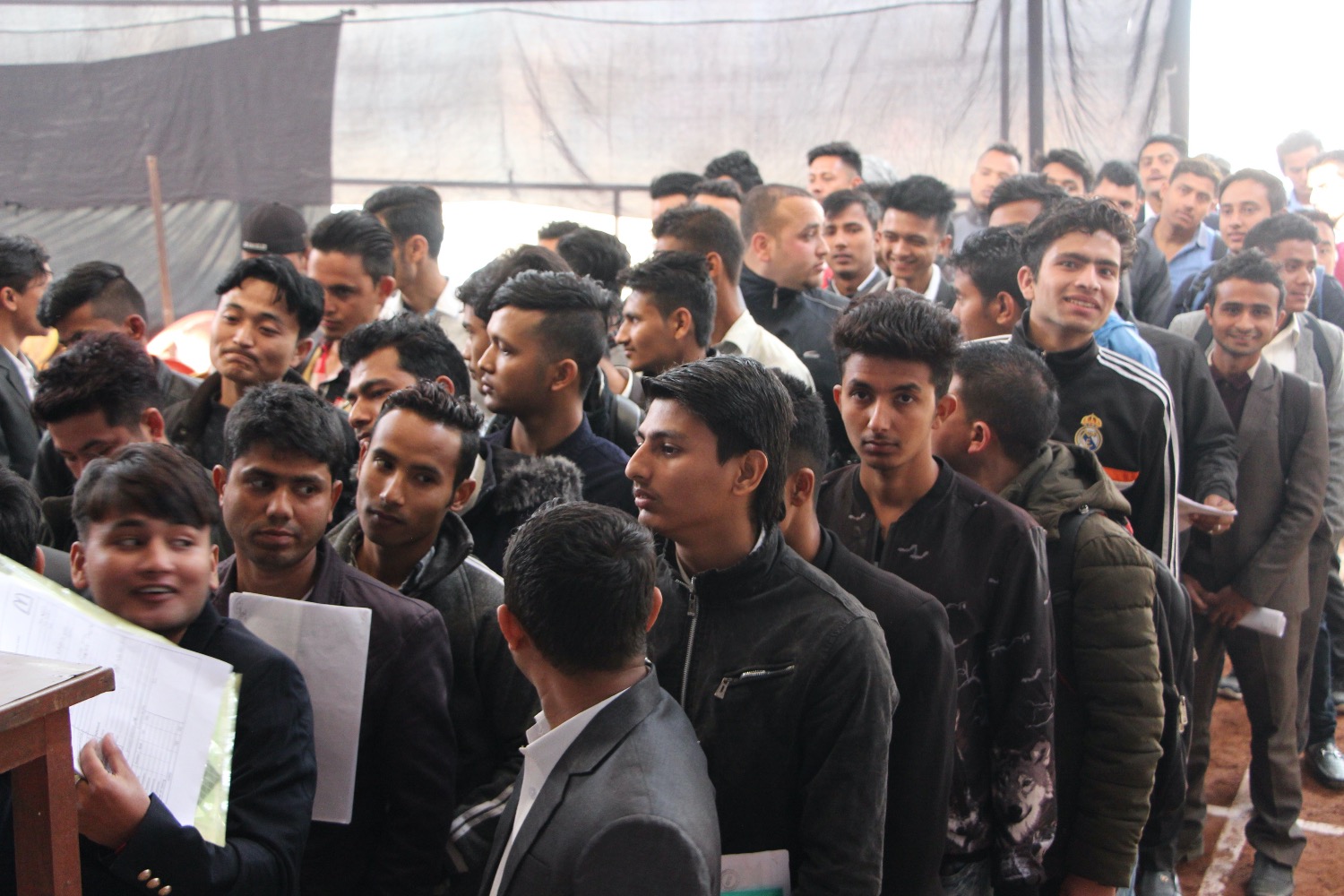
2020 turned the world upside down, and in Nepal, one of the most dramatic impacts was on the country’s economic mainstay – overseas contract workers who sent home nearly $8 billion during the pandemic.
The year forces us to re-examine long-held assumptions about Nepal’s remittance economy. And on International Migrants Day, Friday 18 December, Nepali Times has a special package of reportage, analysis and commentary on the subject.
When citizens are treated shabbily by a government, their health and education needs are neglected, they have no meaningful employment at home – they will leave. And it may be naïve to expect a state that has created the very conditions for millions of Nepalis to migrate to suddenly be conscious about their welfare.
Nepal’s past governments have used migration as a safety valve, so millions of unemployed youth do not create political instability at home. The money they send back keeps the economy afloat. Nepal’s remittance-to-GDP equivalence highest in Asia at 28% — much more than Sri Lanka, Bangladesh, or the Philippines, and among the Top 5 globally.
Yet, it has never been a priority for Nepal’s bureaucrats, political leaders or legislators to ease the process so workers are not fleeced every step of the way and ensure that their work is gainful, dignified and safe. The rare politicians who have tried to address exploitation have been dismissed. Paying lip service to ‘national heroes’ every International Migrants Day is not enough.
Like it or not, out-migration has been a prominent feature in Nepal’s history and is here to stay. One of them is a man named Hari Sharma, who has featured in previous reports in this paper, and whose story captures the hardships, uncertainties and inevitability of migration.
Hari made an arduous journey to Banke district from Ahmedabad in May when the lockdown forced millions of labourers to head home, many on foot. “It is better to die in my own country,” he told us then, as he trudged to the Nepal border on India’s Shramik train.
Five months later, he is back in Ahmedabad with the same employer despite the Covid-19 crisis in India. On the phone this week, he asked us rhetorically: “How will my family survive if I don’t migrate?