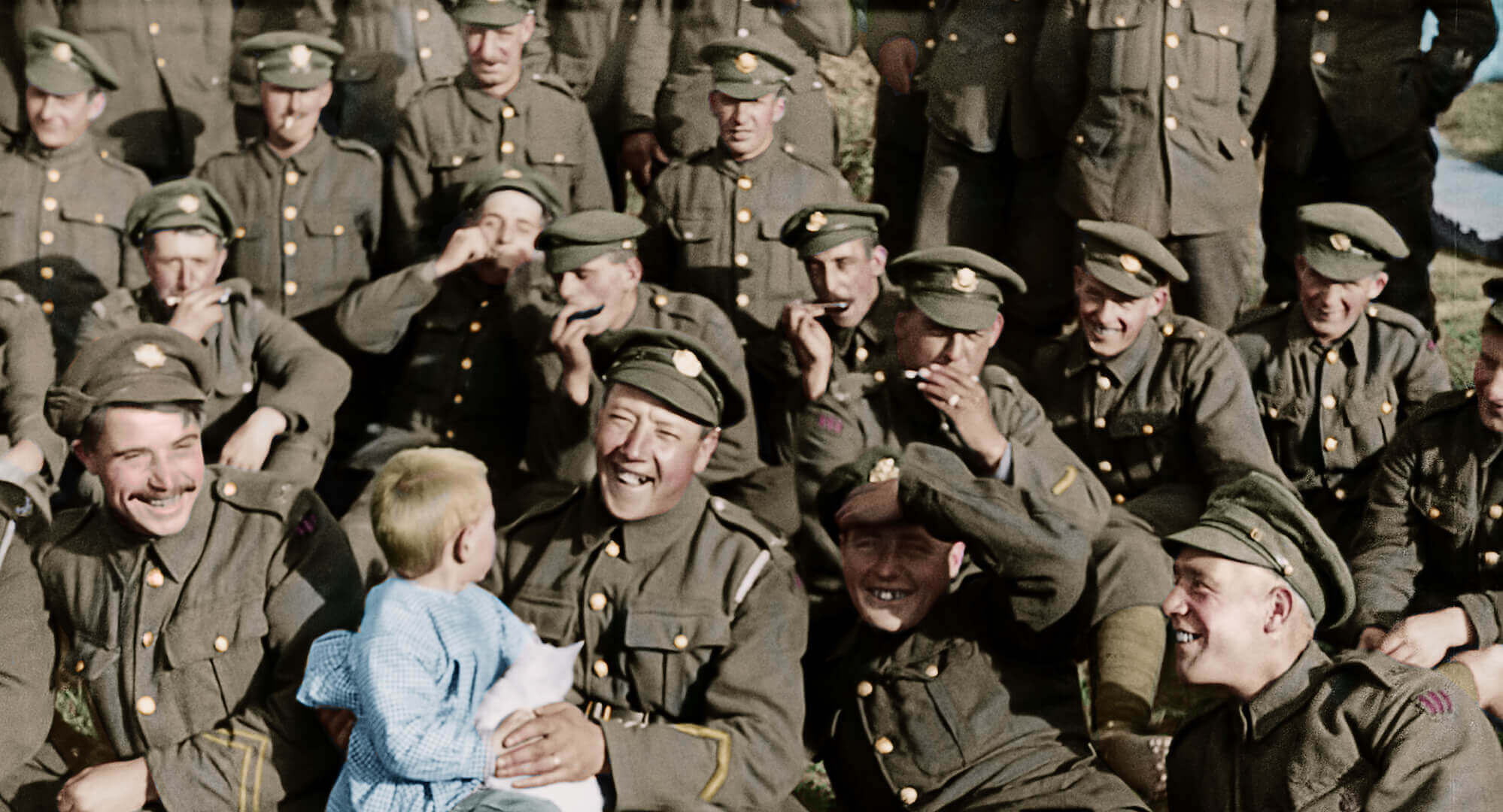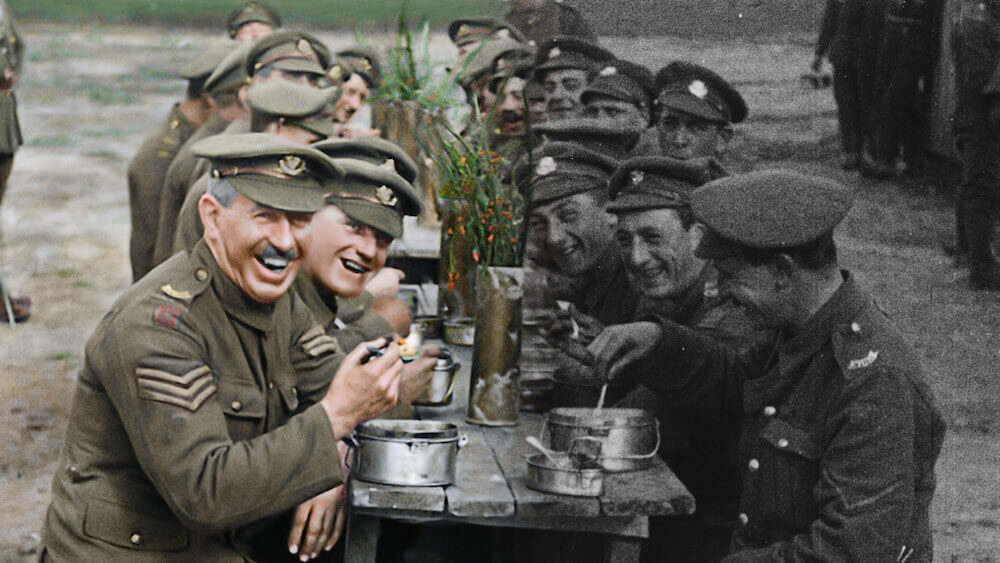
Young and confident faces smile into the camera, eager to enlist in a war that has just broken out after the assassination of Archduke Franz Ferdinand in Sarajevo in 1914. It is hard to believe that they will soon be cannon fodder on the trenches of Flanders Field.
Director Peter Jackson has put together a documentary of rare clips from the Imperial War Museum and the BBC archives to mark the centennial of the Armistice on 11 November 1918. The movie camera had just been developed, and even carrying the equipment to the front to shoot these frames must have been an act of heroism. And 100 years later, with the propaganda value of the films peeled off, the grainy footage in They Shall Not Grow Old bear witness to the hardships, valour, carnage and the utter senselessness of the bloodshed.
Jackson whittled down 600 hours of testimonies, over 100 hours of clips, and many contemporary posters to this 99 minute documentary, parts of which are digitally enhanced and coloured. For those who are fans of Jackson’s epic battle scenes in Lord of the Rings, this film offers something different -- war’s grim reality.
We see the moments just before soldiers go ‘over the top’, leaping into deadly fire from German machine gun positions. Time loses its meaning. “It was the longest and shortest moments of my life,” says one warrior. We see the moments of anxiety in the faces of men conscripted from normal civilian lives: “I learnt how to use a gun, but would I be able to kill a man if I had to?”
Jackson has chosen to be nuanced, even as he retains his penchant for the visually grotesque. The wounded develop gangrene when rain turns trenches into mud pools. Their bodies are infested with lice. There is the anxiety of killing and dying as smiling faces fade into images of fresh corpses and decomposing bodies. This is unsanitised war, a film not for the fainthearted.
Read also: 100 years of platitude, Sunir Pandey
Looking back to the future, Editorial
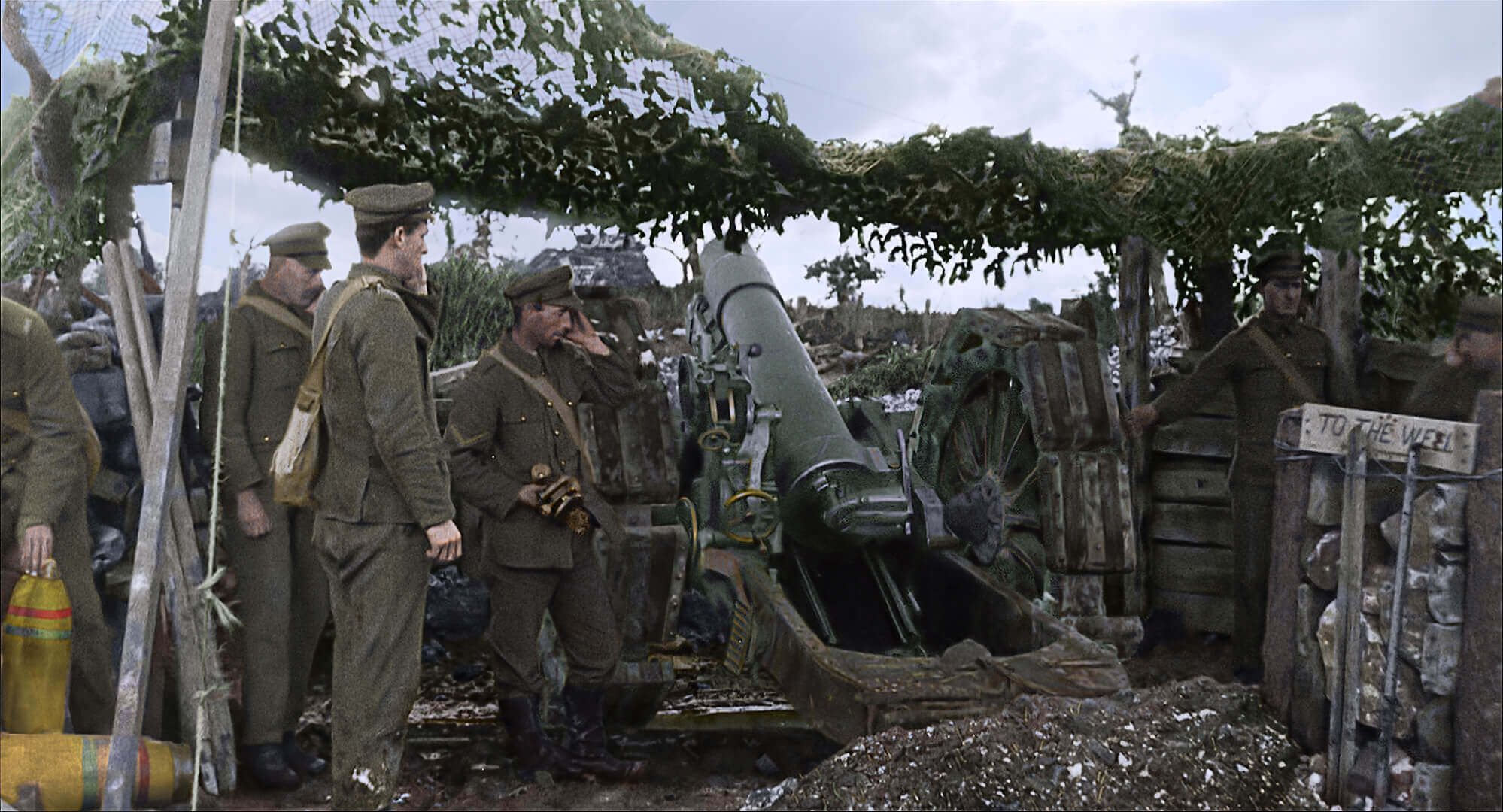
The storytelling is immersive, we are taken back a century right into the frontlines. Jackson combines hundreds of voices which give a constant commentary. A soldier talks of how impossible it is to have even a moment of respite from the constant gunfire and explosions. Viewers don’t get much respite either.
Jackson even manages to find some humour and humanity amidst the carnage, we see not only the terror but also friendship as soldiers bond over tea, cigarettes, and gambling. The open toilet rows where men did not cover up because “there were no women”. We get glimpses of wagons and war horses, the novelty of mechanised tanks.