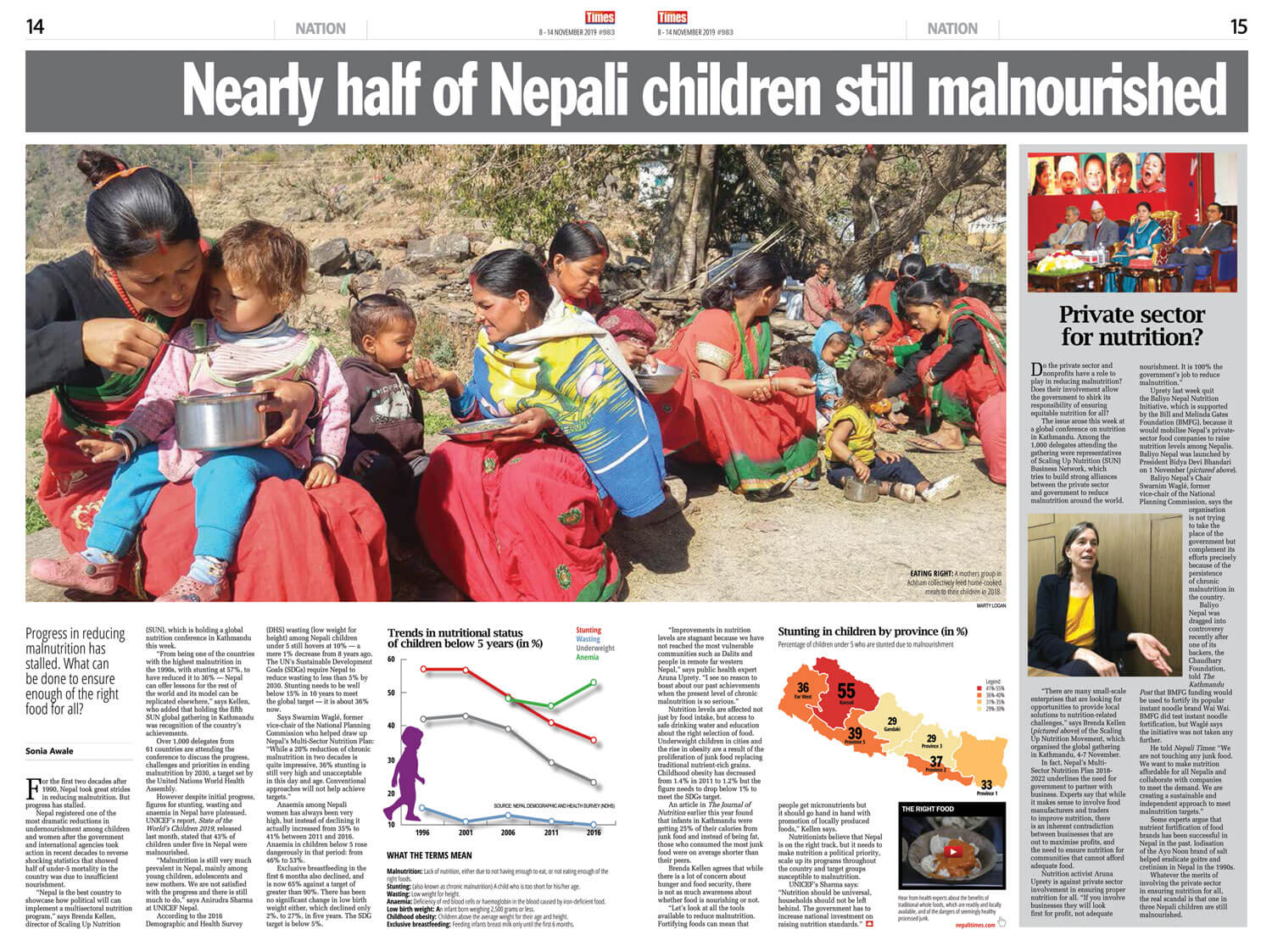
It was easy for me to get in the door of the Nepali Times after I first moved to Nepal in 2005: Editor Kunda Dixit and I shared ties with the Inter Press Service News agency – me from North America, he from Asia.
What I liked about the Nepali Times then is what I still admire it for now: its reporting is issue-based. It does not focus on the what happened? of daily news but tries to get at the why is it happening? Other English papers in Nepal are increasingly adopting this approach, and I often see Nepali Times stories echoed in their pages.
The downside of this, I see as I click through the archives, is that it reveals that things change slowly. It is frustrating to read 15-year-old articles about famine and malnutrition in the Karnali that could have been reported yesterday. So little has the situation in some parts of the region advanced.
Deficits in maternal and child health, quality education, reliable water supply and gender equality still make headlines 20 years after the Nepali Times started reporting on them. But I need to temper my impatience -- statistically, progress has happened, it just takes longer than I want it to.
When I arrived in Nepal 15 years ago we were a larger group in the newsroom than we are today, which is hard to believe considering that the 2020 team produces the paper version and a continuously updated news website. Back then, we printed out the pages on Thursday and each of us took turns reading each one for errors. Today, copy-editing is done mainly online, by one or two staff, while others rush to put the finishing touches on a video or update social media channels.