
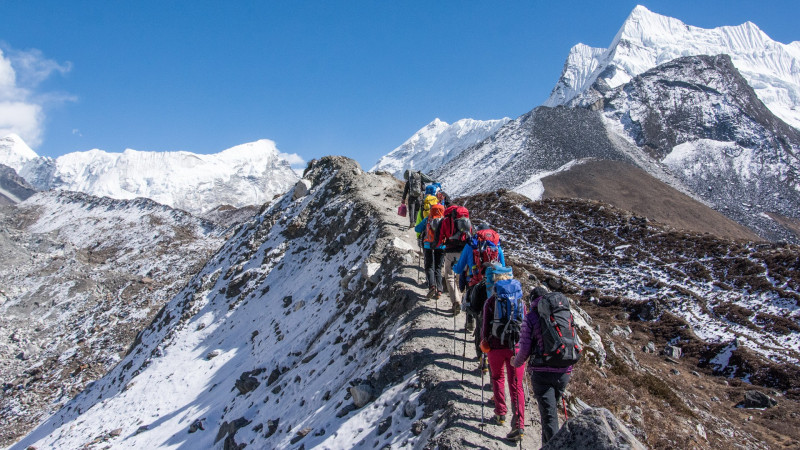
The Ministry of Tourism and Civil Aviation has opened Nepal for trekking and mountaineering from 17 October, but is mysteriously not allowing sightseeing visitors, pilgrims and other foreigners.
Even the trekkers have to meet conditions like getting visas before arrival, having a RT PCR negative report 72 hours prior to departure, another PCR test at their own cost on the fifth day of their 7 day hotel quarantine in Kathmandu, and a $5,000 medical insurance.
“Our hopes that tourism would pick up at the end of 2020 have been dashed, the ministry has made it needlessly complicated for trekkers, and not allowed other kinds of tourists and pilgrims. Where is the logic in that?” asked one frustrated travel agency executive who did not want to be named.
Indeed, instead of making it easier for those genuinely interested in hiking in Nepal’s wilderness, the ministry directive has added several layers of complicated conditions for even those brave enough to risk long range air travel. For example, trekkers and mountaineers must also submit a 7-day hotel booking slip when they apply for their visas.
International airlines who had started taking online reservations for flights after 17 October from tourists coming to Kathmandu say they are seeing some cancellation due to the onerous conditions.
“If they are not allowed to board a flight to Nepal without a PCR negative report, what is the sense in a 7 day hotel quarantine in Kathmandu?” asked the representative of an international airline.
Even more absurd is allowing only trekkers and mountaineers to visit Nepal, a rule that many say can easily be circumvented, and cannot be enforced. The government directive allows travel and trekking agents to issue documents for those who are not able get visas in time, without making clear if that is enough get them through immigration in Kathmandu.
When asked about the confusion in the directives, Ministry spokesperson Kamal Bhattarai conceded: “Even though the guidelines have been sent to the concerned agencies, we may have to make it easier based on consultations. It is not final or official yet. We have had to balance reviving the tourism industry while ensuring health and safety during the pandemic.”