
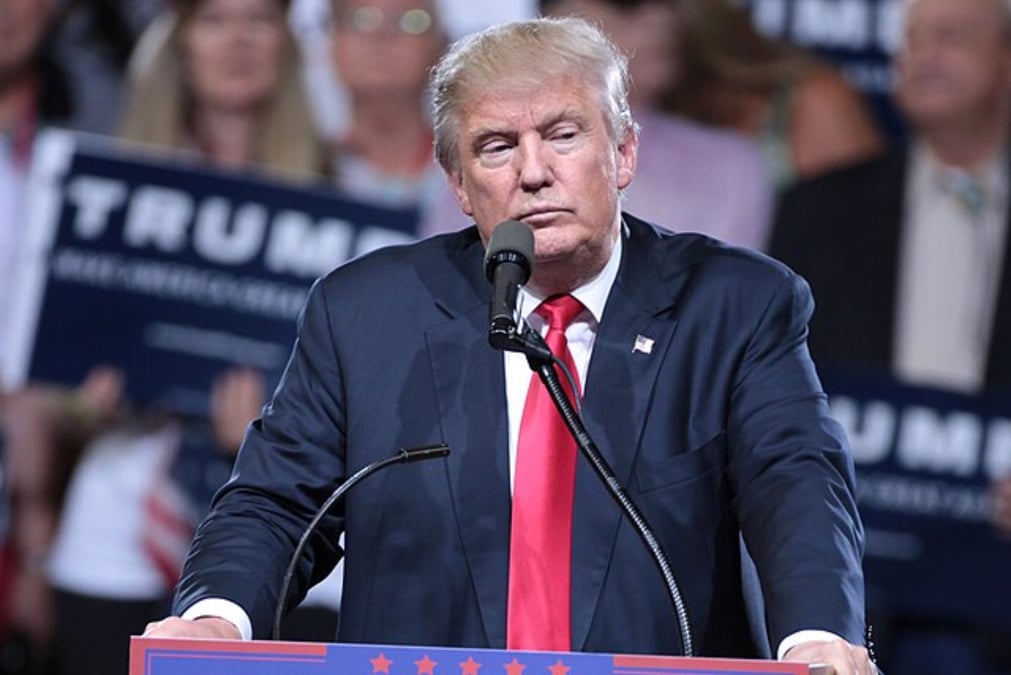
In the first 30 days of his second presidential term, Donald Trump and his associates have been engaged in what some have described as a slow-moving political coup.
The incoming president has undertaken what amounts to a full-scale attack on institutional checks and balances and on civil and political rights. He has launched sharp policy reversals in critical areas of public health, social services, and environmental protection. And in foreign policy, he has upended decades-old political and military alignments intended to defend against potential aggression by autocratic rivals such as Russia and China.
Elsewhere in the world, similar actions have led to the emergence of what political scientists have called “competitive authoritarian regimes,” ones in which democratic institutions become facades that disguise the reality of autocratic control.
Although it is far too soon to say how Trump’s onslaught will end, it is very important to highlight the major differences between his current threats to democracy and those posed during his first term.
Trump 1.0 attacked deeply held norms of political discourse and practice, intensifying the social polarisation that had carried him to victory. But U.S. political and constitutional institutions remained more or less intact. Challenges to the democratic system—including on January 6—were contained by congressional opposition, by the courts, by the press, and by civil society. Even—or perhaps especially—resistance from within the Republican party itself also provided an important check on Trump’s abuses of power.
Read also: Trumpet Call, Shristi Karki
The threat that Trump currently poses to U.S. democracy is far more profound, because it targets legal and constitutional institutions as well as norms. The Congress—currently under the control of now fully loyal Republican majorities—has failed to push back against attacks on independent agencies, the dismissal of Inspectors General, and efforts to weaken or eliminate congressionally mandated government agencies through mass firings and the freezing of funds, beginning with the virtual dismantling of USAID.
A supine Senate has acquiesced to the high-level political appointments of people once considered far outside the mainstream, and it is sitting quietly by while Elon Musk wields extraordinary power to “reform” the state bureaucracy.
Lower courts have moved to block some of these initiatives, but it remains to be seen whether their rulings will be backed by the highly conservative Supreme Court, or even whether Trump will abide by them if they are. Meanwhile, the press, popular movements, and big business—all important checks during the first Trump term—appear dazed, confused, and intimidated this time around.
So far, the speed and volume of Trump’s actions has kept both supporters and opponents off-balance. Although some of his initiatives are transparently illegal, he has also exploited many gray areas of the law; and, as in other backsliding democracies, this makes it difficult for opponents to coalesce against such challenges.
Worse still, the damage done by some of Trump’s (and Musk’s) early initiatives—particularly to government agencies responsible for health, environment, education, foreign assistance, and other critical functions—may already be irreversible. The toll can be measured in lost expertise, interruption of crucial research, suspension of vital services, and increasing threats to national security.
To understand the magnitude of the threats we currently face in the United States, it is useful to place them in a comparative perspective. In a previous analysis of 16 cases of “democratic backsliding,” Stephan Haggard and I distinguished between countries where would-be autocrats succeeded in consolidating authoritarian control over the system (“competitive authoritarian regimes”), and those in which they did not.
In both Brazil under Jair Bolsonaro and the United States under Trump 1.0, opposition groups retained critical institutional leverage in the courts, the legislature, and the states, and they were able to successfully contain autocratic initiatives.
Read also: Trump shock wave hits Nepal, Sudiksha Tuladhar
Conversely, in countries such as Hungary, Turkey, and Venezuela, elected autocrats headed political movements that gained control of these constitutional institutions, and this control, in turn, provided a cover of legitimacy which allowed them to disempower the opposition and undermine their democratic systems.