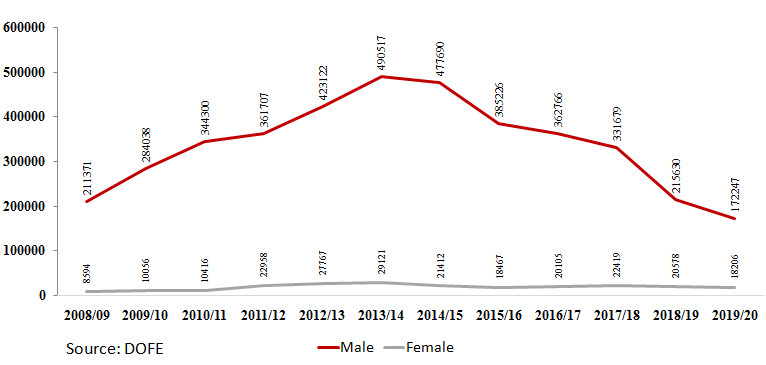
When we last wrote about Nepal’s Department of Immigration’s proposal requiring women under 40 years to obtain permission letters from family members and the local ward, it was heavily resisted.
The fights, those before us had to pick to change the status quo on female emigration are no different than the present. The recent proposal was a chilling reminder that we are just going around in circles.
Over the last two decades since this newspaper started covering the issue, the stories we tell are all the same: women bypassing restrictive policies due to desperation or aspiration, the risks that women are willing to take for a better shot at life for themselves and their families.
The rationale for the Department of Immigration’s reactionary proposal showed that the response to exploitation and abuse of female migrants has not moved beyond knee-jerk bans and travel restrictions.
Going back through the Nepali Times archive to find references to the state trying to keep Nepali women tied up at home reveals the complexities of the issue:
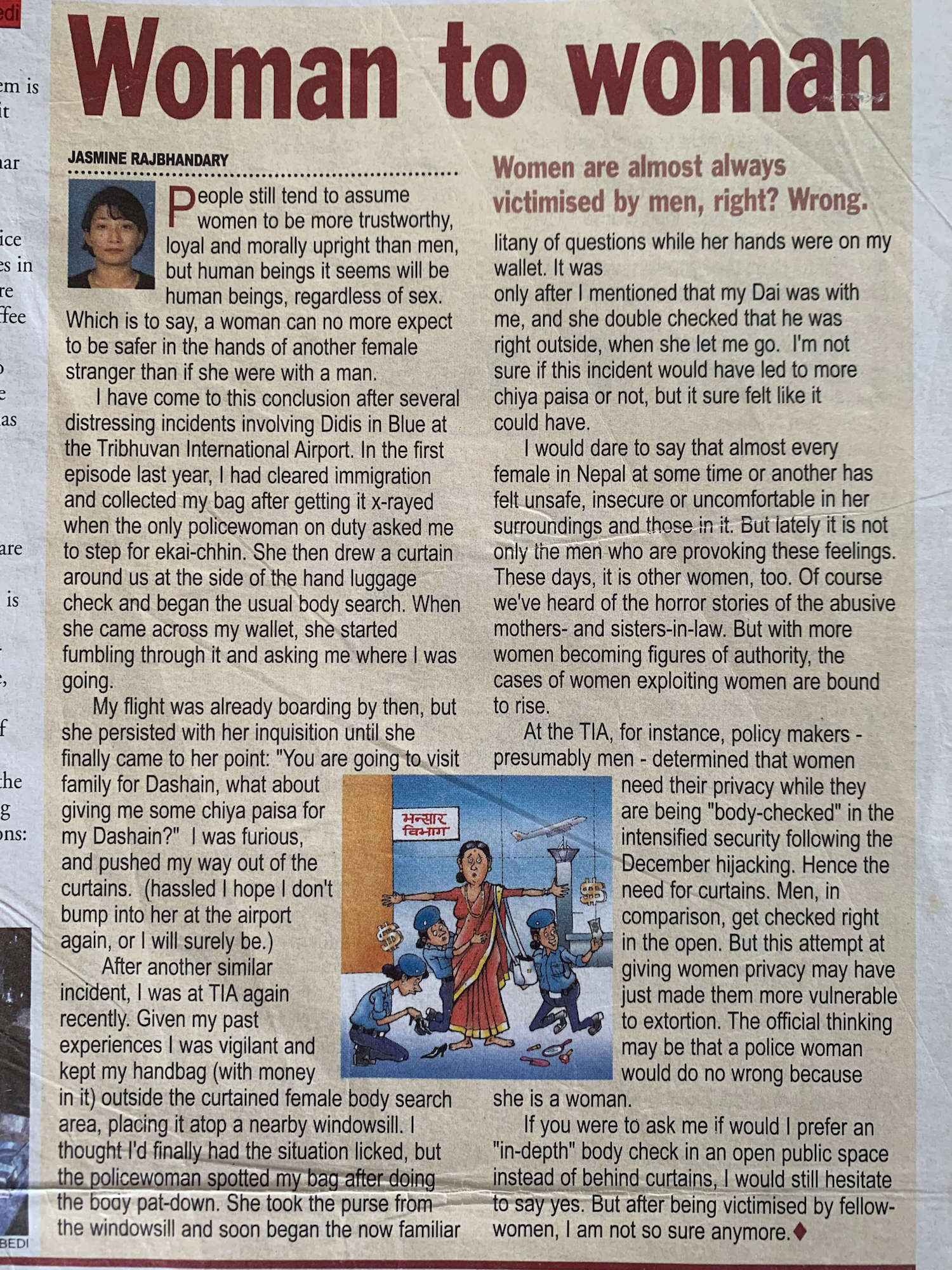
In the very first #0 prototype edition of this paper Jasmine Rajbhandary in her Women to Women column wrote about how female immigration officials at Kathmandu airport also extort female passengers: ‘I would dare to say that almost every female in Nepal at some point or another has felt unsafe, insecure or uncomfortable in her surroundings and those in it.’
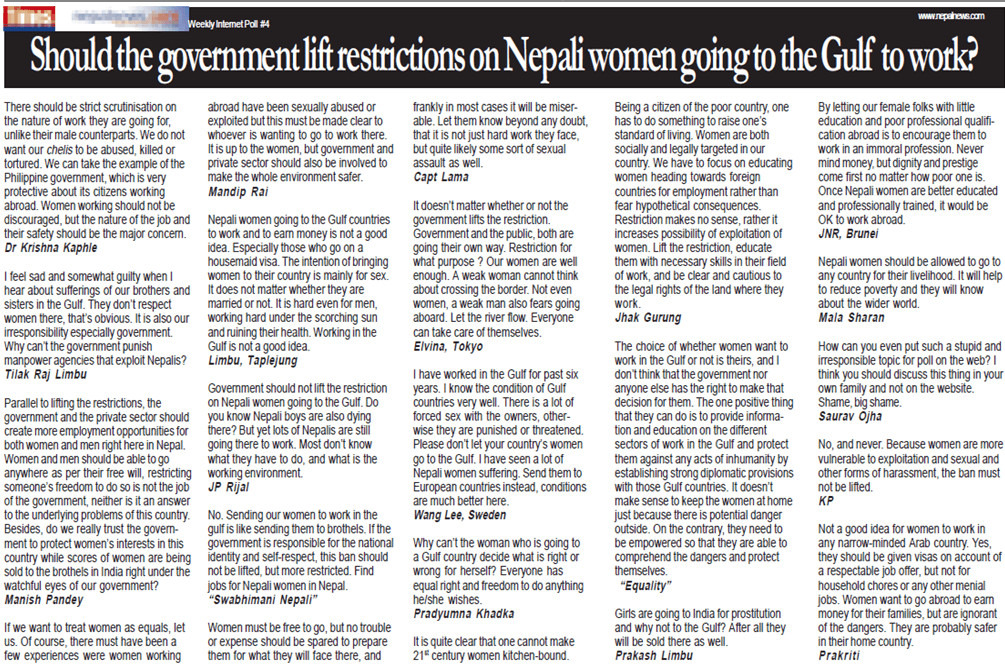
In its 19 October 2001 issue, Nepali Times conducted an online reader poll on whether the government should lift restrictions on Nepali women going to the Gulf to work. Nearly 1,000 people responded, with over 60% saying yes. It showed that this has always been a contentious issue. Some of the responses are quite revealing (see screenshot).
In an interview, Renu Rajbhandari of the Women’s Rehabilitation Center (WOREC) in March 2002, points to bills on abortion and domestic violence that would impact women: ‘The patriarchal notion of the state is strongly evident in the bill(s).”
In the 10 January 2003 edition, Nepali Times reporter Hemlata Rai explained how the high profile suicide of Kani Sherpa in 1998 after being sexually abused by her Kuwait-based employer led to the ban of women going to the Gulf for foreign employment. But even then, there was a realisation that the ban was not serving its purpose. She quotes Binda Pandey of the General Federation of Nepalese Trade Unions (GEFONT): “It is the government's obligation to guarantee safety of its citizens. Preventing women from foreign employment is violating women's basic human rights to conceal its own weaknesses.”
In 30 July 2004, reporter J B Pun Magar in an article titled ‘Manpower Agencies and Women’s Power’ showed how abuse abroad had not deterred Nepali women from migrating for household work in the Gulf. He quotes Maya GC who was exploited and sexually abused but was still migrating for work in Qatar: "I know it may happen again, but look at the situation in our country".
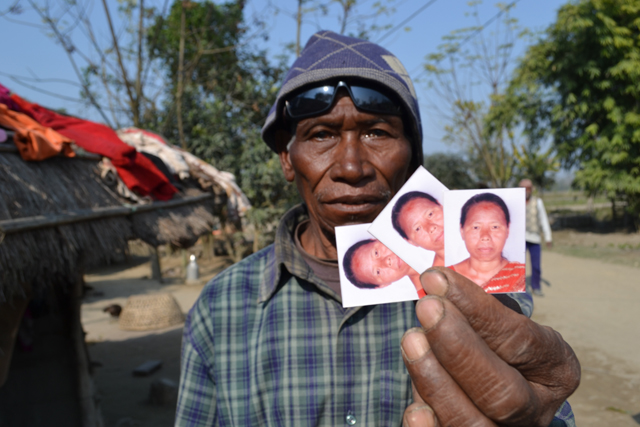
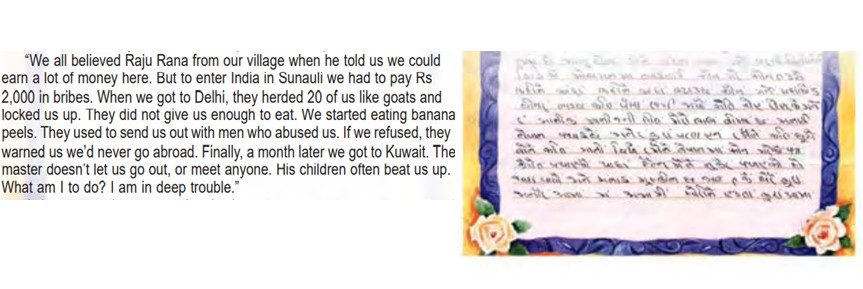
Another woman named Anita from Palpa who managed to escape from an abusive employer in Kuwait, said in a taped message to her family how she had been duped by an acquaintance from the village. (See screenshot)
In an op-ed published in the 20 July 2007 edition of Nepali Times, Nischal Nath Pandey points out how Nepali embassies abroad were poorly equipped and staffed, and budget was scarce to attend to labour matters.
In 31 October 2008, reporter Dewan Rai told the story of Kopila Rai who suffered abuse as a caregiver in Israel. She asks, “We only talk about the government benefits from the money that migrant workers send home, but at what cost?”
In another report in 2009, Rai points out that the ban on domestic workers has not improved the situation of women workers abroad. Contrary to the more common India route to bypass the ban, he writes about Sabina who submitted fake documents saying she will be working in a hotel so she could fly out.
In an interview with Nepali Times in the 3 December 2010 issue, Caroline O’Reilly of the ILO is asked if there is a link between migrant workers and human trafficking. She replies, “Absolutely, especially when migrant workers don’t go through official channels, they are vulnerable to forced labour.”
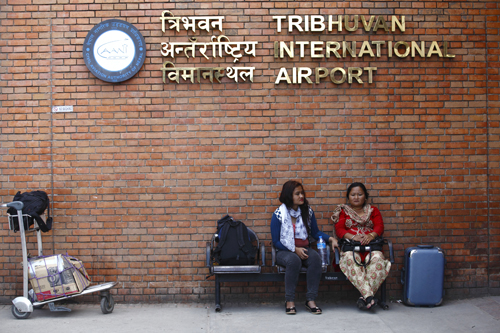
An editorial in the 28 October 2011 edition of Nepali Times mentioned the story of Dechen Doma Sherpa who recorded an immigration official at Kathmandu airport asking her for a bribe even when she had the required paperwork. The editorial called for a crackdown on exploitation by immigration officials, reducing recruitment costs, and skills training to make migration more rewarding.
In an op-ed titled Womanpower in the 23 March 2012 issue of the paper, Rubeena Mahato argues that despite the ban being lifted with the passing of the Foreign Employment Act 2007, women continued to travel via illegal routes as the perception of the ban persisted. She reported that 3,200 Nepali women had been intercepted at New Delhi Airport after the Nepal government asked Indian officials to stop Nepali women going to the Gulf on visit visas.
‘Even Slaves are Treated Better’ was the title of a joint report by Sushila Budathoki and Mina Sharma in the issue of 8 June 2012 about how lifting the ban on female workers was not enough. Legalising individual contracts for domestic workers to directly arrange their employment with foreign employers put women at risk while giving recruiters a free pass to game the system, and avoid being identified or implicated in case of abuse.
The story began with four heart-wrenching stories of Nepali women who were sexually abused, and had endured physical torture at the hands of their Nepali recruiters and employers in the Gulf.
In 13 September 2013 Brikuti Rai and Sunir Pandey reported in Nepali Times about Sita, a Saudi returnee, who was robbed and raped by officials at Kathmandu airport. While Parshuram Basnet and Somnath Khanal got one year jail sentence, immigration section officers Tikaram Pokharel and Ram Prasad Koirala were acquitted.