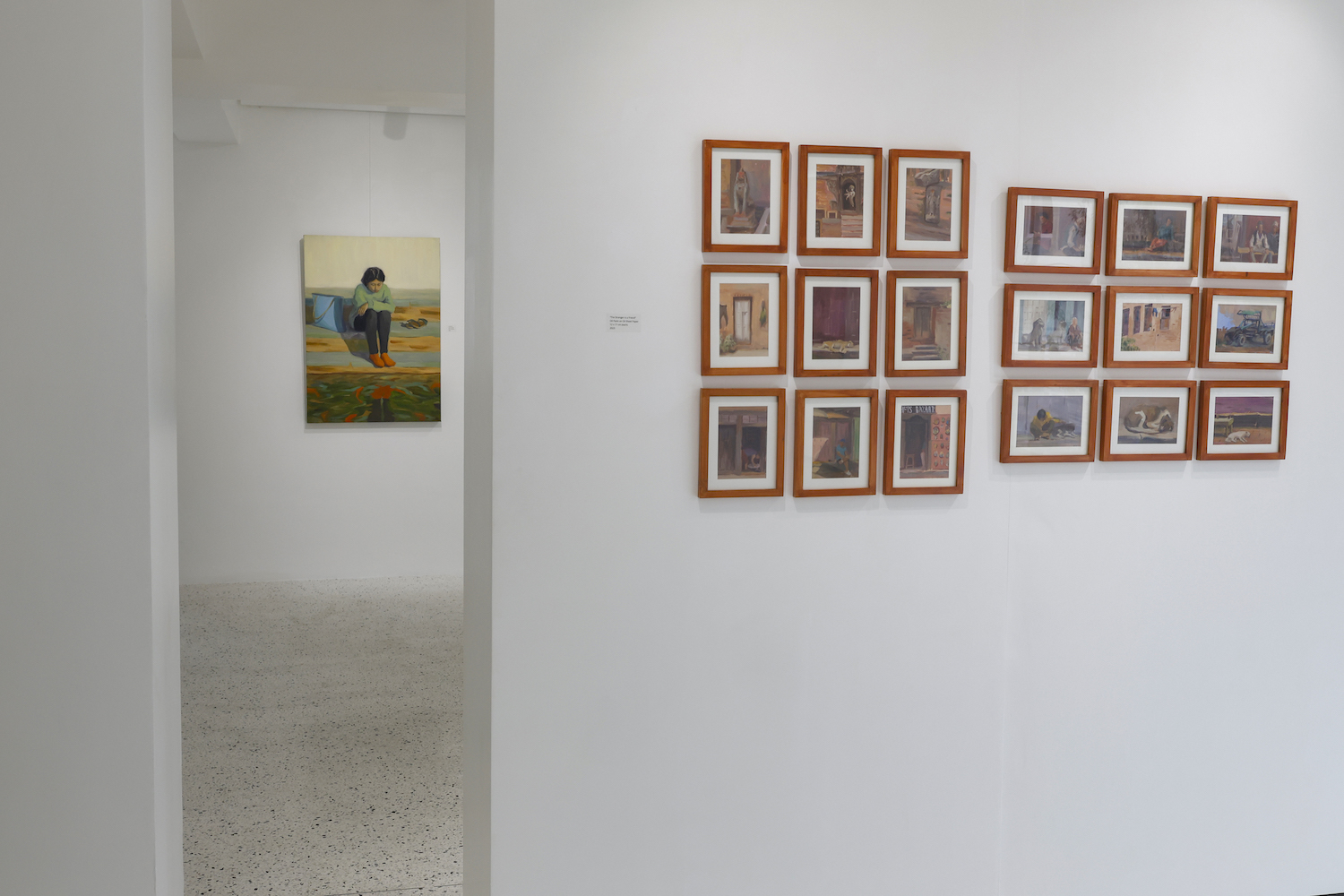
The art scene in Nepal is witnessing a renaissance, and at the centre of this resurgence is Tsherin Sherpa, the internationally renowned artist known for his distinctive, and sometimes provocative, fusion of traditional and contemporary.
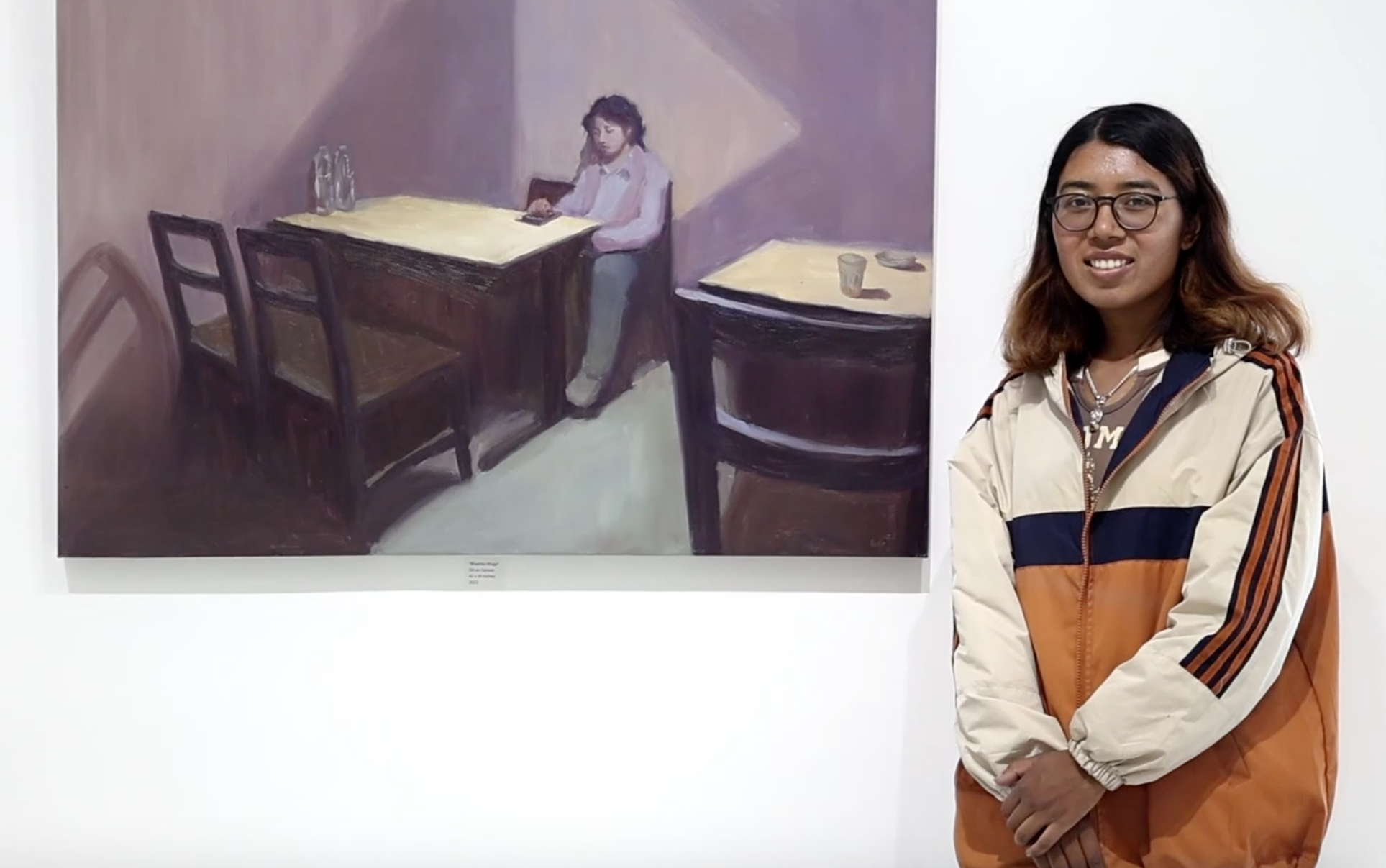
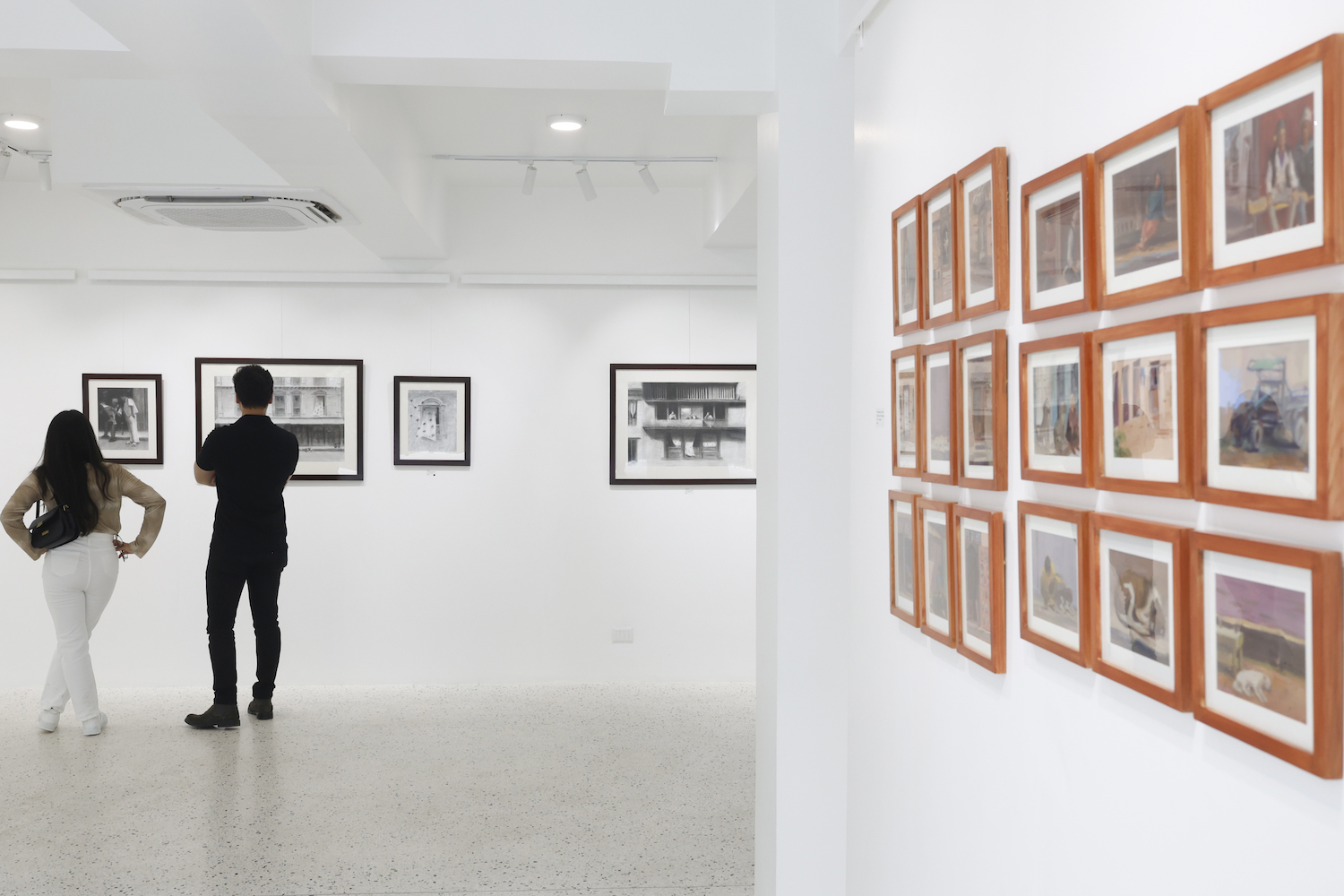
Sherpa has now embarked on a new chapter in his career by returning to Nepal to open Takpa, Kathmandu’s newest art gallery strategically located in Lazimpat.
‘Takpa’ is a playful spin on the Buddhist expression of ‘Mitakpa’ which means impermanence. So, Takpa is permanence and for Sherpa this name encapsulates his exploration of the dynamic interplay between the sacred and the secular and reflecting his journey from traditional thangka painting to the unique, hybrid approach he eventually mastered.
“Growing up, I never thought I would be an artist. My father was an established thangka painter, and he always wanted to hand over his knowledge to one of the children. For better or worse, it happened to be me,” quips Sherpa who started painting thangkas at 12.
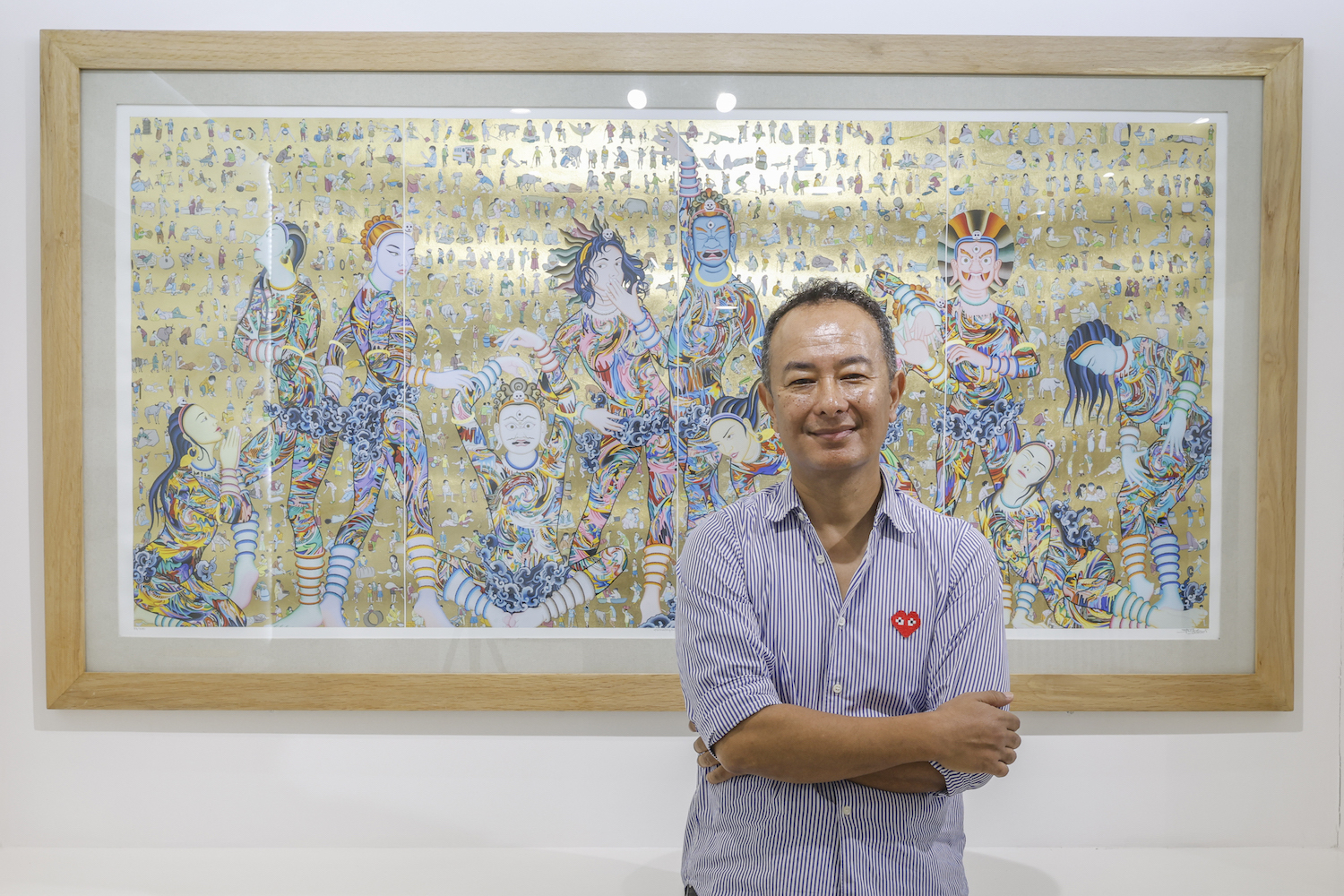
But in the late 1990s venerated thangka art was becoming commodified as in tourist souvenir shops. “I was discouraged seeing this, and did not want to follow my father’s footsteps,” recalls Sherpa who enrolled in a computer science course in Taipei and later went to the United States in 1998 to live there for the next 20 years.
Away from home, Sherpa needed an emotional outlet which he found in art. He visited museums and exhibitions, and rediscovered the real sacred significance of thangka paintings.
Two exhibitions of South Asian and Chinese art pushed him to experiment with traditional techniques like Chinese brush in contemporary art.
But Sherpa does not regret his Computer Science degree, in fact it allowed him to integrate technology into his art. He explains, “Computer science actually helped me visualise my work, allowing me to spend less time drawing sketch after sketch. I do one sketch, scan it, work on the computer and finalise it.”
Sherpa’s shift from traditional thangka painting has been shaped by encounters with diverse art forms during his time in the United States.
For instance, his first experience of painting something non-traditional was a marketing poster for Jamba Juice. This made him realise that he could go beyond the traditional confines to express himself and bridge the gap between older and modern art forms.
Sherpa now divides his time between California and Kathmandu and draws inspiration from diverse cross-cultural lifestyles to imbue vitality in his artistic expression.
“Your work becomes stagnant if you are just in one place. Travelling allows me to go to new places and learn, so I keep moving,” he says.
And yet, each of Sherpa’s works is a visual representation of his heritage. The modernised thangka themes represent his heritage and identity.