For the first time in weeks, Nepal recorded more than 3,000 new cases on 20 July. There were 25 deaths. The country is on the tail end of what has been a deadly second wave, but the rate of decline in infections and mortality has stalled.
Public health officials blame it on sudden reopening following two-months of lockdown in which many mingled without masks, low vaccination rate, and minimal testing and tracing.
While some experts say Nepal and India are now safe against another major surge of the Delta variant that was largely responsible for the second wave, others warn of a third wave if safety measures are not enforced.
The Delta mutant is now ravaging Indonesia, and spreading across Europe and North America. And scientists say it has affected mostly countries and regions with low vaccination rates.
“The third wave is a matter of when not if. And if we don’t vaccinate as many people as soon as possible, there will be a continued threat of more dangerous variants, and we will be repeating the whole cycle,” warns Buddha Bansyat, a physician at the Patan Academy of Health Sciences.
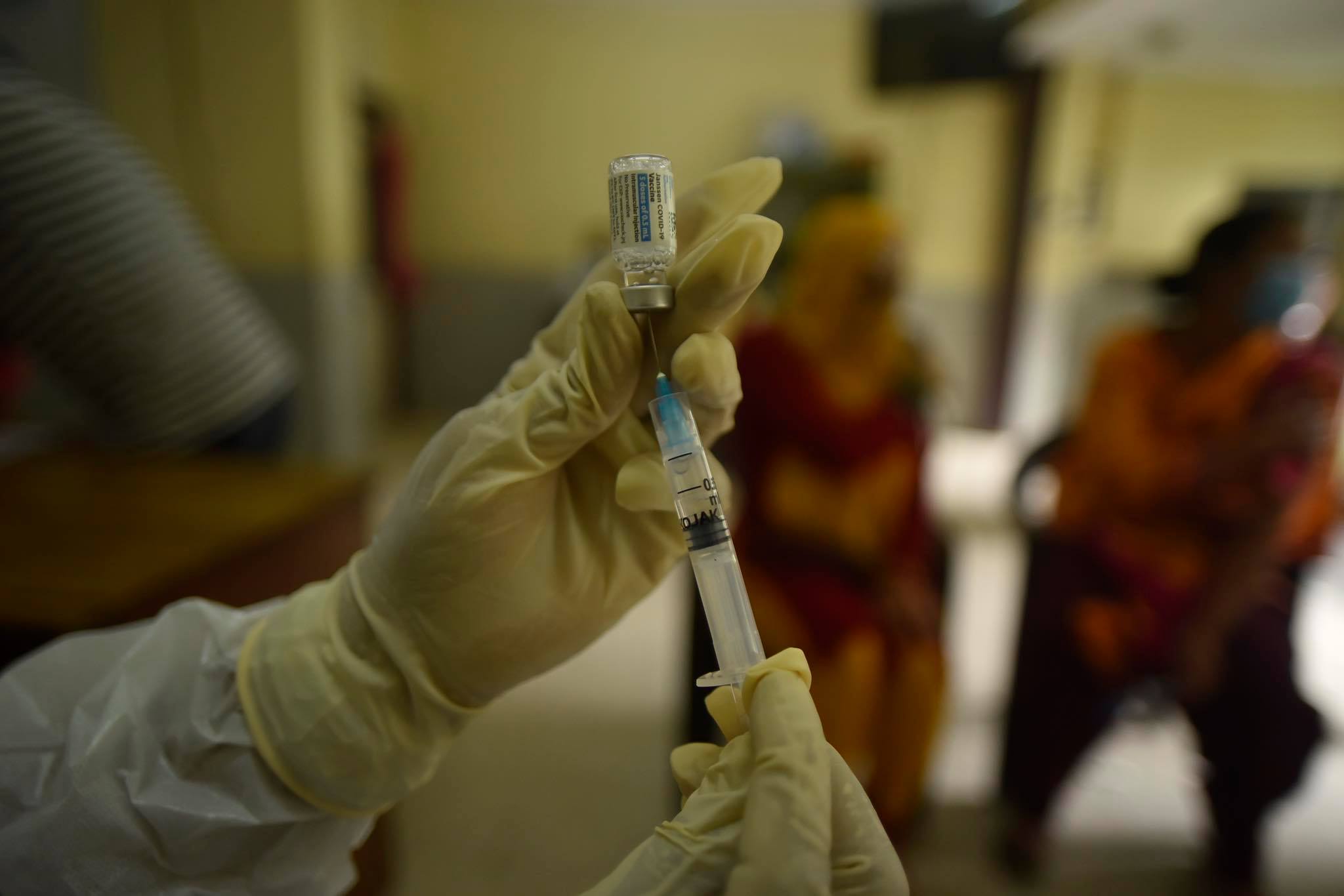
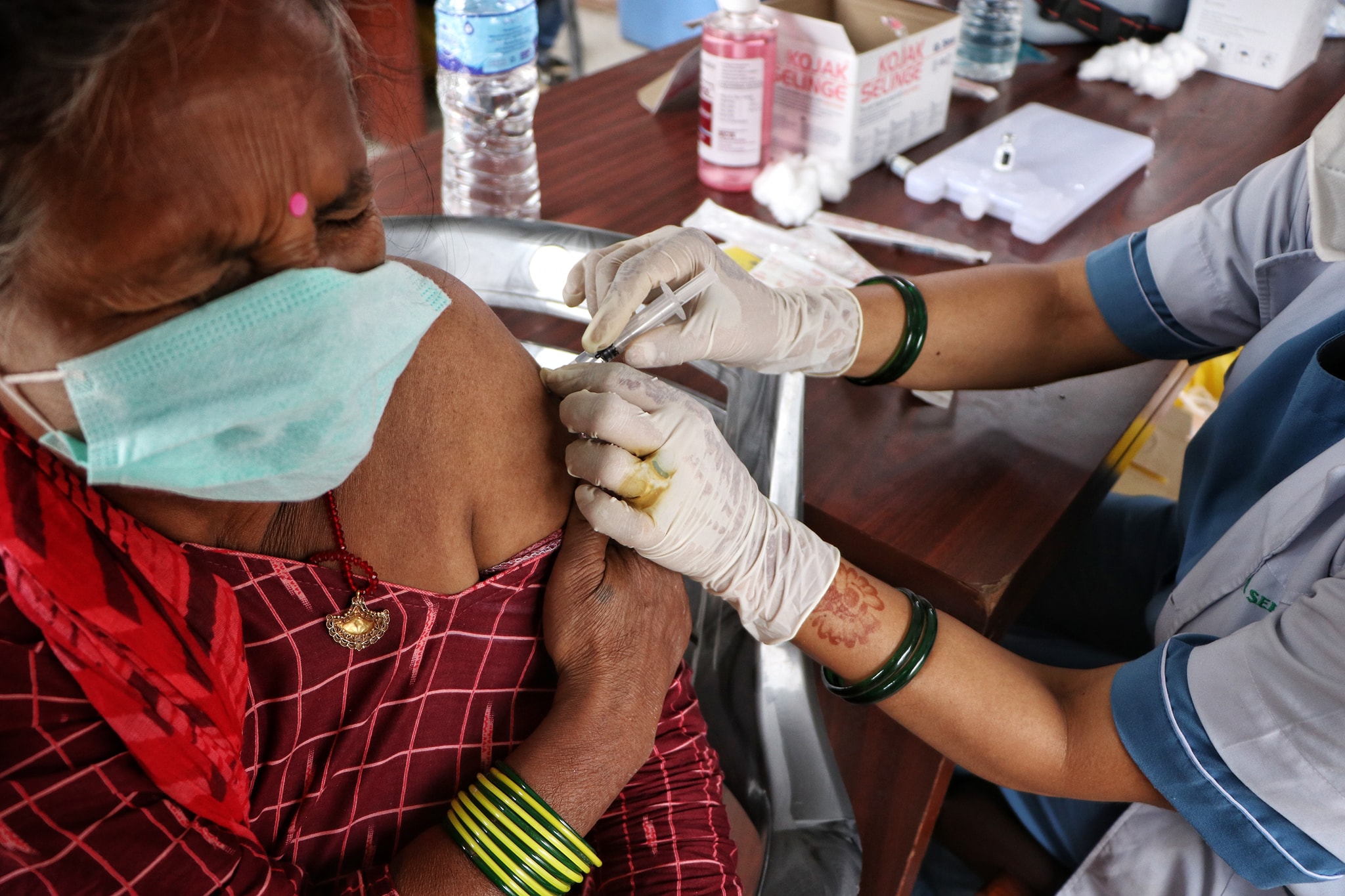
So far, Nepal has fully vaccinated 1,158,130 people, 3.6% of its total population. Some 10% Nepalis have received the first dose of either AstraZeneca Covishield, Chinese Sinopharm VeroCell or single-shot Johnson & Johnson jabs.
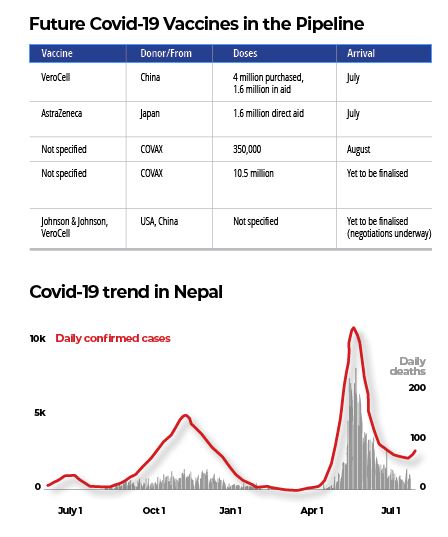
Another 8 million doses of various Covid-19 vaccines are expected by September – some purchased from China, more doses from COVAX, as well as a direct grant from Japan. This should take the total fully vaccinated population near 20%, which together with antigen positive population could cushion the impact of a possible third wave.
“We have now moved on from vaccinating the elderly and frontline workers to groups less at risk of the Covid-19, and we have more vaccines in the pipeline,” says Shyam Raj Uprety, head of government's Covid Vaccine Strategy. “We have applied to buy 10.5 million more doses of vaccines from the COVAX at a subsidised rate.”
Indian public health experts have projected the third wave to hit that country in late August. What happens in India usually follows in Nepal within 12-13 days, and if that is true this time too, Nepal cannot be unprepared like in March.
“If the vaccination program progresses as smoothly as it is happening now compared to the first two surges, the third wave might not be as significant if it happens at all. By Dasain, a significant chunk of Nepalis should have been vaccinated,” explains Sameer Dixit of Centre for Molecular Dynamics Nepal.
Apart from vaccines, in case of a sudden surge, hospitals need to be ready with sufficient beds and ICUs, oxygen, life-saving medical equipment, drugs and functioning oxygen plants. Hospitals must also prepare their paediatric wards since the third wave could affect a younger population.
Since the peak of the second wave when there were close to 10,000 new cases a day and over 200 daily fatalities, international donors have been supplying essential medical equipment to Nepal.