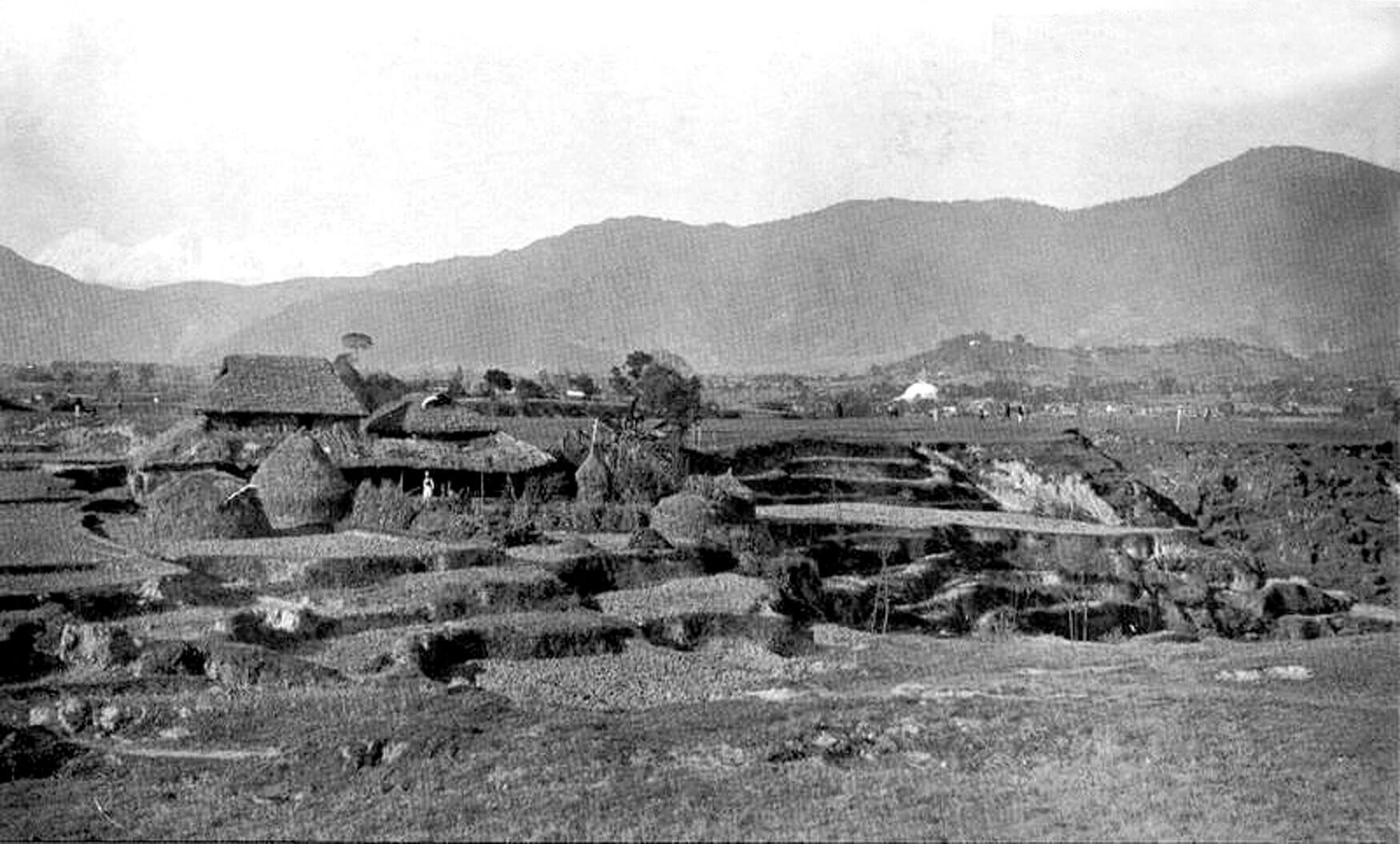
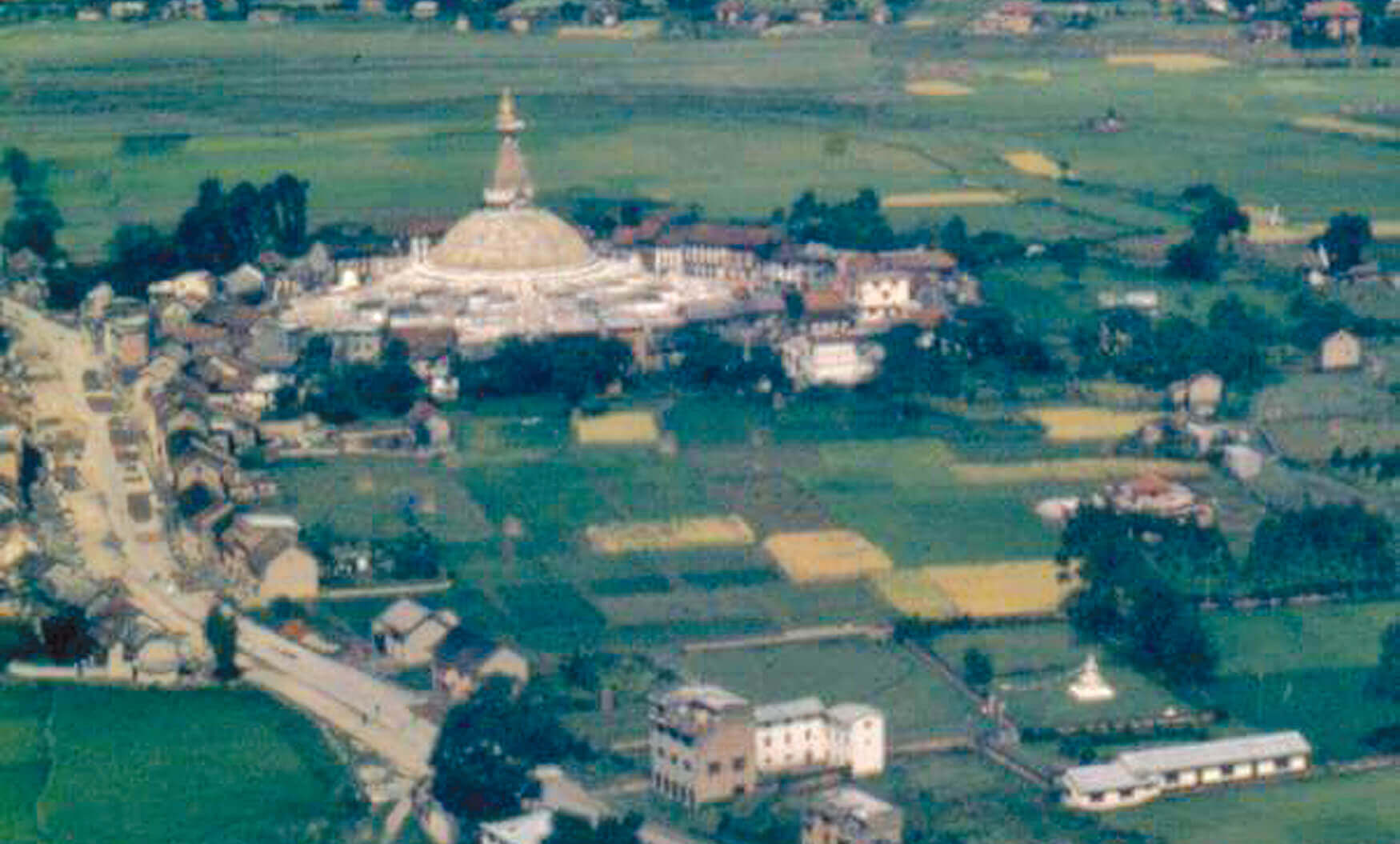
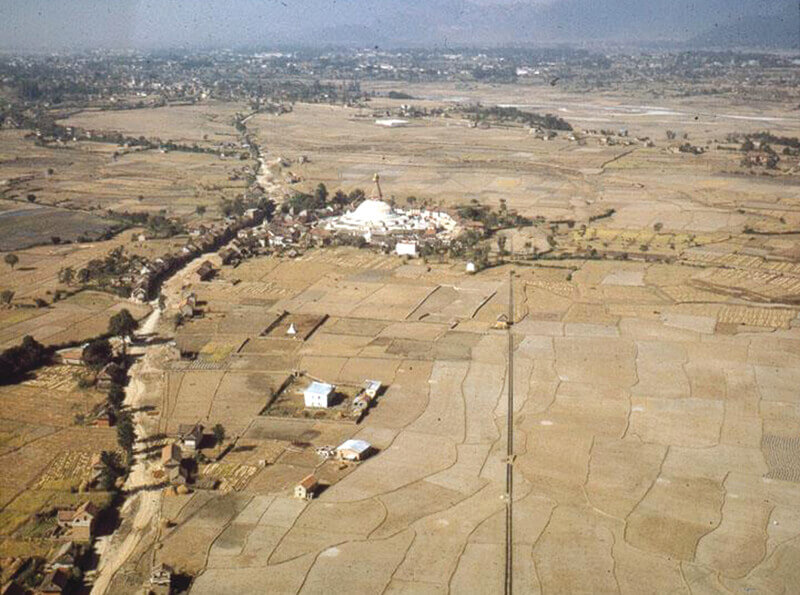
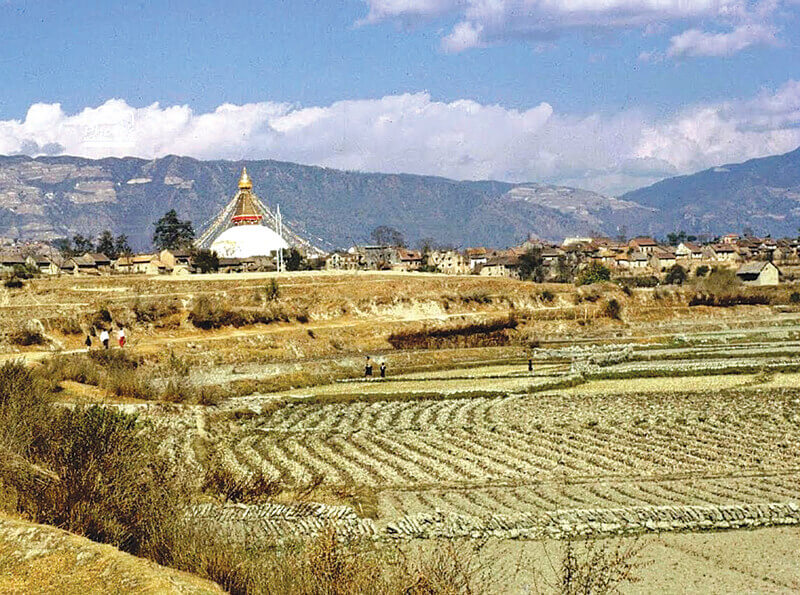
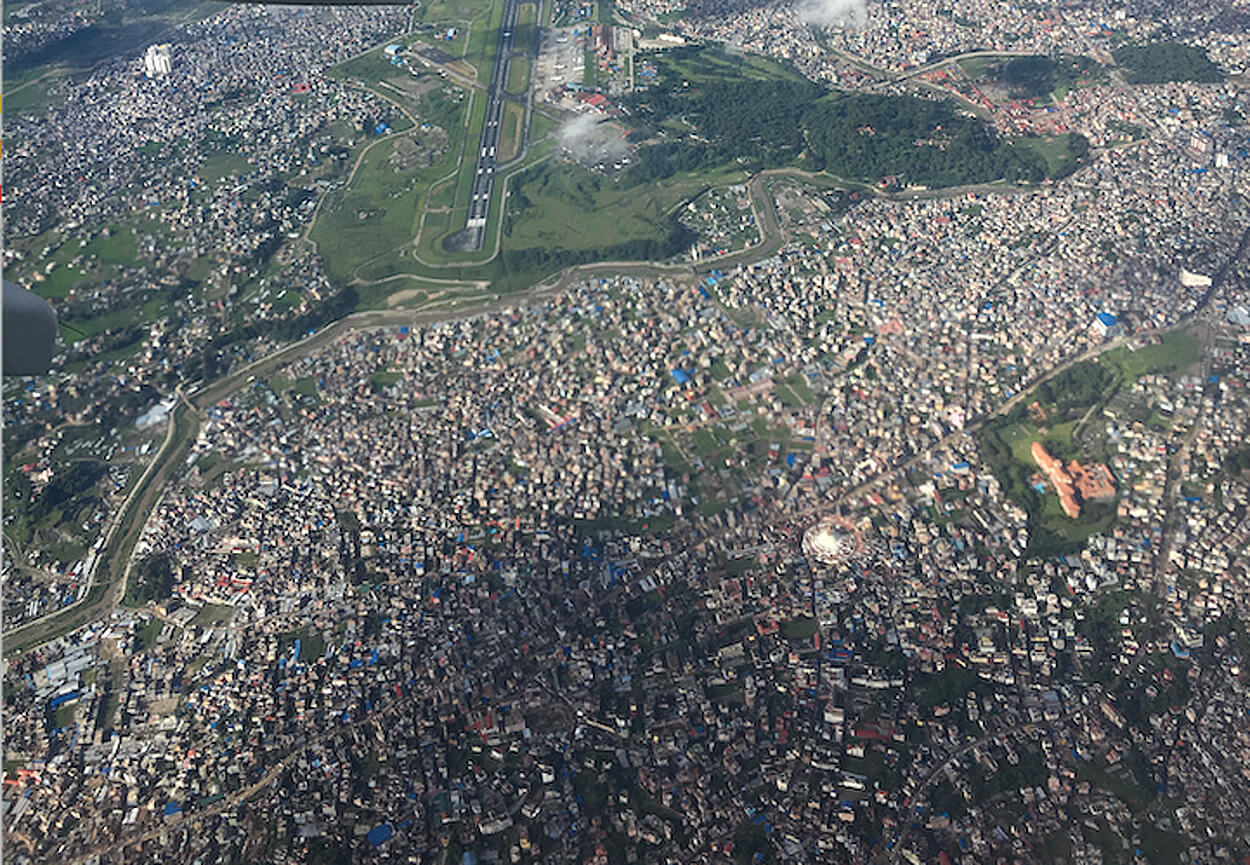
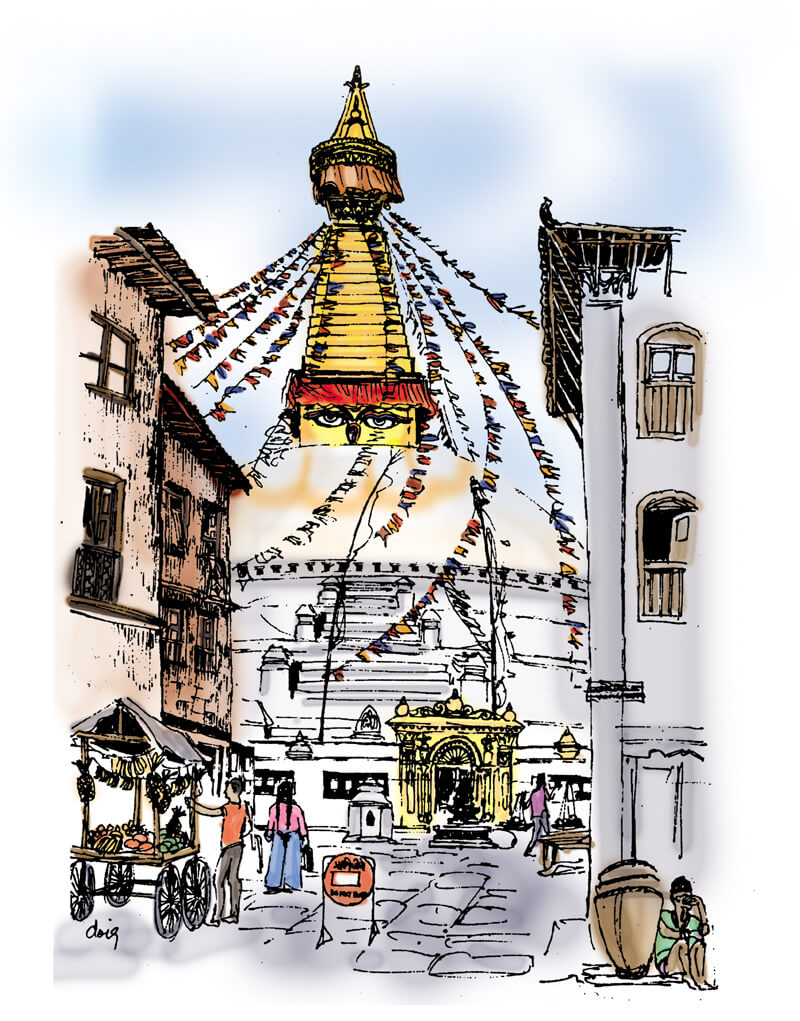
Until a few decades ago, the white dome of Boudha capped with its gilded tower and finial, and all-seeing eyes was so prominent it could be seen from all over the once-emerald Valley.
Today, one of the country’s holiest Buddhist shrines is over-run by Kathmandu’s rampant urbanisation. The stupa itself is dwarfed by surrounding hotels, malls and apartment blocks. Boudha has lost a lot more than its serenity, it is losing its uniqueness.
Boudha is said to have been first built by Emperor Ashoka’s daughter who arrived in the Valley more than 2,500 years ago. Boudhanath is actually the Sanskritised name given during the Panchayat era in the 1960s. Its original name is Khasti Mahachaitya, which means ‘great stupa of the dew drops’, and there is an interesting story about how that name came about.
During the Lichhavi period (400-700 CE) the palace of King Bikramaditya was located where Narayanhiti is today at Durbar Marg. The king had constructed three water spouts at the southern edge of the palace, but it did not give any water. Astrologers recommended a human sacrifice of a male possessed of all 32 perfections. However, only the king himself and his son had those attributes.
As the story goes, the next morning the king ordered his son to kill a man sleeping by the water spout. The prince did as he was told, and the water started running from the spouts. But he found out that the man he had killed was his own father, the king. Ridden with guilt, he consulted the priests about how to absolve his great sin.
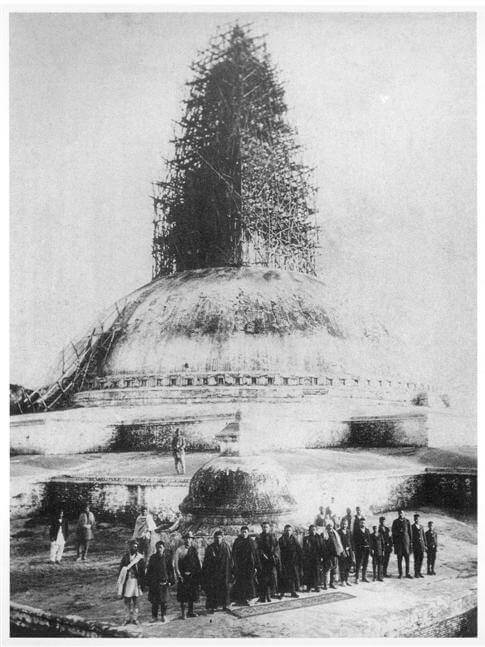
They suggested that he should release a white bird from the top of Bajrayogini Temple and construct a stupa wherever it landed. The bird landed at the current location of Boudha.
However, there was no water to mix the clay for the construction of the stupa since Kathmandu Valley was suffering a prolonged drought. So determined was the young king that he instructed the people to harvest water by collecting dewdrops every morning.