The global pandemic hijacked 2020 and reset priorities, but countries now need to regroup and renew their commitment to cap global warming at well below 2°C above pre-industrial levels, as agreed in Paris in 2015.
On 12 December, it will be the fifth anniversary of the signing of the landmark climate accord when 196 countries, including Nepal, will be presenting their Nationally Determined Contributions (NDCs) to reduce the impact of the climate crisis.
NDCs are voluntary commitments by countries to reduce their carbon footprints, but there are fears that a world in the throes of a Covid-19 induced economic crisis will follow through on past commitments—even as scientists warn that the earth is warming much more rapidly than forecast five years ago in Paris.
The Himalaya is literally a hotspot because the mountains are warming faster than the global average. But activists say Nepal's own 'Enhanced NDC' does not go far enough in mitigating carbon emissions, or adapting to the impact of the climate emergency.
The document has been put up for public comment and is subject to revision. Its highlight is that Nepal for the first time mentions ‘net-zero emission’ as a future goal.
But the document does not give a timeline to achieve it, and only says that the country will formulate 'a long-term low greenhouse gas emission development strategy' sometime next year.
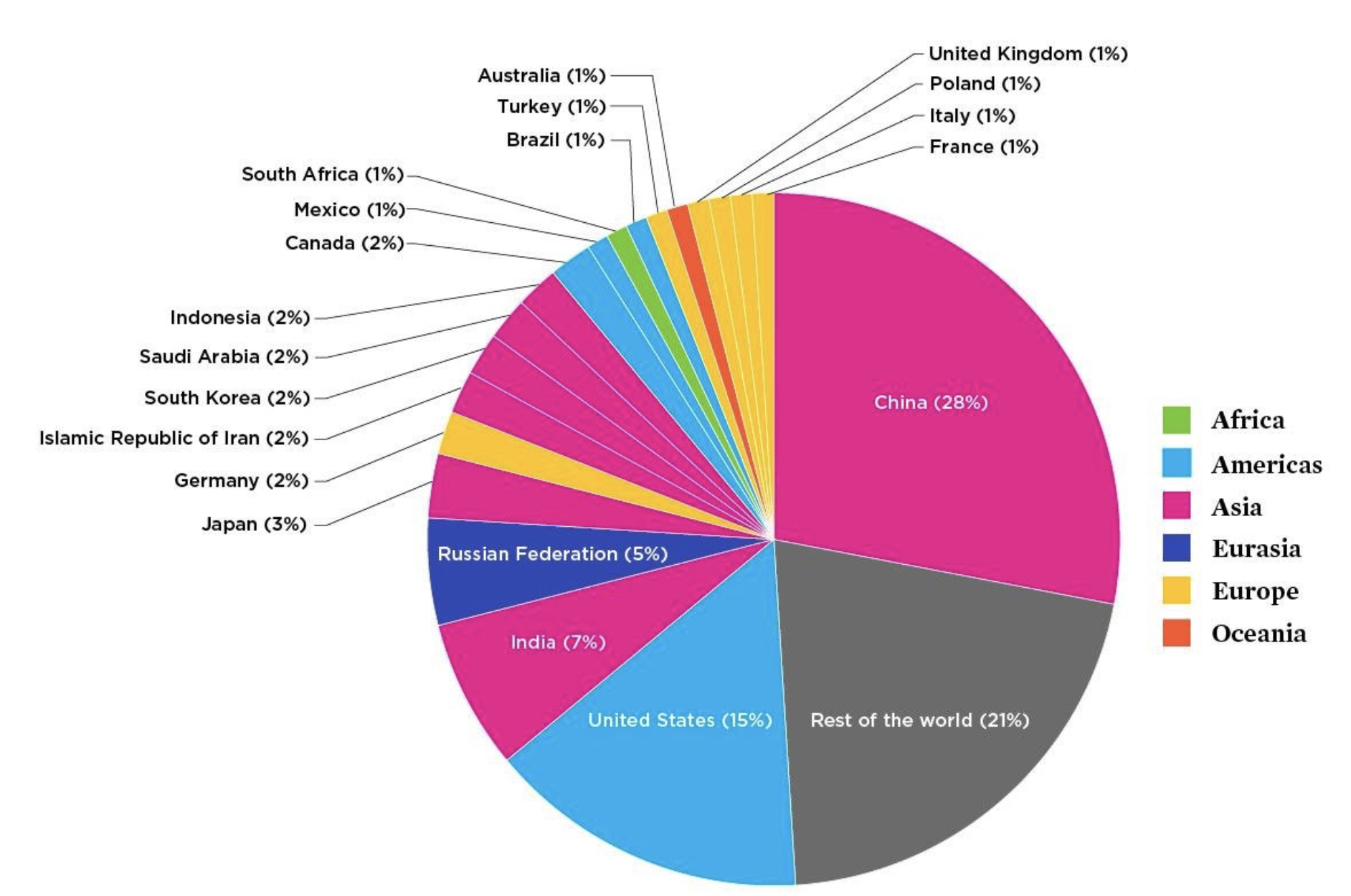
In the region, Bhutan has already declared itself carbon neutral—meaning its forests absorb more than the CO2 it emits. China, responsible for 28% of total annual carbon emissions, recently pledged peak emission before 2030 and attain net-zero by 2060. President-elect Joe Biden as committed that the US, which contributes 15% of CO2 annually, to zero carbon emissions by 2050, as have Japan, South Korea and the UK.
India, the fourth largest CO2 emitter globally, is lagging but has been investing heavily in solar power, and by setting targets to electrify railways and phasing out diesel and petroleum vehicles by 2030.
Nepali activists say the country's NDC could have gone much further to set realistic firm pledges, since it is starting from such a low carbon base.
"We could have easily set a target of net-zero by 2050. In fact, we can achieve it by 2030 if we are really committed," says environmentalist Bhushan Tuladhar. "Our emission is negligible, we are a low-carbon economy and have much cleaner sources of energy like hydroelectricity at our disposal."
In 2014, a report showed that Nepal's forest area had doubled in 25 years, and it absorbed half of Nepal's total emissions from burning fossil fuels. However, another report last year showed that carbon emission was rising faster than vegetation cover, and frequent wildfires were themselves pumping more CO2 into the atmosphere.
Manjeet Dhakal, adviser to the Least Developed Countries support group at the UN Framework Convention on Climate Change (UNFCCC) says: "I'm pretty confident we will achieve net-zero by 2050. But what is important in this discussion is that, while we may be among the smallest emitters, our emissions are increasing and forests are not absorbing CO2 as they used to."
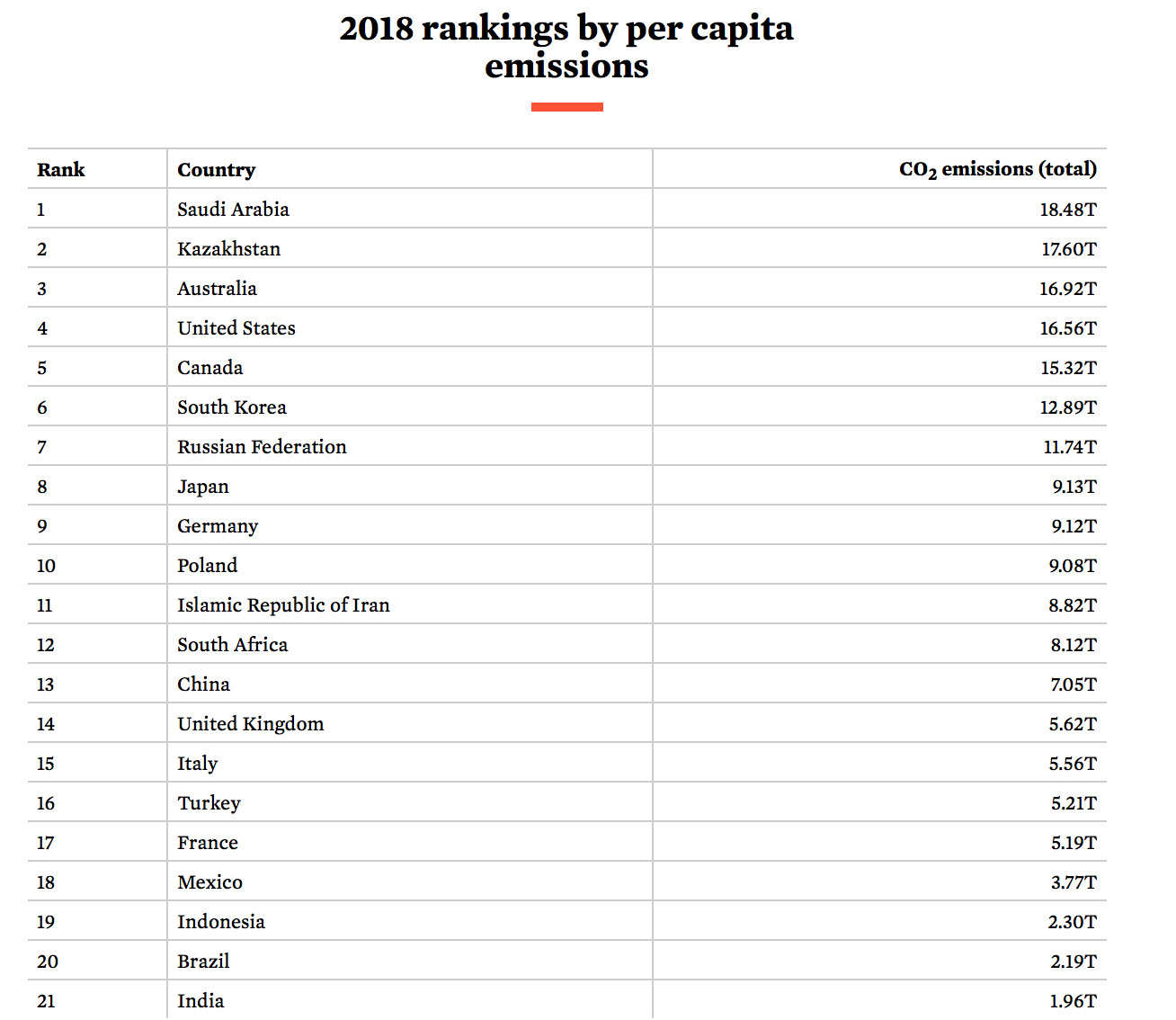
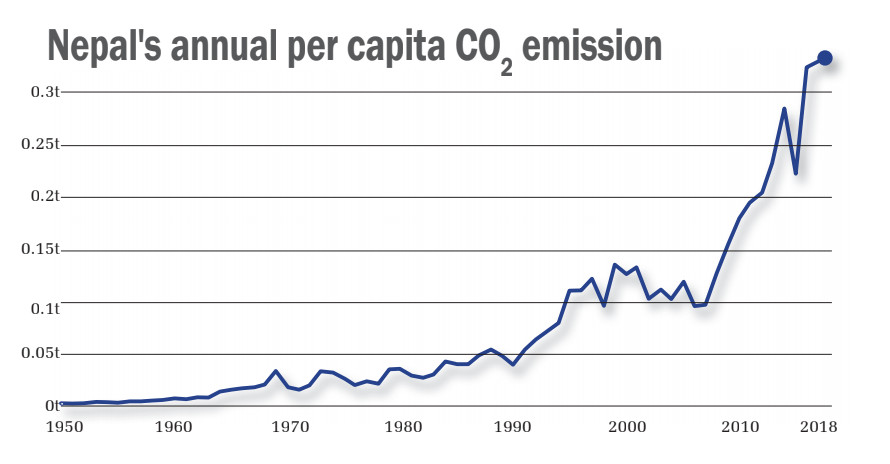
Nepal's annual per capita carbon emission is one of the lowest in the world at 0.29 tons. In comparison, an average American pumps 16 tons of carbon every year, and Qataris burn 37 tons. However, Nepal's per capita emission is rising significantly due to the growing import of petroleum products and thermal electricity from India.
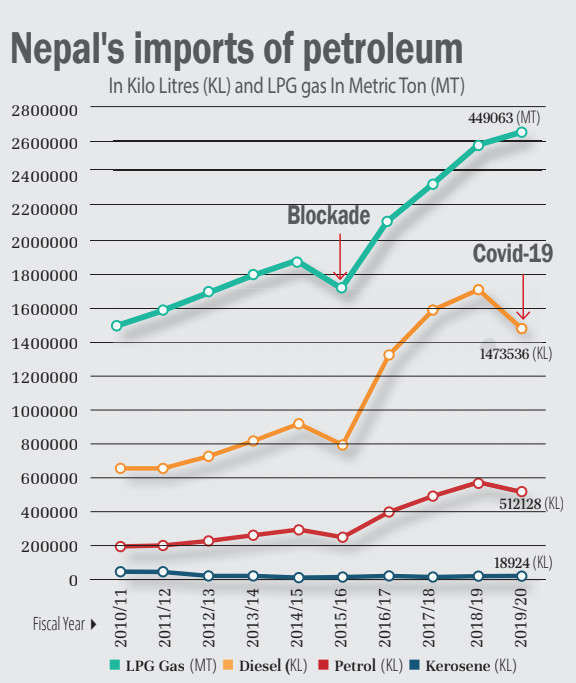
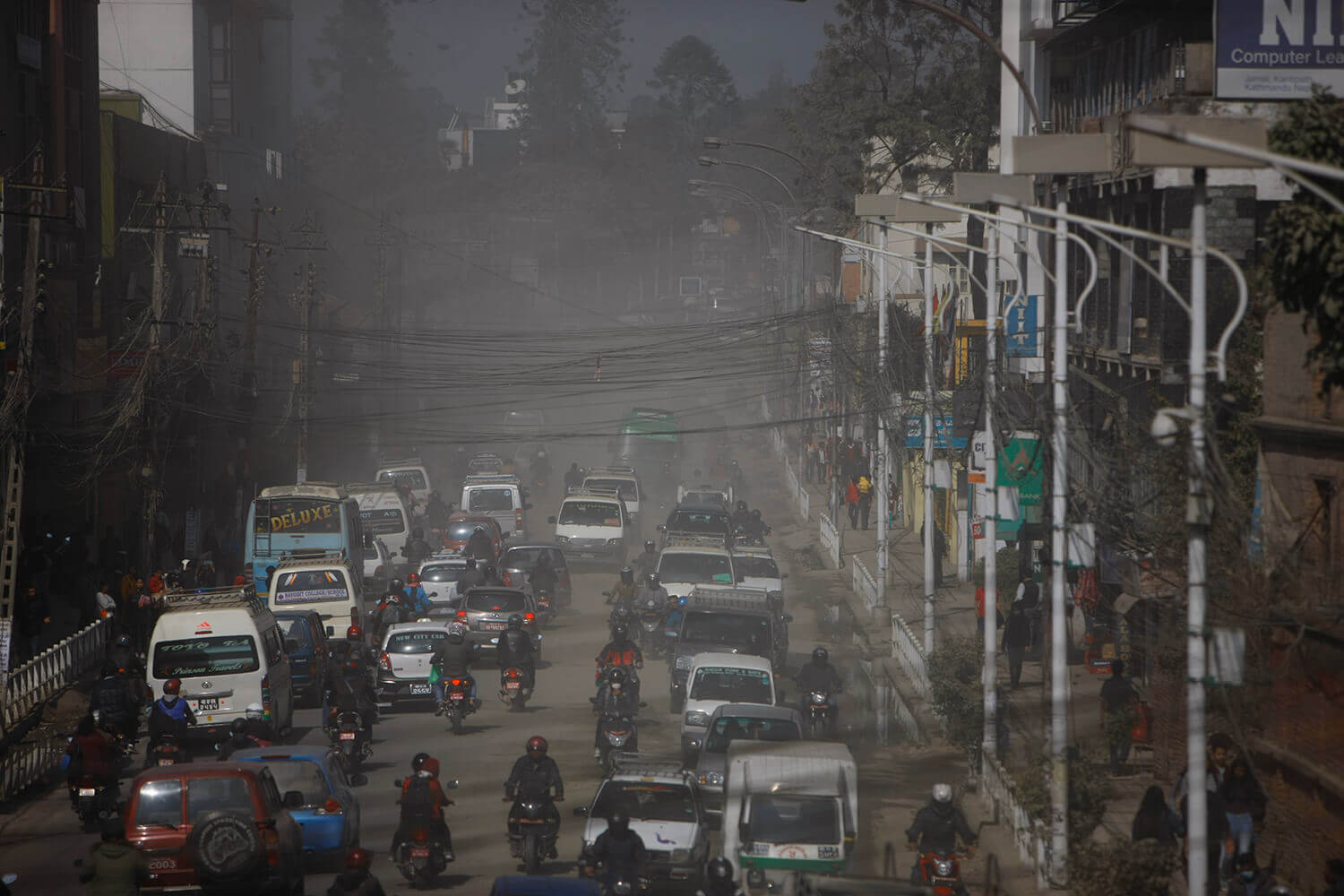
As new roads are built and more vehicles imported, Nepal's main driver of fossil fuel consumption is the transportation sector. Motorcycles account for 80% of all vehicles in Nepal, and phasing them out for battery-powered two-wheelers would significantly reduce petroleum imports.
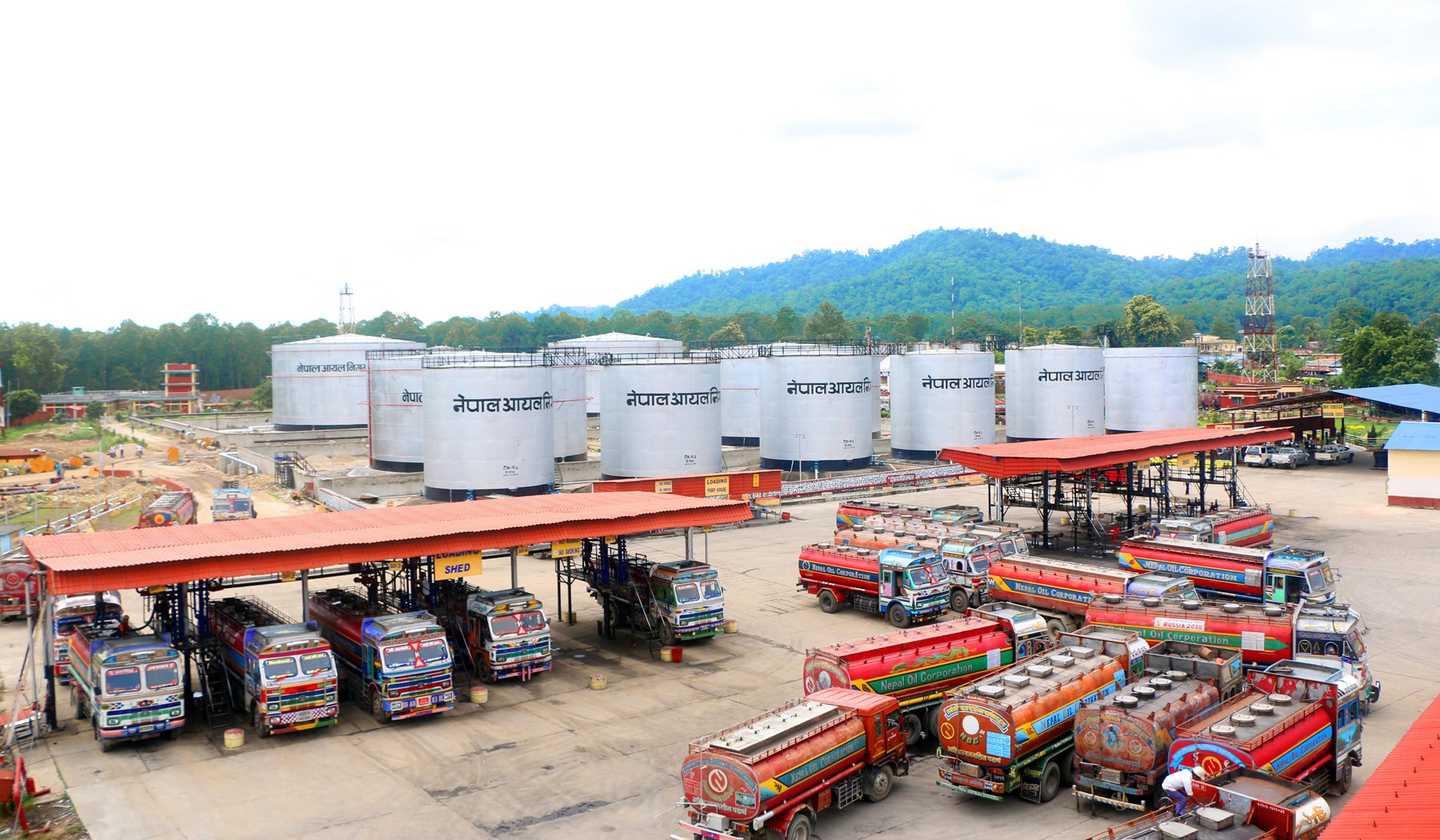
Electric public transport will need subsidies from the government and investors but it also means utilising Nepal's clean energy from hydropower and further reducing our carbon footprint. Last fiscal year, Nepal's petroleum import reached Rs200 billion— 2.2 times higher than the country's total income from exports. Imports of diesel, petrol, aviation fuel and LPG went down slightly in 2020 due to the pandemic and lockdowns.