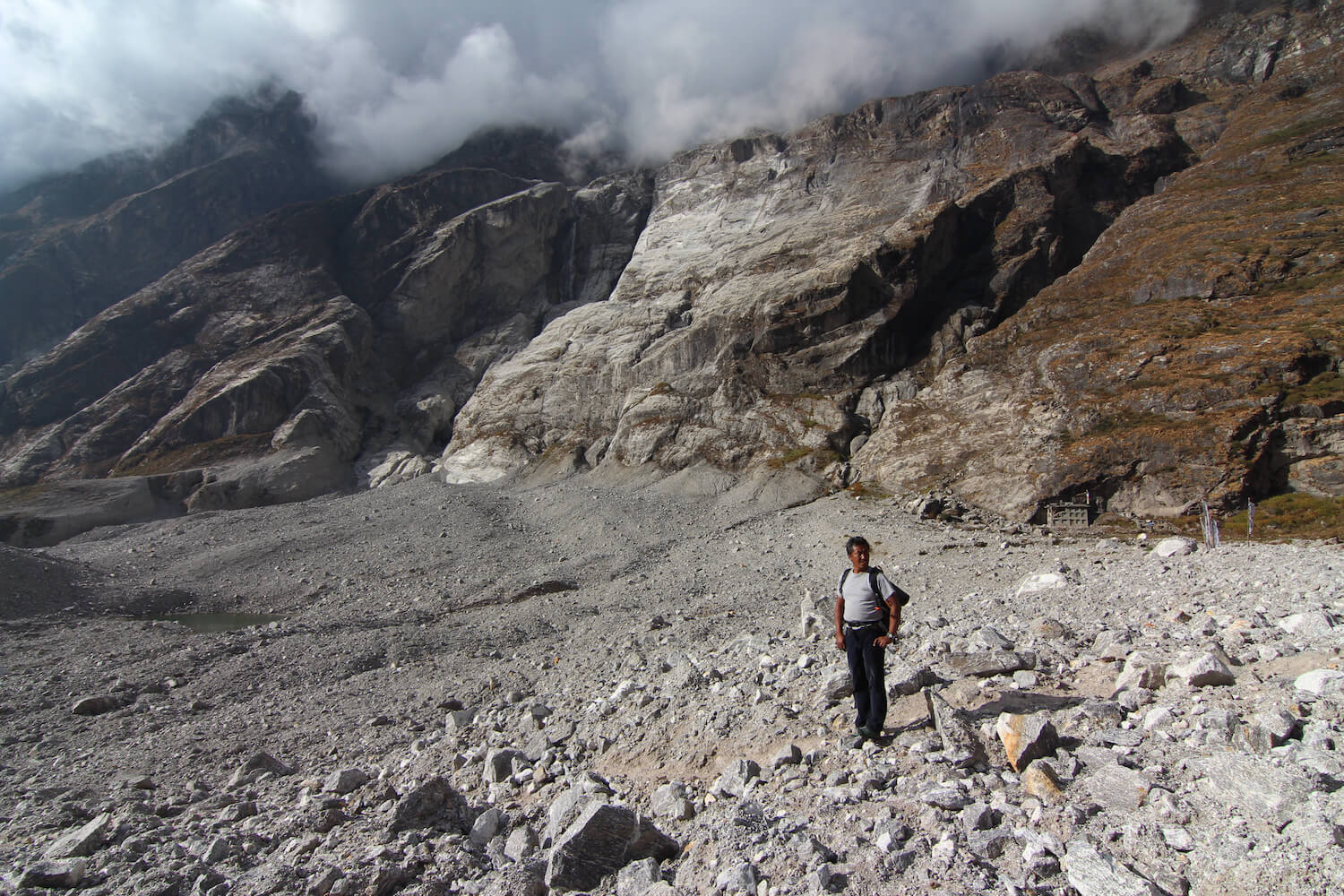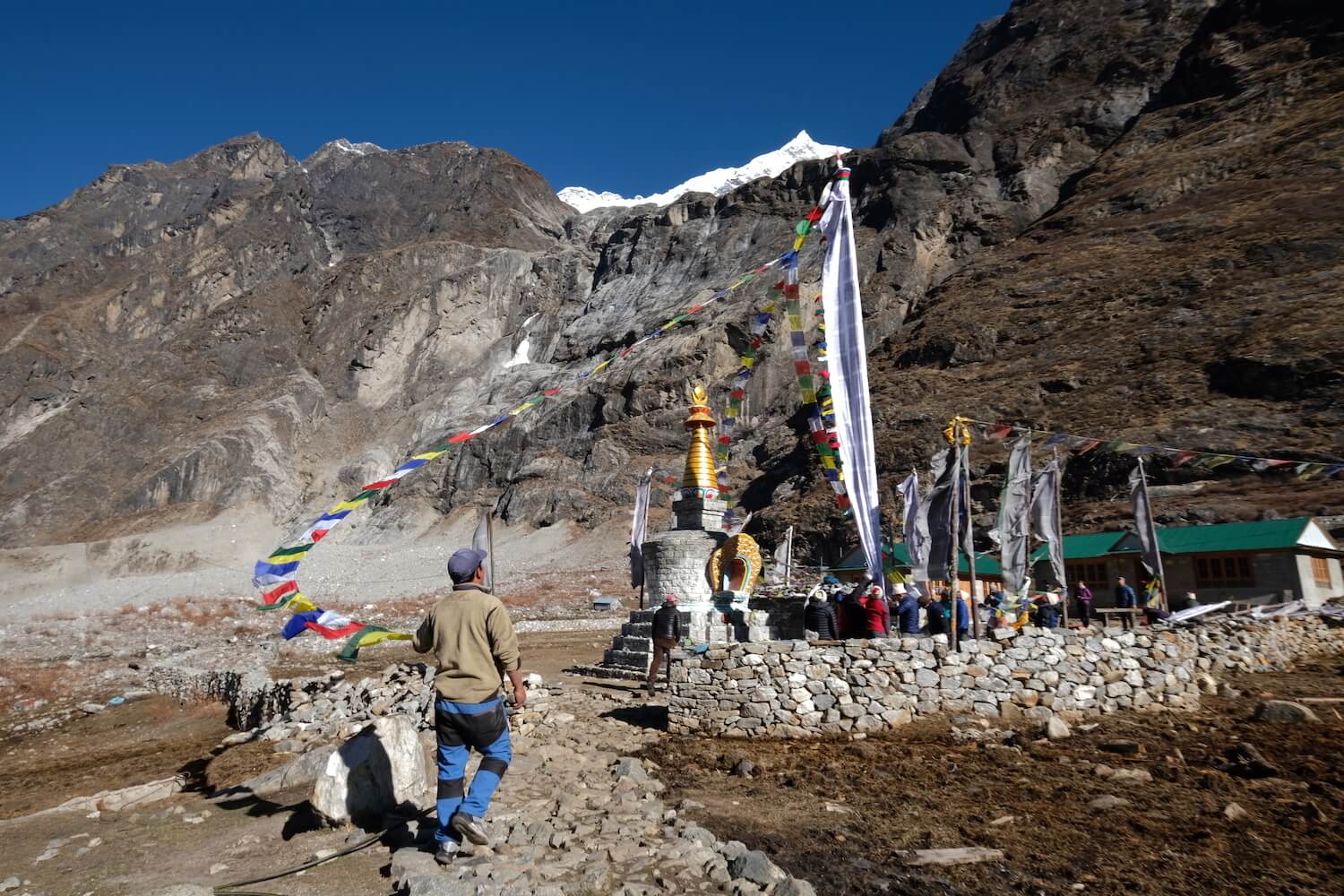
Five years ago, I was in the Langtang Valley with my parents at the moment when the earth shook. The earthquake released a massive, roiling avalanche weighing over twelve million tons of material from the slopes of Langtang Lirung, carrying half the force of an atomic bomb. The earthquake brought loss beyond words or comprehension, and even now, so much remains unspeakable and unknowable. Surviving those unstable moments and all that followed has changed my life and my view of this world, forever.
Five years after the avalanche, Langtang is locked down
Since that day, I have returned to Langtang again and again, and I have remained engaged with post-earthquake recovery and the Langtangpa community in a variety of ways. It has been an immeasurable privilege to see and feel Langtang come back to life. The Langtangpa have a great deal to teach us about strength, courage, resilience, endurance, and the ways we might carve out places for ourselves in a world full of uncertainties.

Disasters can shift, warp, and fold our sense of time in complex and unexpected ways. Anniversaries and other moments of mutual reflection, ceremony, or commemoration can help us mark time and reorient ourselves in the wake of disaster. In regathering ourselves, we might attempt to restore some kind of temporal sovereignty, if only for a moment, or perhaps give ourselves over to the uneven flows of time.
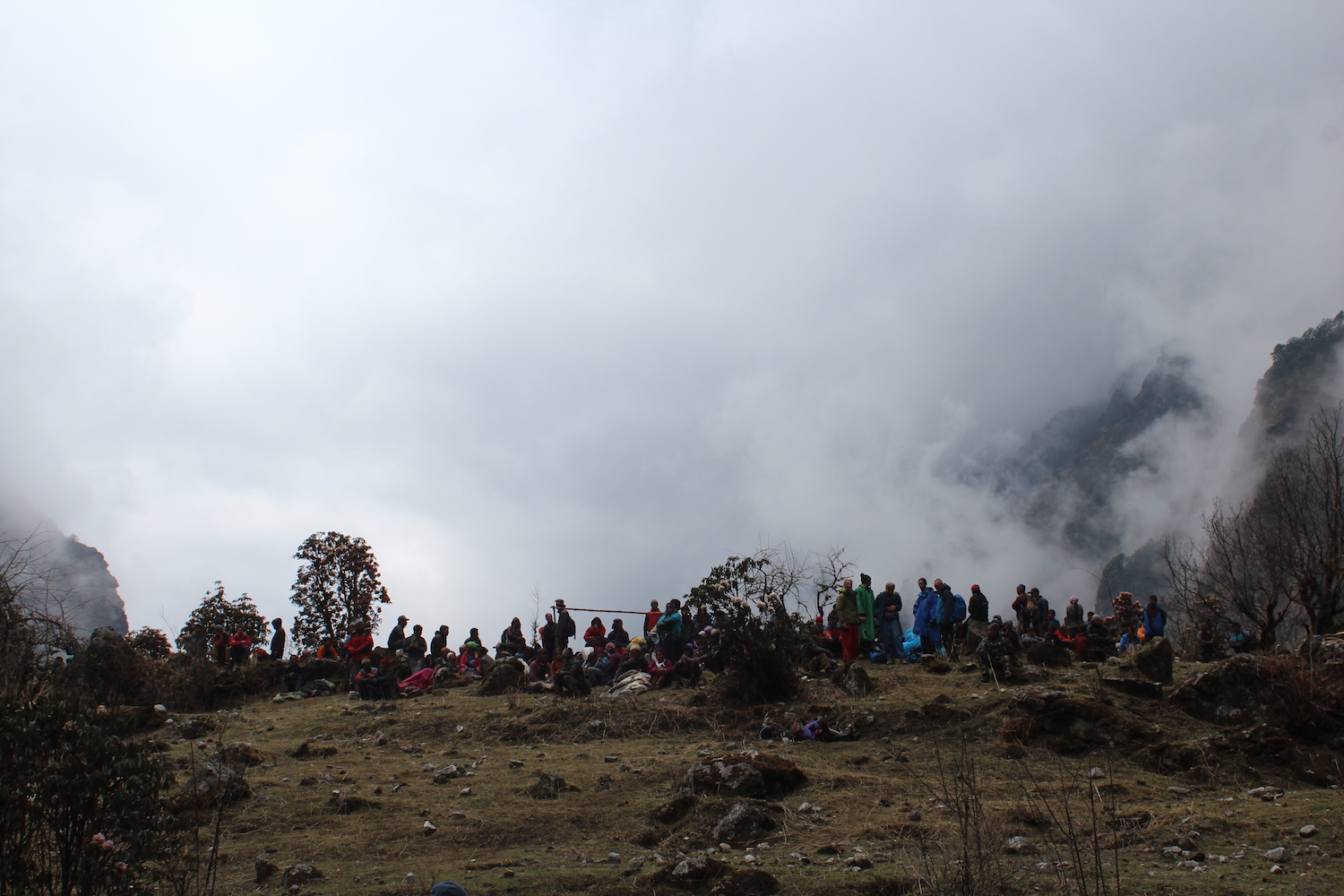
Five years after the 25 April earthquake, fundamental questions about the time of disaster persist and recur. How and when does a disaster truly conclude, and for whom? In what ways do we navigate the tangled temporalities that shape the aftermath of disaster, or the multiple pasts of our present moment?
As all Nepalis know, we do not all reckon or account for time in the same ways. And so, the ‘anniversary’ of the earthquake is itself is referred to as ‘April 25’, ‘Baisakh 12’ and ‘Bö da sumbatsebadün’ in the Gregorian, Nepali, and Tibetan calendars. This time around, each date falls on a different day, and so the anniversary is (perhaps, rightfully) distributed over an entire week.
The Reincarnation of a holy valley, Clara Bullock
The following reflection – written based on dozens of conversations and interviews with my Langtangpa friends over the years – retraces some of the moments and feelings that have gathered around each of earthquake anniversaries in the Langtang Valley over the past five years:
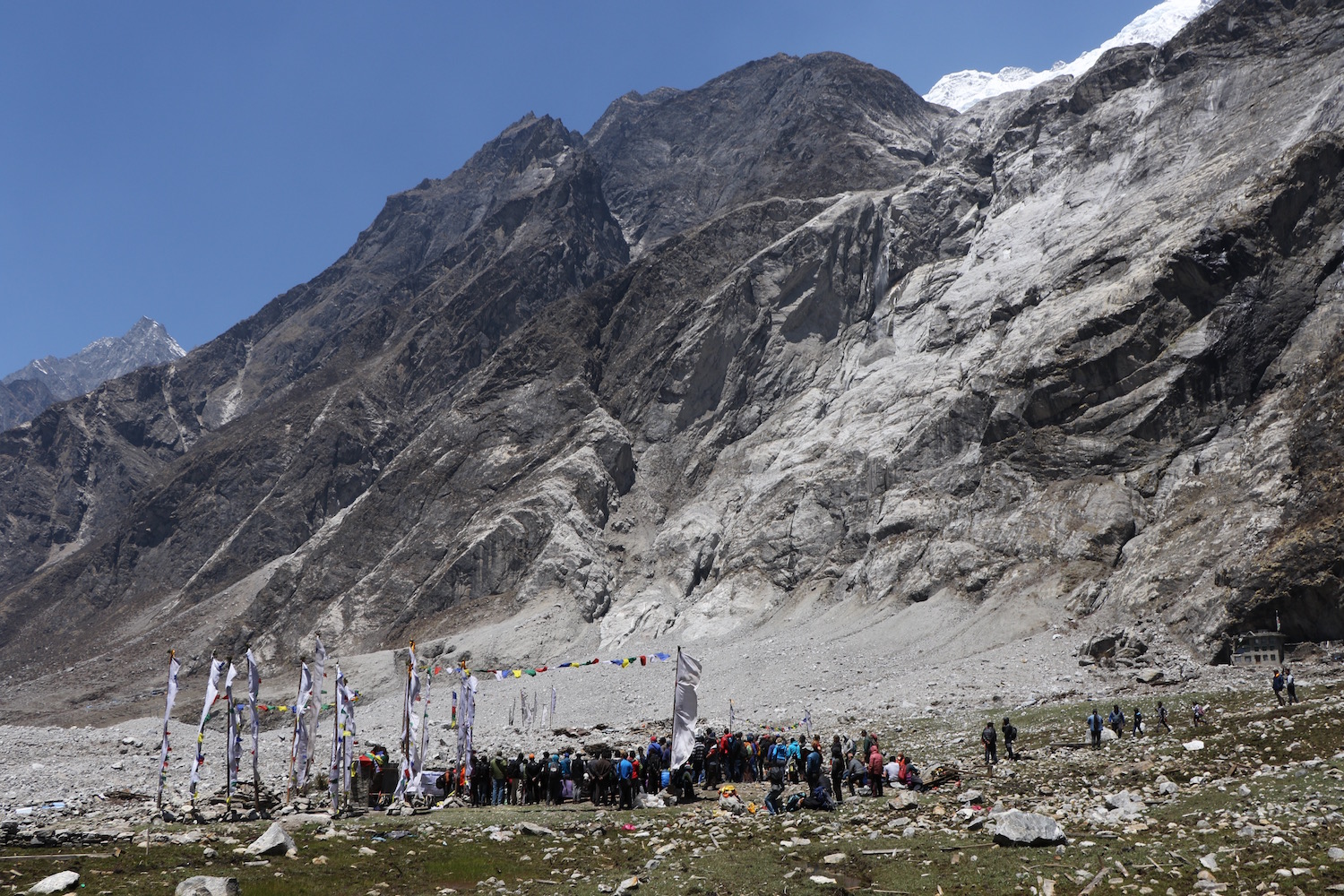
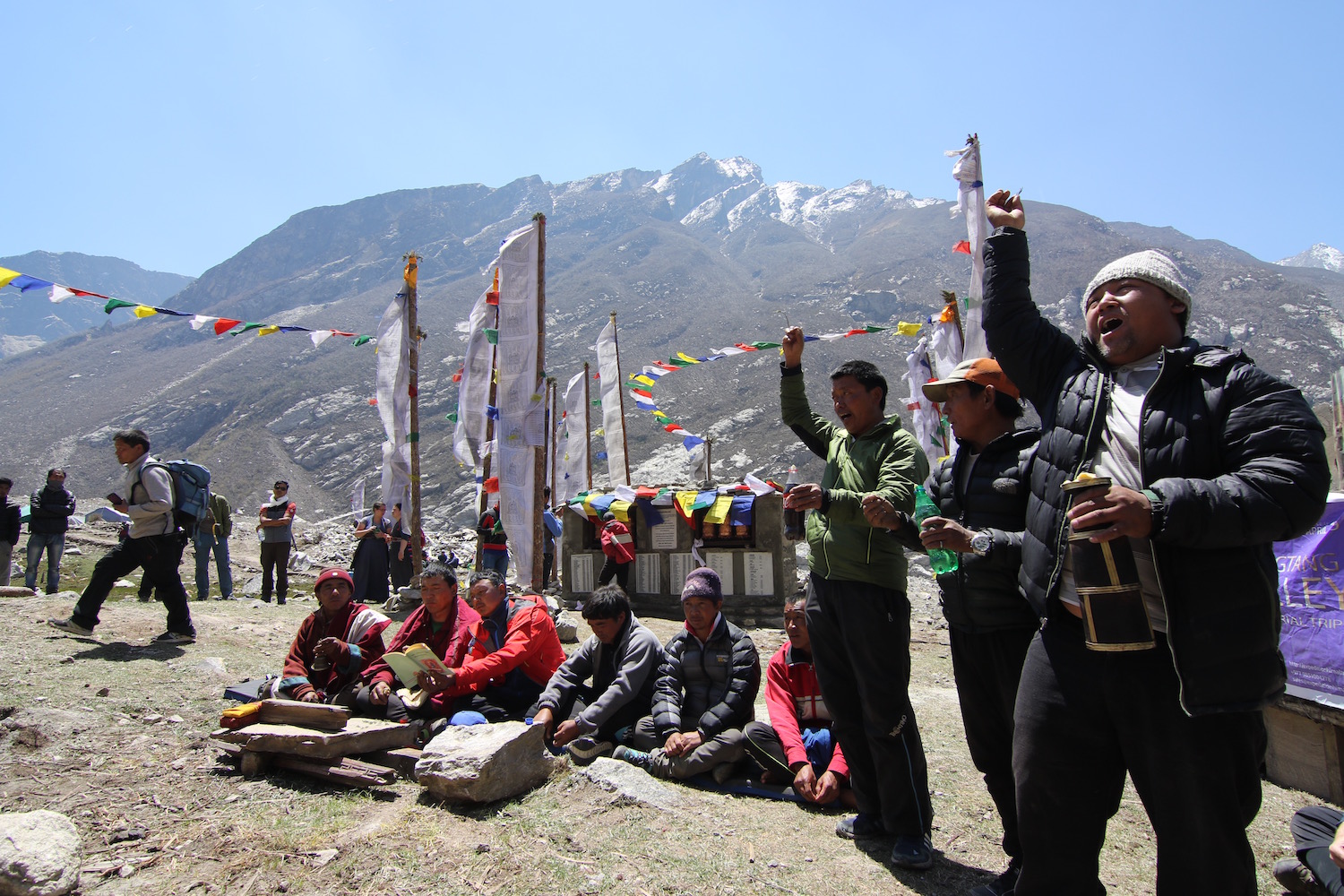
1. Awash in uncertainty and emotion, without homes, the people of Langtang gathered. Most of them had only recently returned to the valley, disoriented and struggling to begin again. Foreigners came from around the world -- those who had lost their family members, survivors, and other supporters -- bringing a feeling of solidarity and care. A tangle of people and torn lives, gathered in the lap of the mountain, at the edge of the scar the avalanche created in the landscape. On the morning of 25 April, we gathered at the foot of the avalanche, in front of a recently built mani wall inscribed with the names of the deceased and the phrase ‘forever in our hearts’ written in the eleven languages. Every nerve was raw. A moment of silence at 11:56 AM, and then twelve minutes to read all the names of the dead, as I was asked to do.
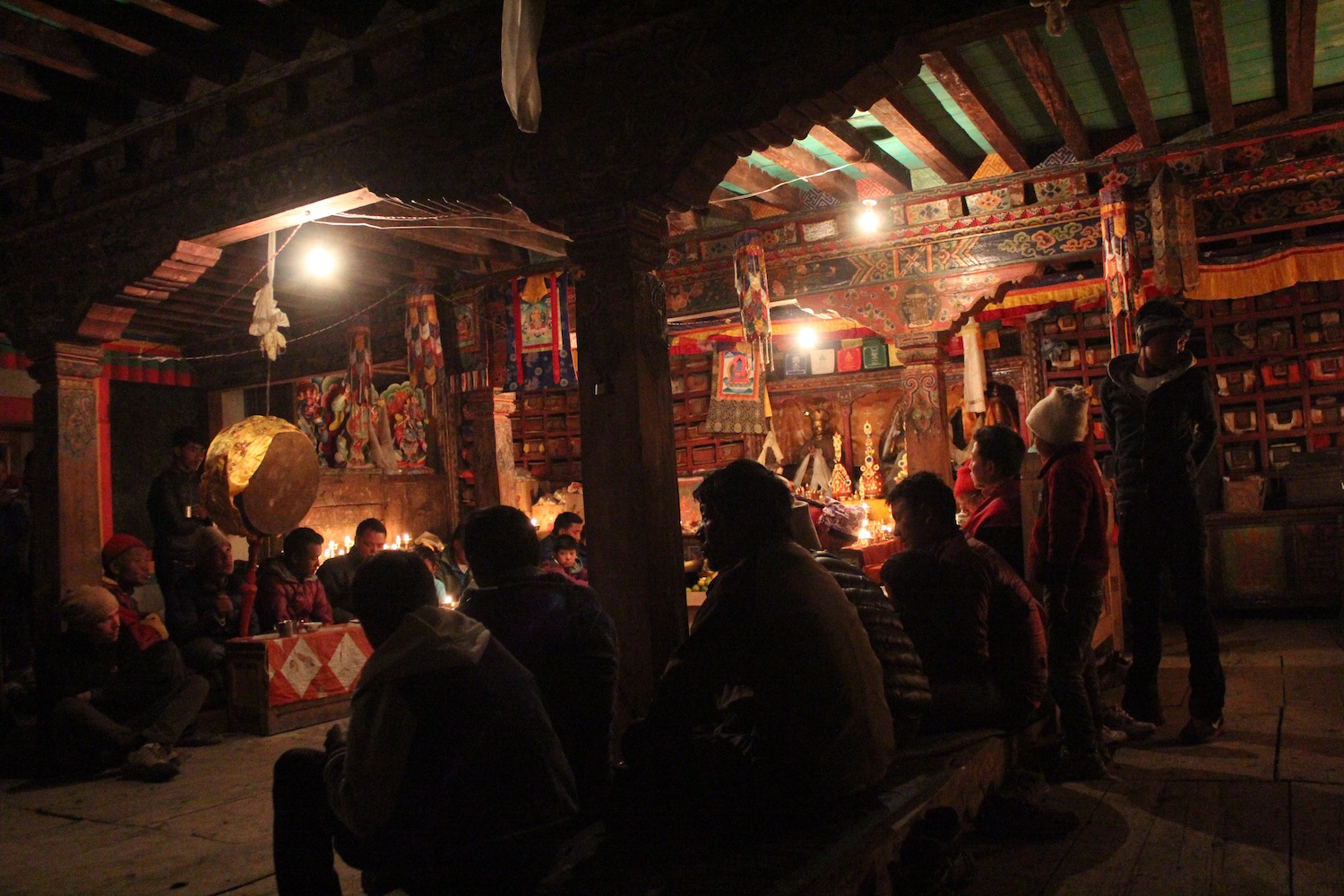
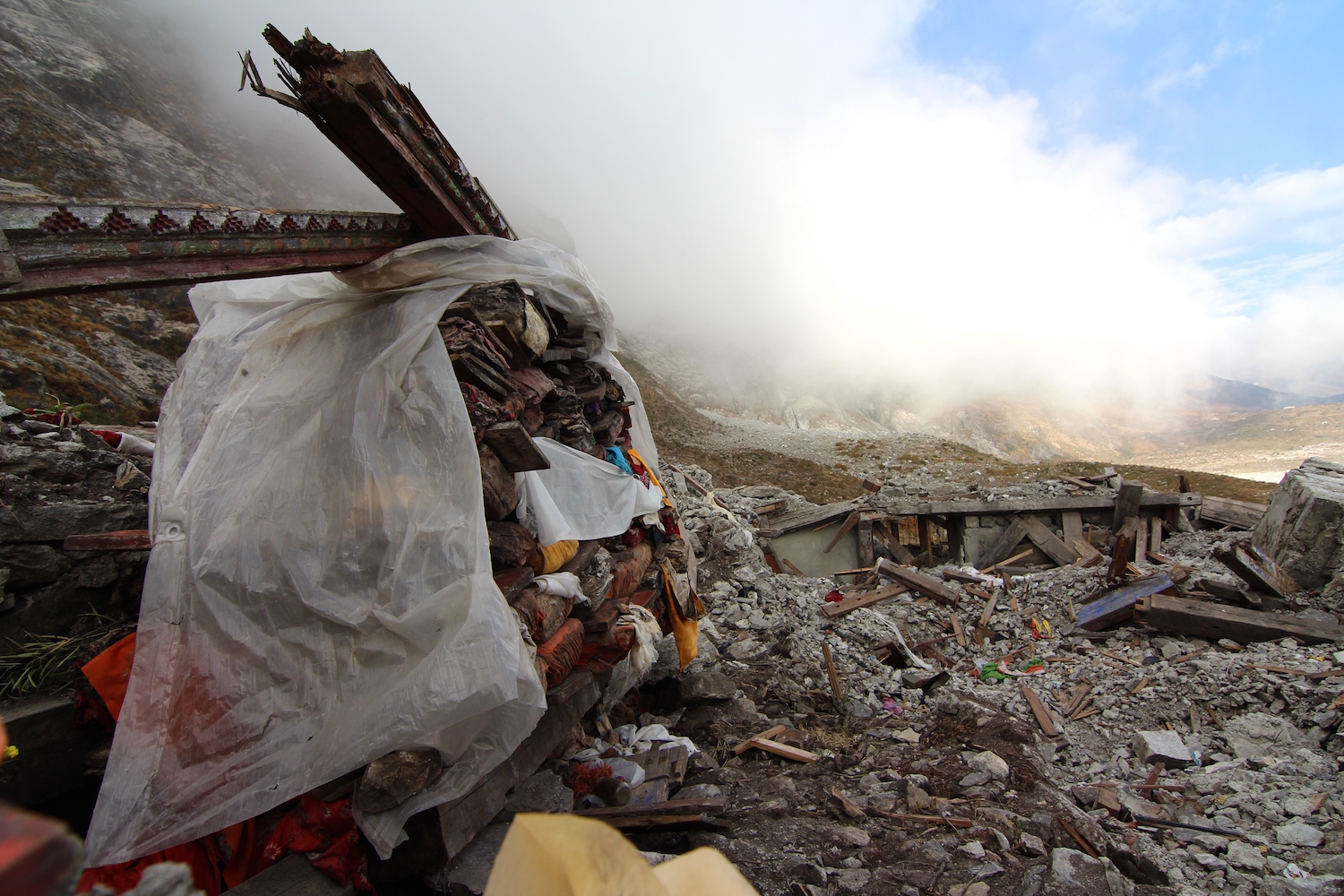
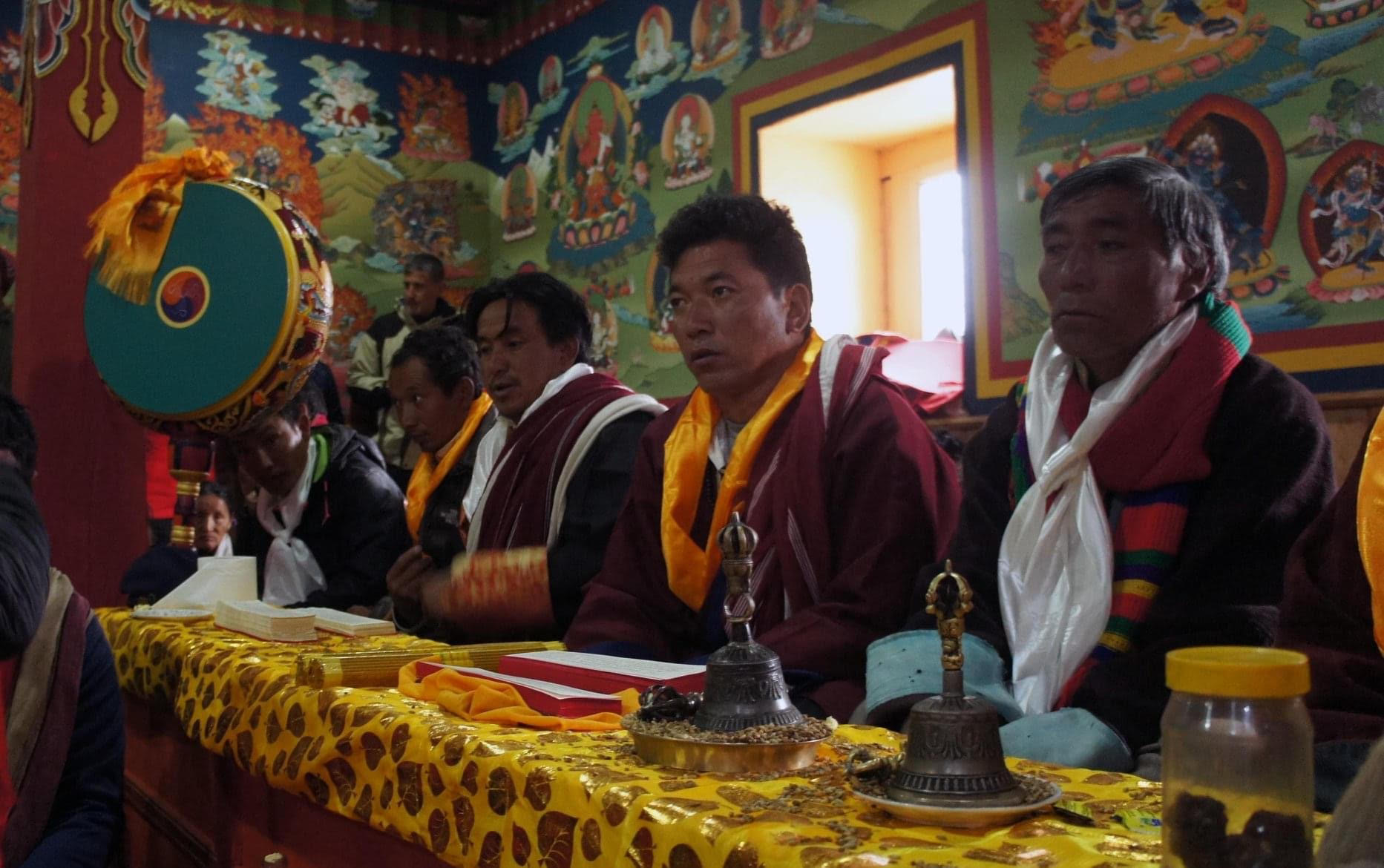
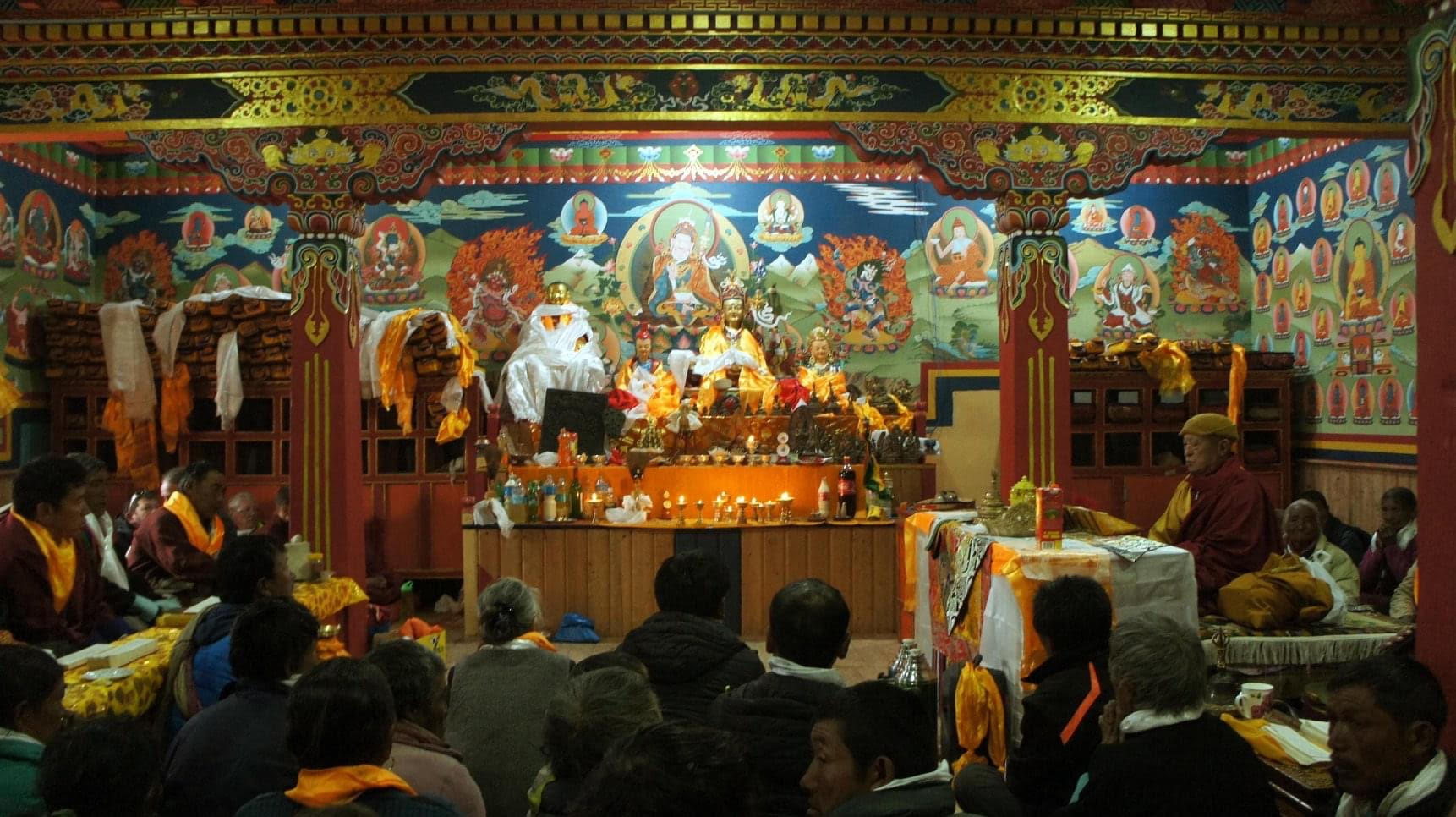
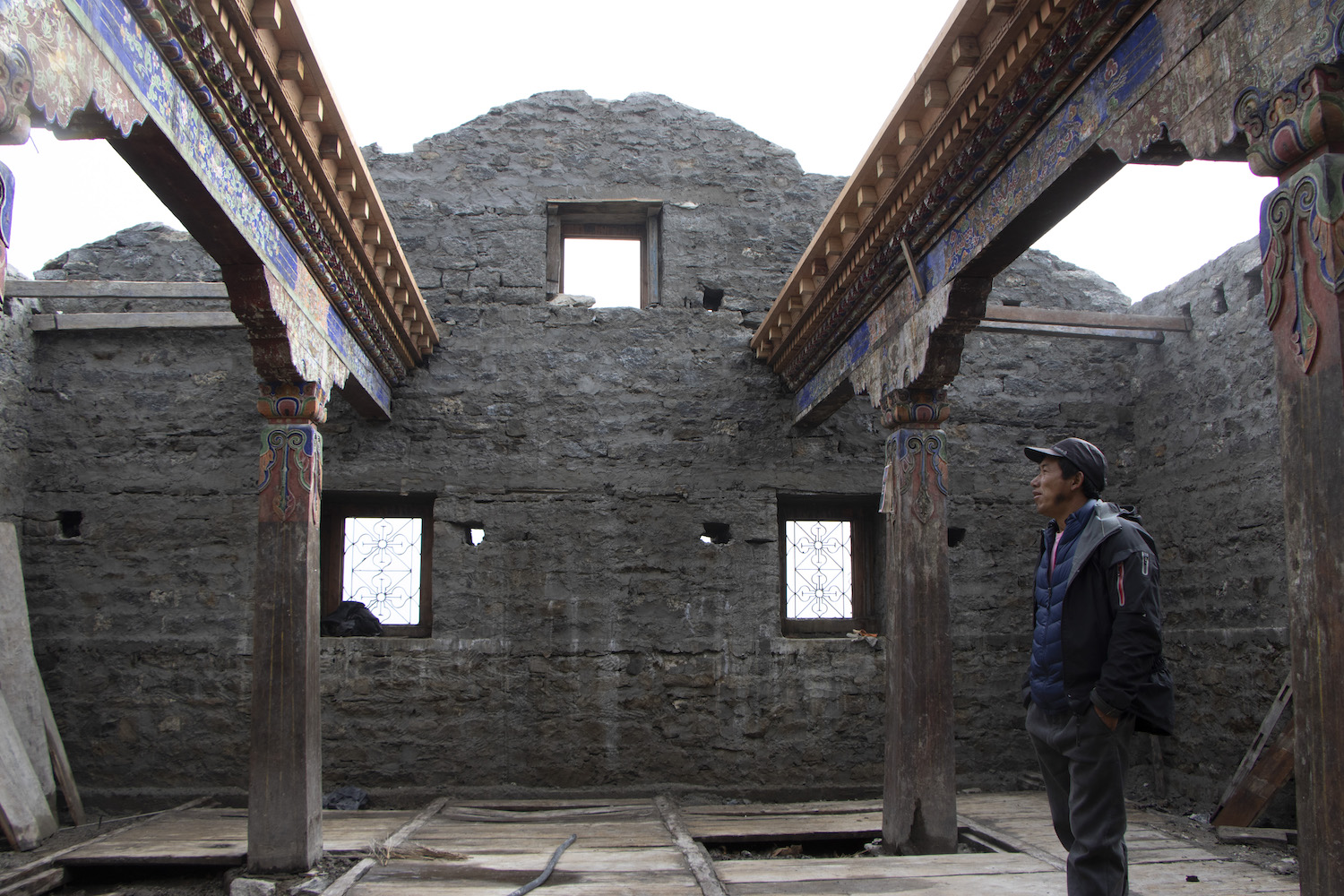
A video projection of old Langtangpa songs and photographs. Labourers walked by carrying building materials. Both of the gompas in the Langtang Valley had been destroyed, and there was no place to conduct a puja on the earthquake anniversary. A few days earlier, on April 13, the Langtangpas had gathered for a puja that Chökyi Nyima Rinpoche conducted in a field above the village. On the same day, a few Langtangpas also gathered for prayers at the Yellow Gompa in Kathmandu one last time. One turn around the sun, and many of us were still broken. A year of grief and absence, followed by gathering and presence. Time flowing around our varied and imperfect attempts at beginning.
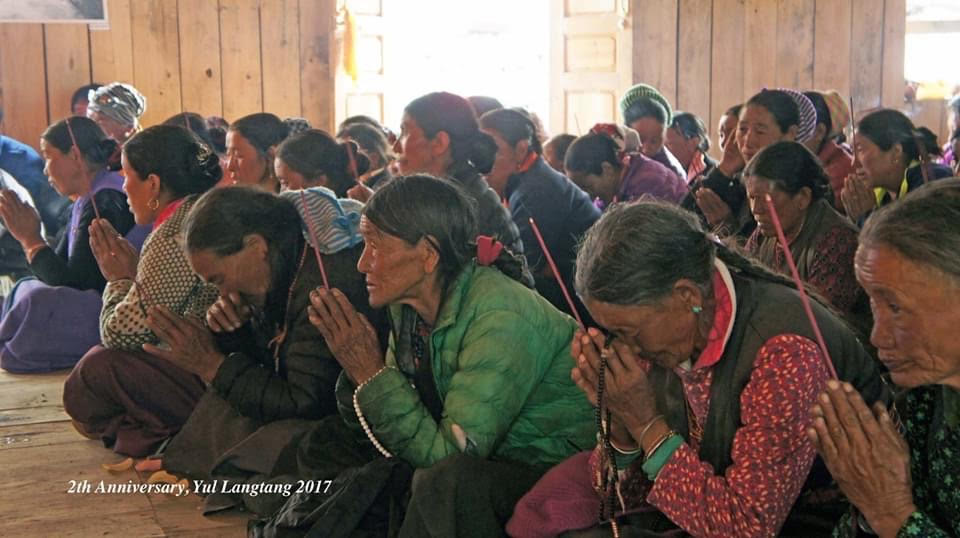
2. Small houses, a community center, a larger gathering of Langtangpa. “We had made some progress rebuilding, but it was still a very emotional time.” Chökyi Nyima Rinpoche came to Langtang again on the Tibetan earthquake anniversary and conducted a serkhim puja for the protection of the village. “This puja gave people some mental support, it helped us deal with all the tension.” Rinpoche also conducted a puja at Seto Gompa in Bouddha that day, since there was still no gompa in Langtang. Tearful speeches in the community centre, bittersweet reflections on change. A large prayer wheel spun inside the recently built Memorial Stupa, sending prayers to the heavens for all the deceased in their new lives. The herders moved more confidently this year, as a Japanese NGO had helped them buy zomos to replace some of the animals that had died during the disaster. The prayer flags of the prior year were taken down and burned, new flags hung. The rhythms of the valley were slowly layering onto each other again.