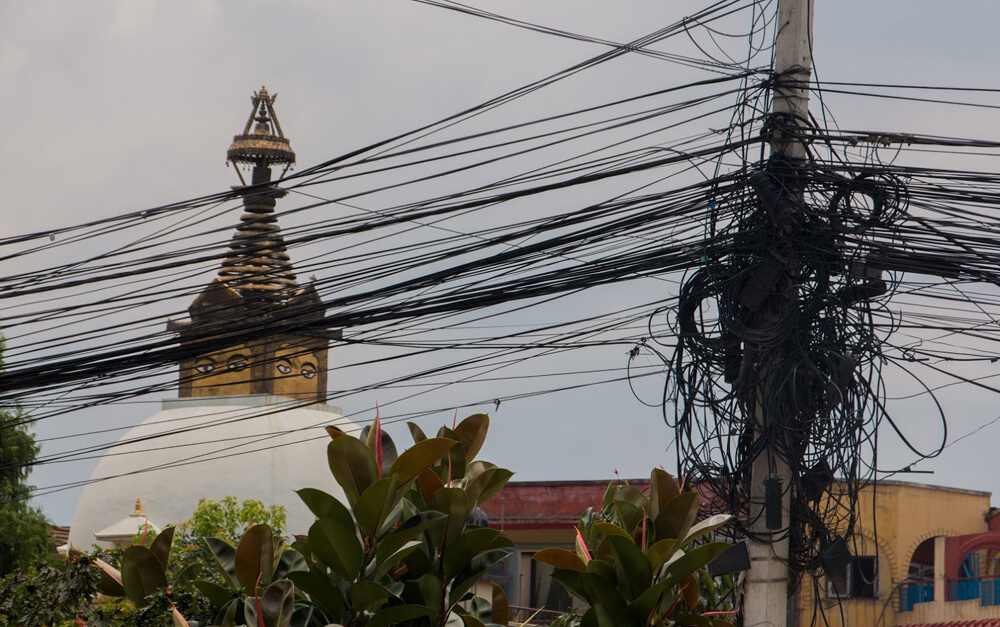
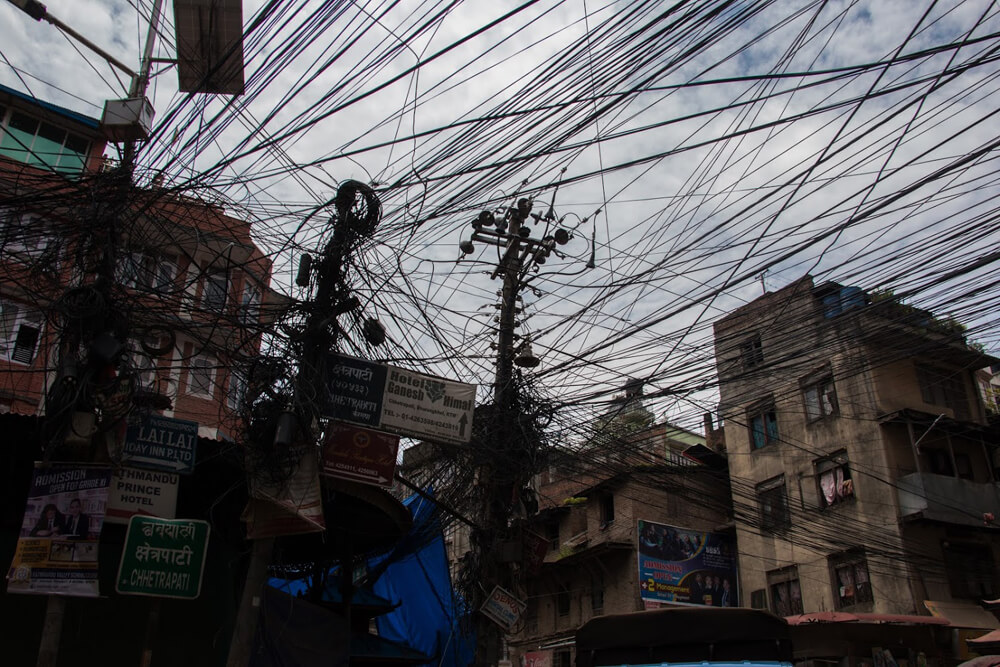
The jumble of wires above Kathmandu’s streets may be an eyesore for residents, but they have become the city's latest tourist attraction. Instead of temple landmarks, visitors seem more intrigued by monkeys clambering on overhead wires above Kathmandu’s intersections.
However, the tangle of transmission lines, phone wires, fibreoptic and TV cables that wrap the city in giant black spider webs have become dangerous because they are too heavy for the flimsy poles.
Several maintenance crew members have been electrocuted in the past two years, and there have been a rash of fires that could easily have gone out of control. The wires are so knotted up that repair teams often give up trying fix problems.
But just like potholes, polluted air and crumbling sidewalks, residents of the capital have given up expecting the elected city government to solve the problem.
Read also: How they kept Nepal in the dark ages, Ramesh Kumar
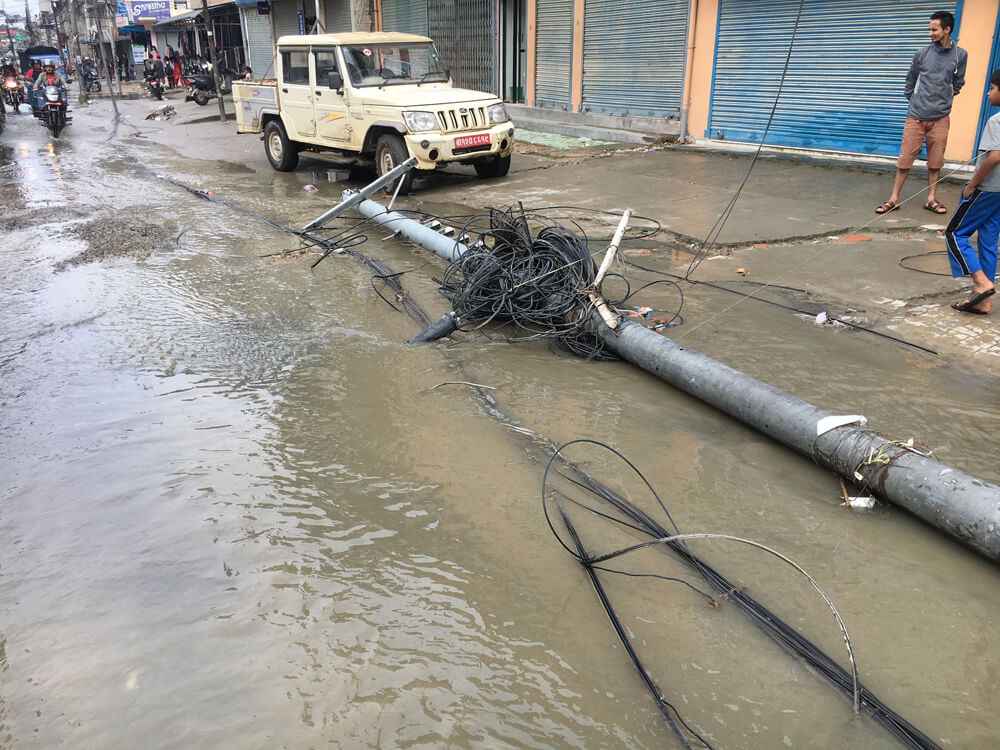
Till now. This week, the government suddenly realised just how scruffy the city looked, and the Municpality sprang into action to streamline the wires and pave roads that have turned into muddy rivers this monsoon.
The reason for repairs on a war-footing is not public pressure, but the need to spruce up the streets ahead of the Bay of Bengal Initiative for Multi-Sectoral Technical and Economic Cooperation (BIMSTEC) Summit later this month when the leaders of Bangladesh, Bhutan, India, Myanmar Nepal, Sri Lanka and Thailand will descend on Kathmandu.
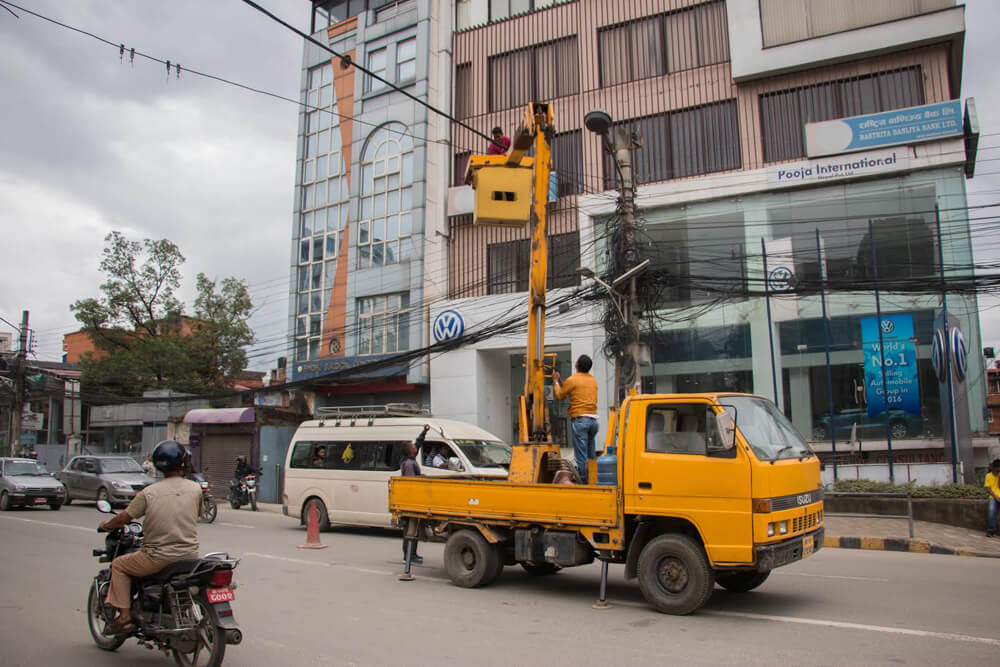
The stretch of roads from the airport to Soaltee Hotel, and to the Hyatt Regency are getting facelifts, and unruly overhead wires are being tamed. Because the leaders of Buddhist countries like Burma, Sri Lanka and Thailand may also decide to visit Baudhha, the electricity poles along the road to the temple are also being cleaned up.
“What to do, we have to impress the important guests,” said one supervisor, as his team tied wires into neat bundles atop a ladder at Chabahil intersection this week.
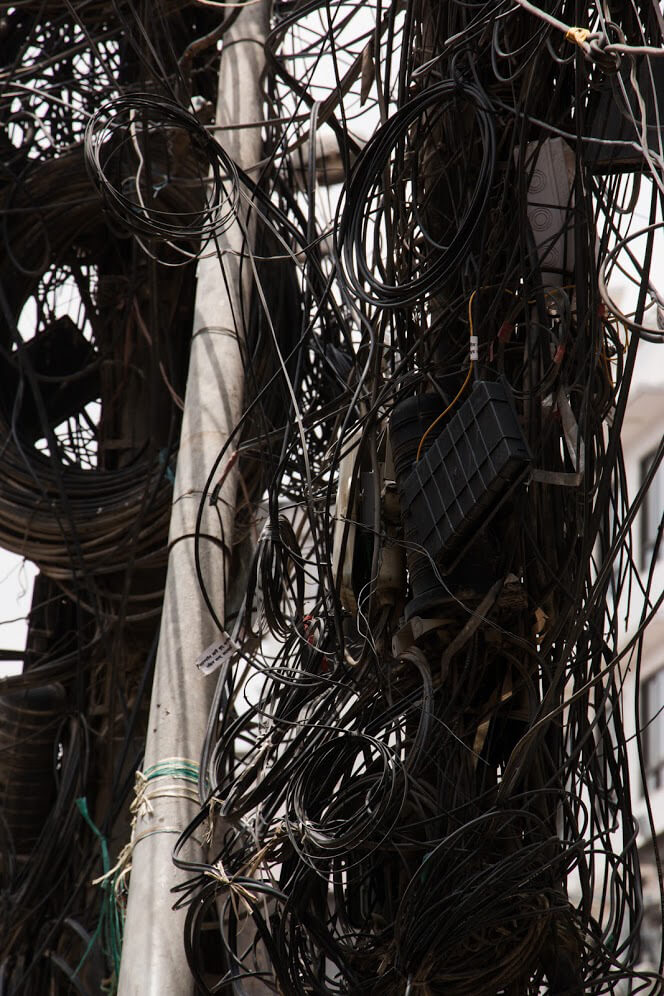
The poles are mostly owned by the Nepal Electricity Authority (NEA) which has a nominal charge for vendors who want to rent it. However, there is no regulation and no monitoring of who is actually hanging wires along the pylons.
“There is no oversight, that is why it looks like a jungle out there,” says Dileep Agrawal of the internet service provider, Worldlink. “But can easily be solved with better regulation and restriction on the number wires.”