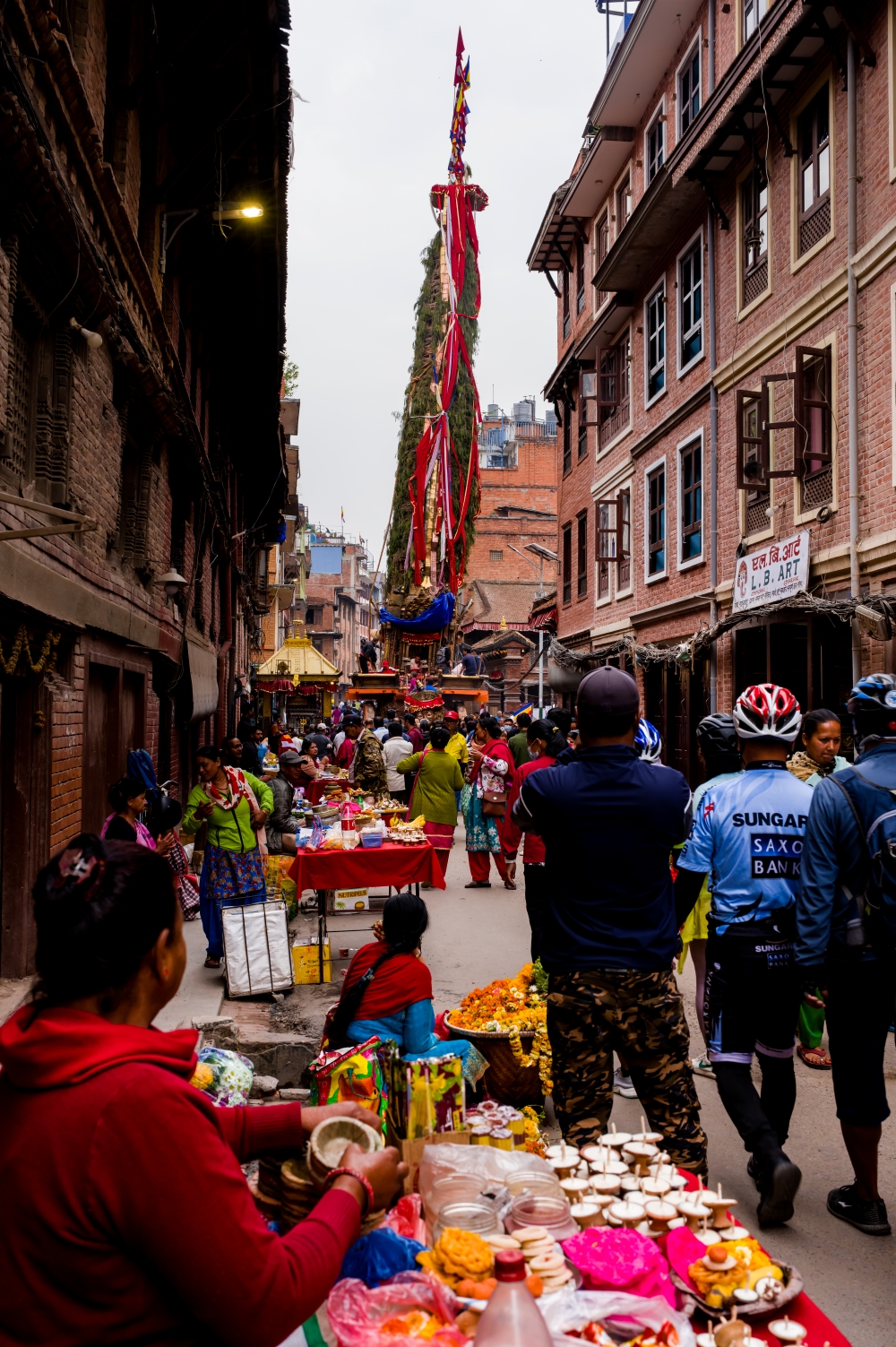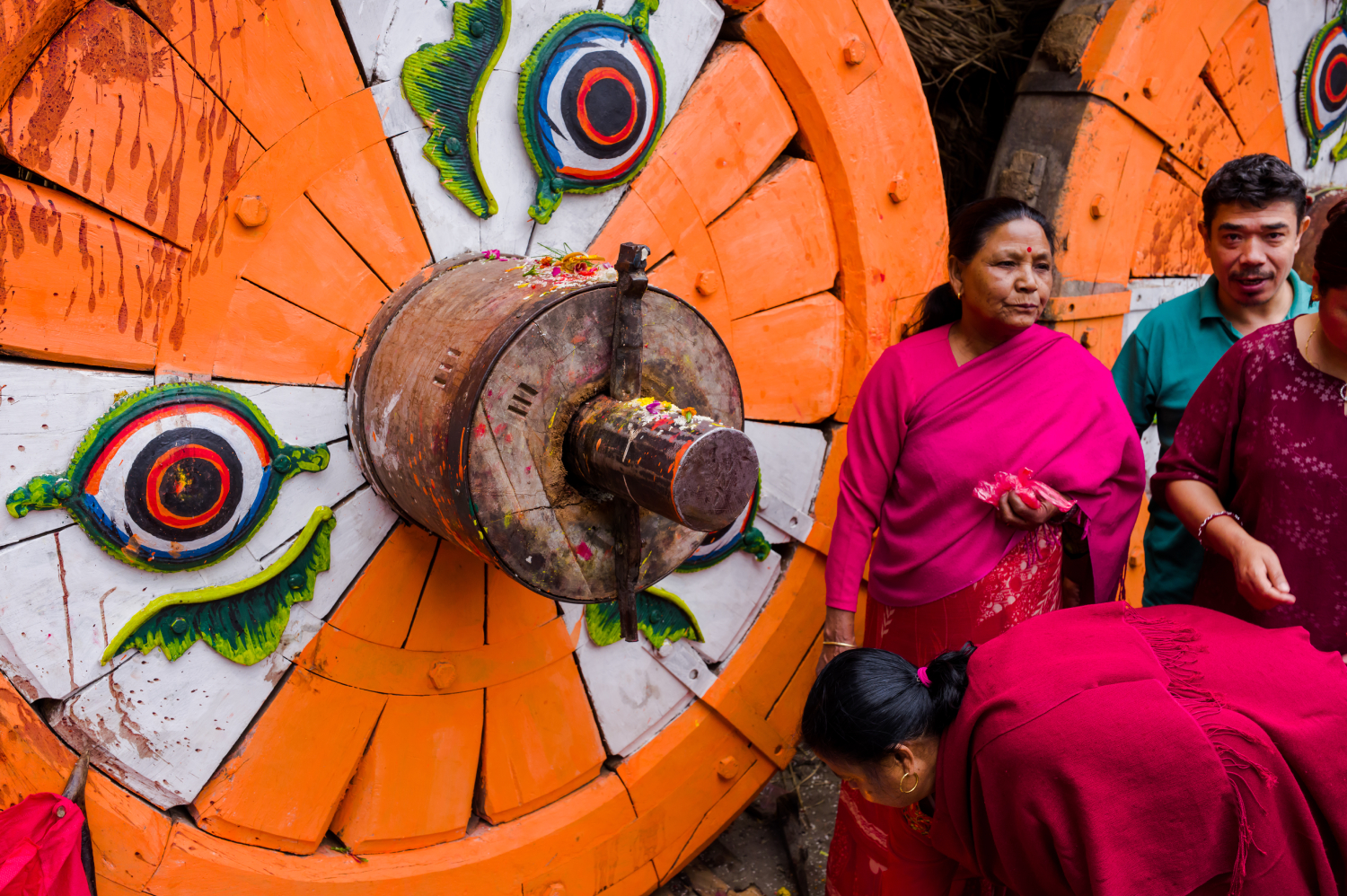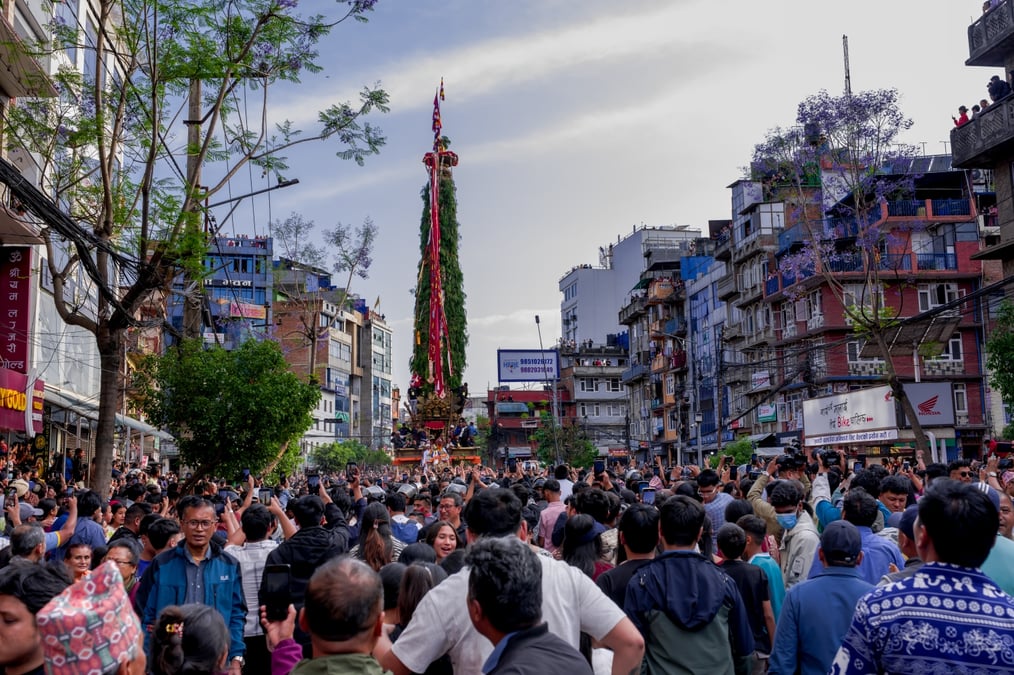
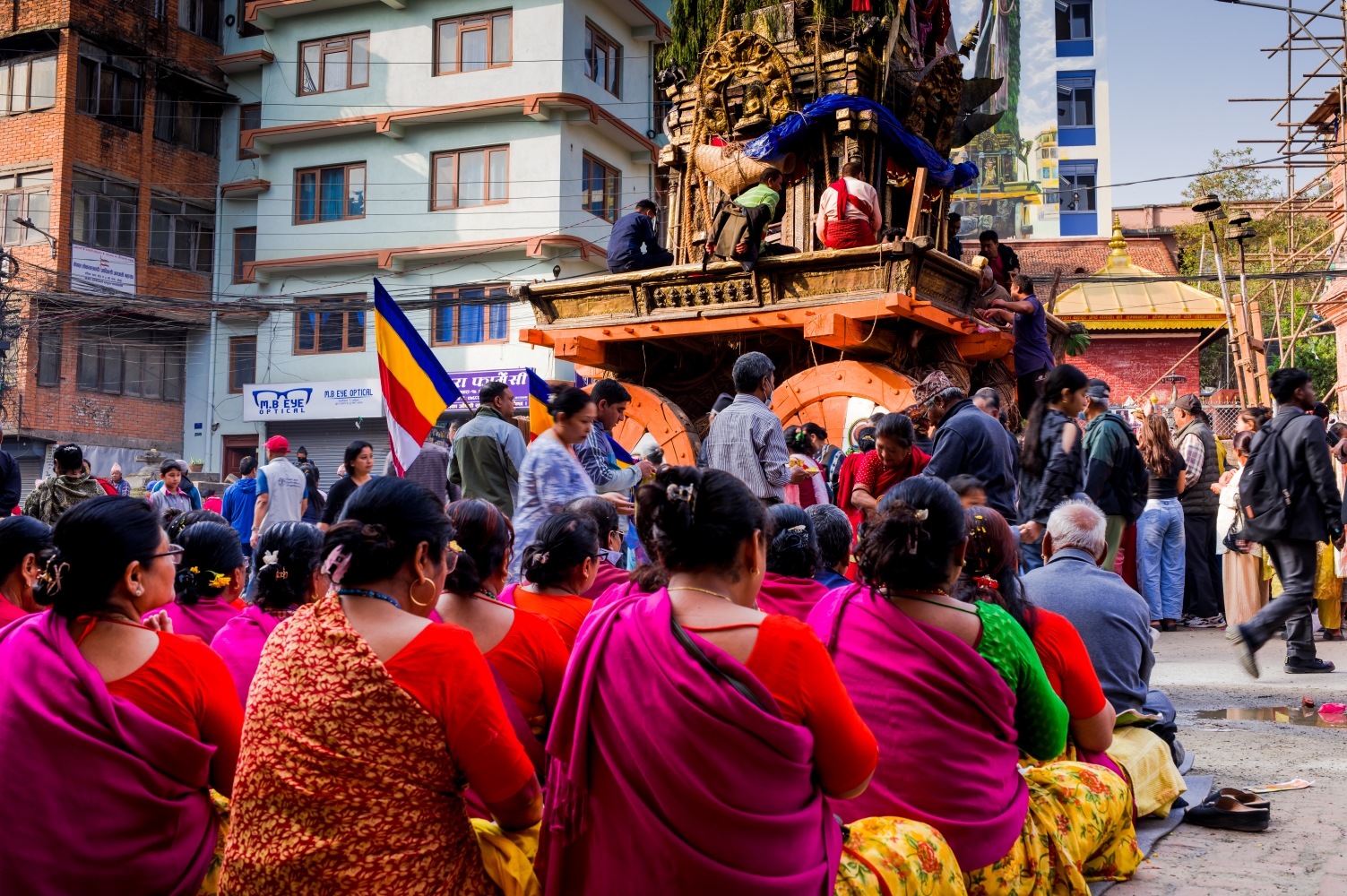
The streets of Patan are alive this month with lavender jacaranda trees under rain-washed skies as the chariot of Rato Matsyendranath is pulled across town.
This is the festival of the rain god, and inevitably the heavens opened up and pre-monsoon showers pelted the chariot as it started being pulled in Pulchok last week.
Thousands of devotees, onlookers and the chariot procession organisers thronged the streets on the first day last week. The rhythmic cymbals and drums exuded a vibrant energy as the enormous four wheels turned and the chariot lurched.
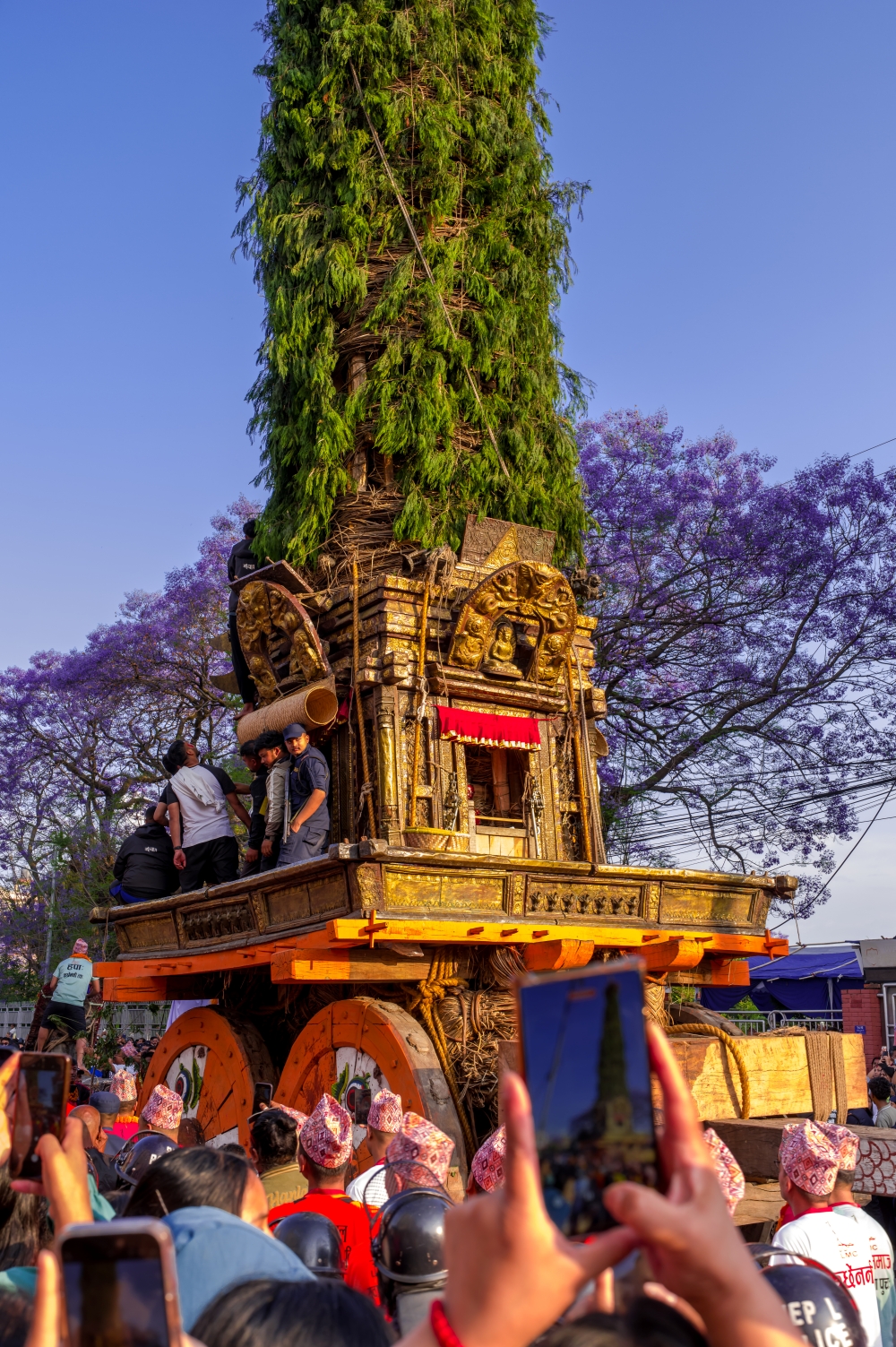
The red rain god has Hindu and Buddhist antecedents, alternatively called Bungadya and Karunamaya — reflecting Kathmandu Valley’s syncretic mixture of the two religions.
“Bungadya is a profoundly intangible form of heritage,” explains heritage expert Monalisa Maharjan. “It embodies traditional knowledge, artisanal skills passed down through generations. Local communities and specific families have specified roles in being custodians of the heritage, ensuring their survival over the centuries.”
There are many legends and stories about this annual tradition. Lichhavi king Narendra Dev is supposed to have brought Rato Matsyendranath from Assam to Kathmandu Valley to convince Guru Gorakhnath to lift a spell that created a two-year drought in Kathmandu.
Matsyendranath was Gorakhnath’s mentor, and upon seeing him, the serpents were released, unleashing the rains. The chariot festival honours the return of this life-giving rain. The deity is seen as an icon for thriving agriculture, the arrival of monsoon showers, and the welfare of the community.
Read also: The reign of the god of rain, Vidhu Prakash Kayastha
Till this day, the Rato Matsyendranath festival is no ordinary celebration. Patan does not sleep for a month as the chariot is pulled through various neighbourhoods. It unfolds at a state level with the president (formerly the king) attending the climax of the Bhoto Jatra in Jawalakhel later this month.
The intergenerational transmission of tradition is unique in the world, and the reason the festival is one of the most vibrant cultural expressions that thrives despite inroads of modernity. The other unique aspect is that it is a transnational festival, binding Patan with Guwahati in the Indian state of Assam.