
On World Health Day on 7 April this week, the Air Quality Index (AQI) in Kathmandu exceeded 300 – one of the dirtiest in any city in the world. Breathing was literally lethal.
Although the main source of pollution this week was smoke from brushfires raging across the country, emissions from diesel and petrol vehicles are a bigger year-round source of hazardous suspended particles and toxic gases.
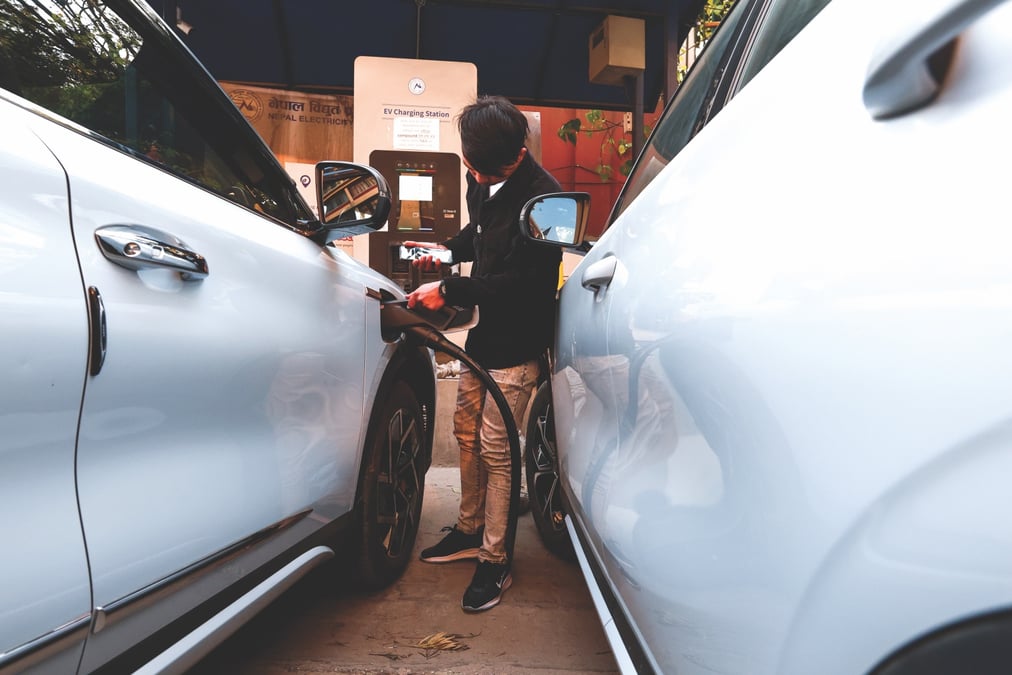
The good news is that the sale of electric four-wheelers is growing rapidly, and battery-powered vehicles now account for one-third of Nepal’s total car imports. Outside Kathmandu, vans, microbuses and three-wheelers are switching to electric as never before
All this has happened even though there is still a hefty tax on battery-powered vehicles. In last year’s budget ex-Finance Minister Prakash Mahat increased the tax on smaller EVs and electric vans while inexplicably reducing the tax on luxury SUVs.
This year, all eyes are on the new Finance Minister Barsha Man Pun, who is under pressure to raise government revenue that has fallen drastically due to a slowdown in imports. Instead of lowering taxes and even announcing subsidies on electric cars and appliances, he may actually increase them. He could also do it selectively to favour certain EV brands imported by cronies.
“The government should be more careful in how it taxes electric vehicles,” says air pollution activist Bhushan Tuladhar who is also the director of Sajha Yatayat, the public transport company that is operating 40 electric buses. “It should be consistent, predictable and guided by science, it can’t be a kneejerk reaction with no real planning.”
One large electric bus can replace at least 10 cars, easing road congestion, improving air pollution and reducing petroleum imports. But existing excise and import taxes make battery-powered buses up to five times more expensive than a diesel bus of similar capacity.
On Tuesday, Sajha Yatayat inaugurated Nepal’s largest charging station with 24 charging points where it will charge its 40 e-buses. Speaking at the event, Kulman Ghising of Nepal Electricity Authority (NEA) acknowledged that Nepal was undergoing a “massive transport transition”.
“We will soon have surplus power even in winter, and private EVs can only use so much of our electricity, what we really need is to electrify our mass transport,” he said. “On one hand, by increasing our consumption of electricity, it will reduce our petroleum imports and subsequently our trade deficit. It will also help us meet our net zero target. This is also very feasible as a business model.”
Petroleum imports account for one-fourth of Nepal’s total imports and is more than all of our exports combined. Reducing petroleum consumption by just 10% would save the country over Rs30 billion whereas even exporting all of our current power generation of 3,000MW would earn us just half that amount.