
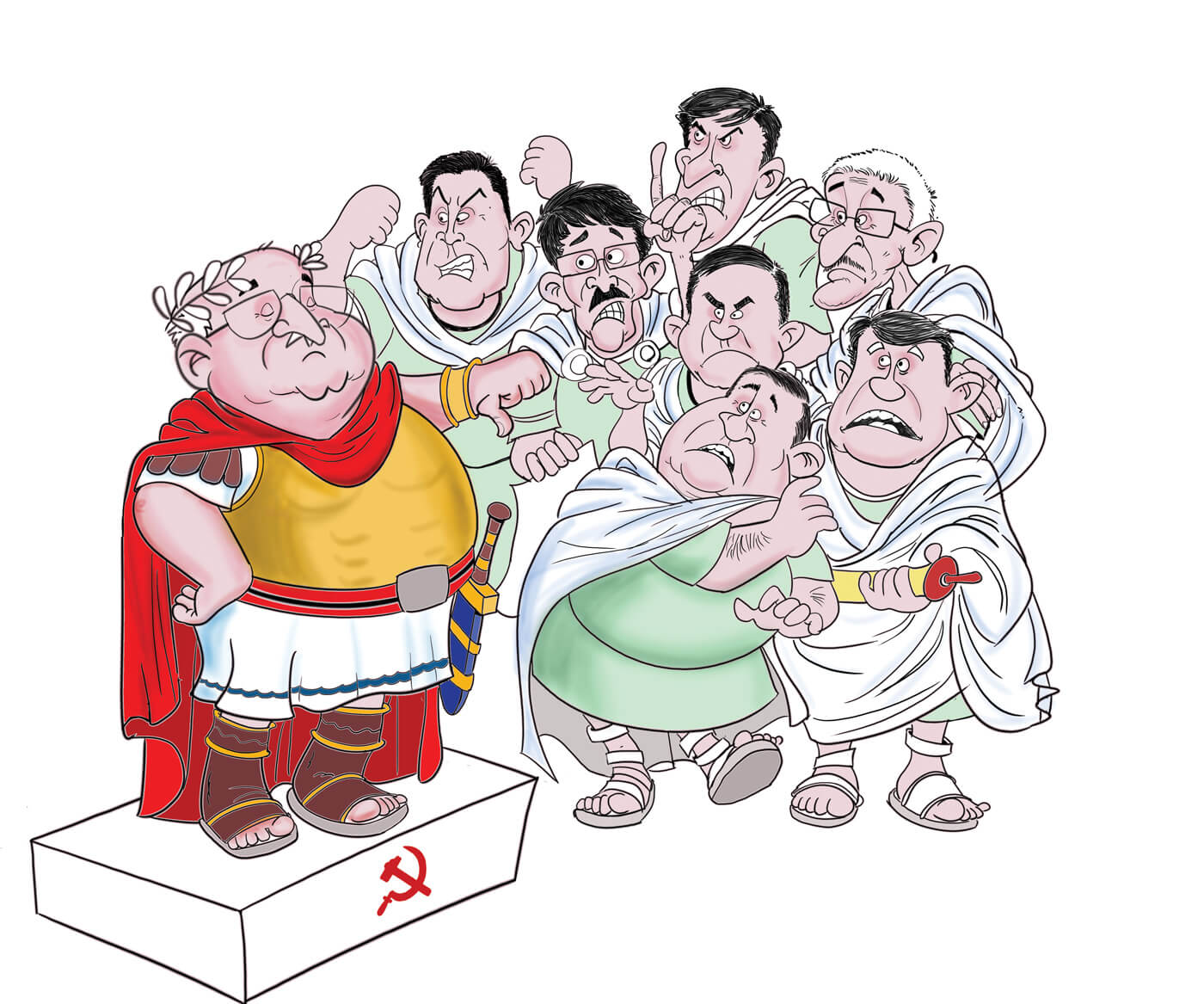
Nepal may be a federal state on paper, but the mightiest government in the country’s democratic history is showing that it is extremely reluctant to share its considerable power with the seven provinces.
Chief ministers (CM) of all seven provinces are engaged in a tug-of-war with Singha Darbar, which is unwilling to devolve power to federal and local governments. Who wins this fight will determine the fate of Nepal’s nascent federalism.
Six of the seven chief ministers had a huddle in Pokhara last week, in which they came up with a list of agenda points to take up with Prime Minister K P Oli. The CM of Karnali province could not make it because he was sick, but lent his moral support. All seven were to take part in the first meeting of the inter-provinces council in Kathmandu early this week, but PM Oli cancelled the meeting at the last minute, apparently because he was not happy with the provincial bosses’ assertiveness, despite most of them being from his own party.
The chief ministers then tried to meet Oli anyway, but after failing to get an appointment for three days, they returned to their respective provinces. Gandaki Province CM Prithvi Subba Gurung told Nepali Times on Thursday that the inter-provinces council meeting was urgently needed to clear major policy hurdles.
“The PM should take the initiative to hold these meetings so federalism can work. He should not think that the chief ministers are ganging up on him,” Gurung added.
The chief ministers have been sharply critical of Kathmandu for not supporting federal provinces and creating difficulties by delaying laws and not deploying enough human resources. The Constitution allows the Centre and federal provinces to jointly exercise some rights, but the chief ministers say they are undermined by the lack of laws.