
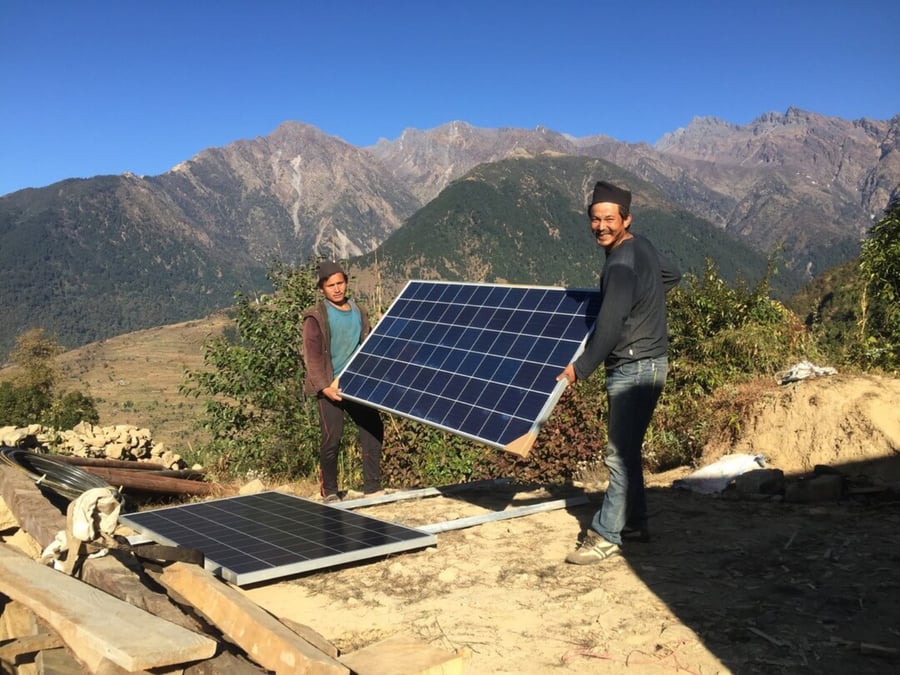
The Bhote Kosi flood this month was a stark warning of the increased risk to Nepal’s hydropower plants due to climate breakdown, and the disaster has prompted a rethinking into solar energy options.
Nepal has pursued an energy strategy that relies almost totally on hydroelectricity, but grid-scale solar power is becoming cheaper and offers a viable alternative.
Solar energy accounts for a mere 0.1% of Nepal’s total installed generation of nearly 3,800MW. The rest of the world can now afford solar power because of China’s production. The price of solar panels has gone down by up to 90% in the past decade.
“One advantage of solar over hydro is the speed at which projects can be set up,” says Kushal Gurung of WindPower, “a 100MW hydro might take ten years to build, while a solar plant of the same capacity can be set up in six months.”
Landslides, floods and earthquakes frequently damage hydropower stations. The Rasuwa flood last week affected 230MW of generation capacity from four plants along the Trisuli. Last September’s flood badly damaged the 456MW Upper Tama Kosi.
The Nepal Electricity Authority (NEA) and private power producers lost much revenue, and Nepal had to stop exporting monsoon surplus electricity to India last year. Damaged solar projects, on the other hand, can be up and running after repairs within a few weeks.
“The main limitation of solar is land,” explains Gurung. “While a relatively small hydro project can generate 5-10MW pretty easily, a 1MW solar plant requires 500 m2 of land.”
Where the plant is situated matters as well. The best region is Mustang, because it gets the most solar radiation per unit area over a specific period. The Tarai may get a lot of sun but cloud cover, fog and pollution makes it less ‘irradiated’. The efficiency of a photovoltaic cell also drops, the higher the ambient temperature.
“A 1kW panel in Mustang might give you 6-7 units per day, while the same panel in the Tarai would give you half that,” says Gurung.
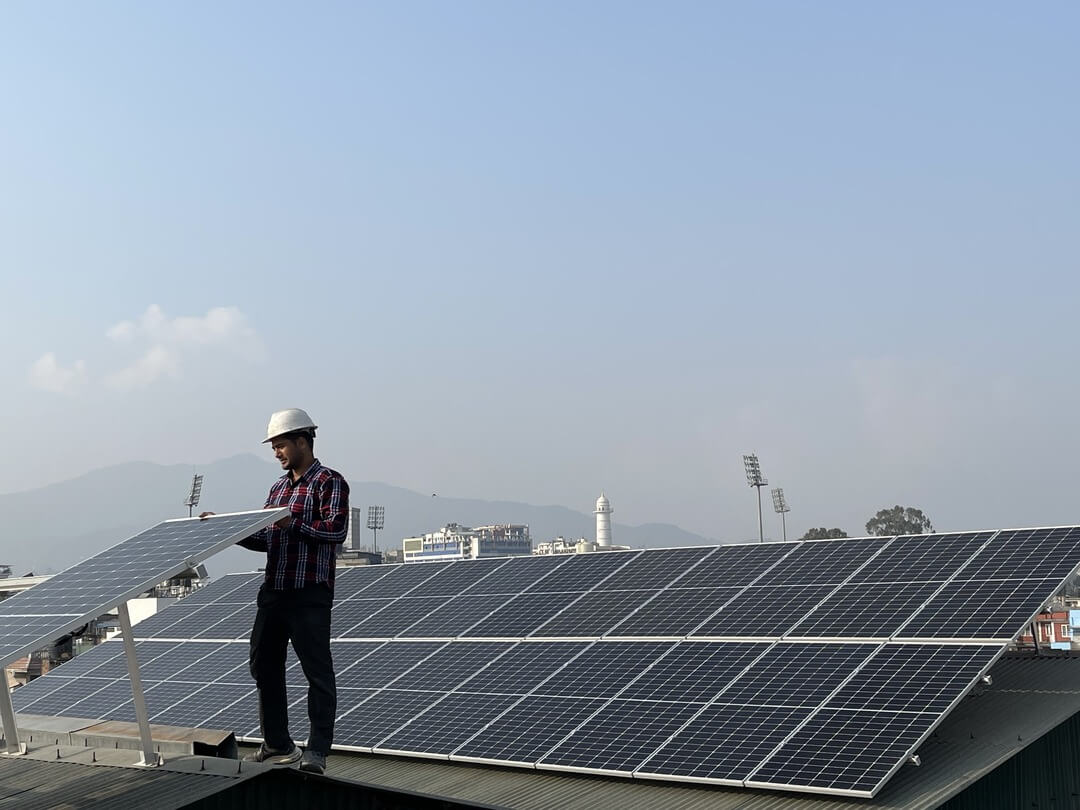
Another advantage for solar in Nepal is how decentralised it can be. An unreliable grid and difficult terrain make it hard to build hydropower stations and transmission lines, but home solar systems can be set up easily and provide reliable energy especially when paired with batteries for morning and the night.
Hydropower dams submerge large tracts of fertile valleys, impact ecosystems and displace people. But NEA and energy producers are locked into hydro, and are reluctant to shift to solar.
GhamPower is moving into solar in a big way, offering strategic funding to make panels available to poorer communities, and setting up solar microgrids.
The company was one of ten winners, out of 2,500 applicants, of the $50,000 Keeling Curve Prize which honours high-impact clean energy solutions.
