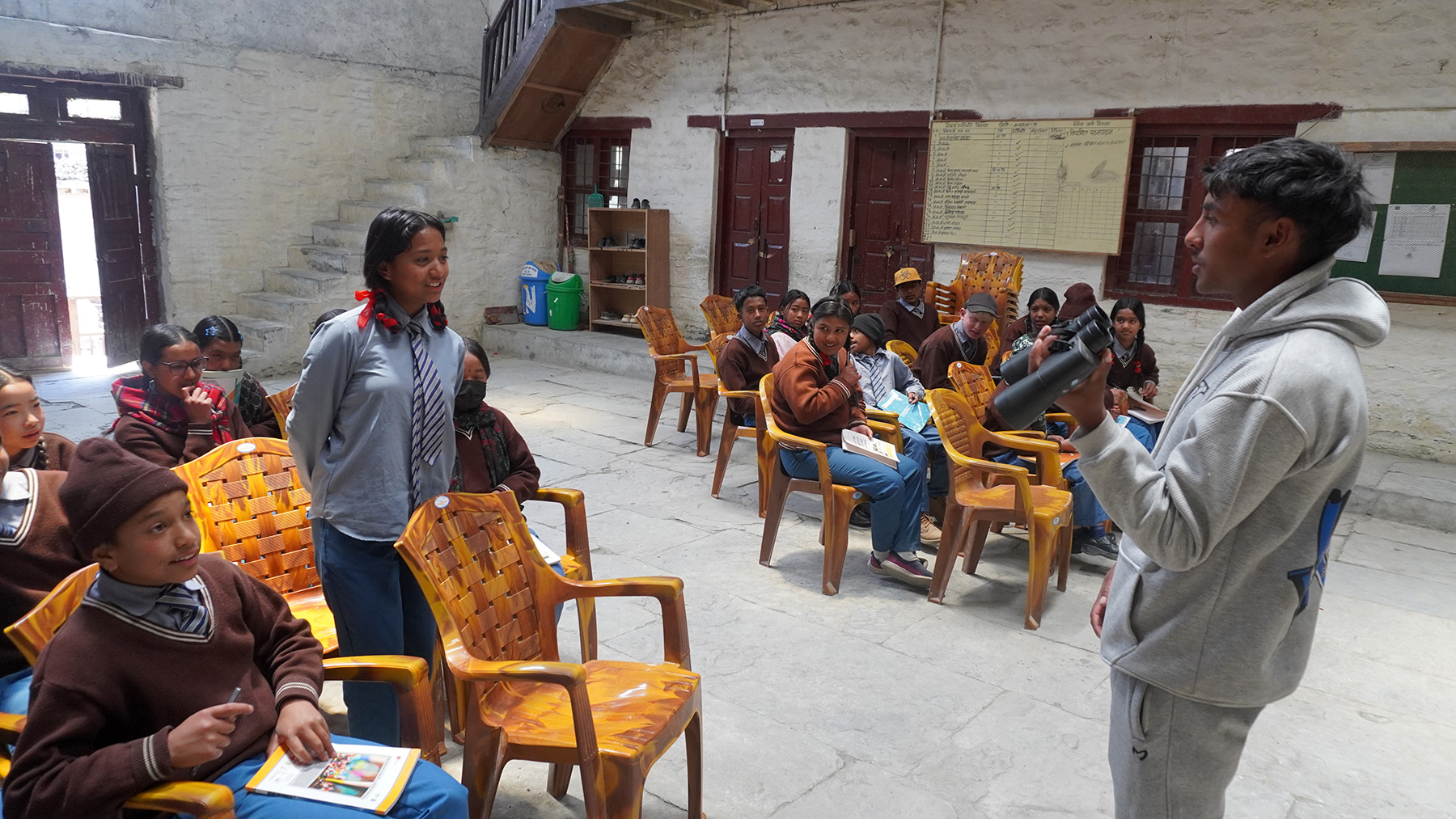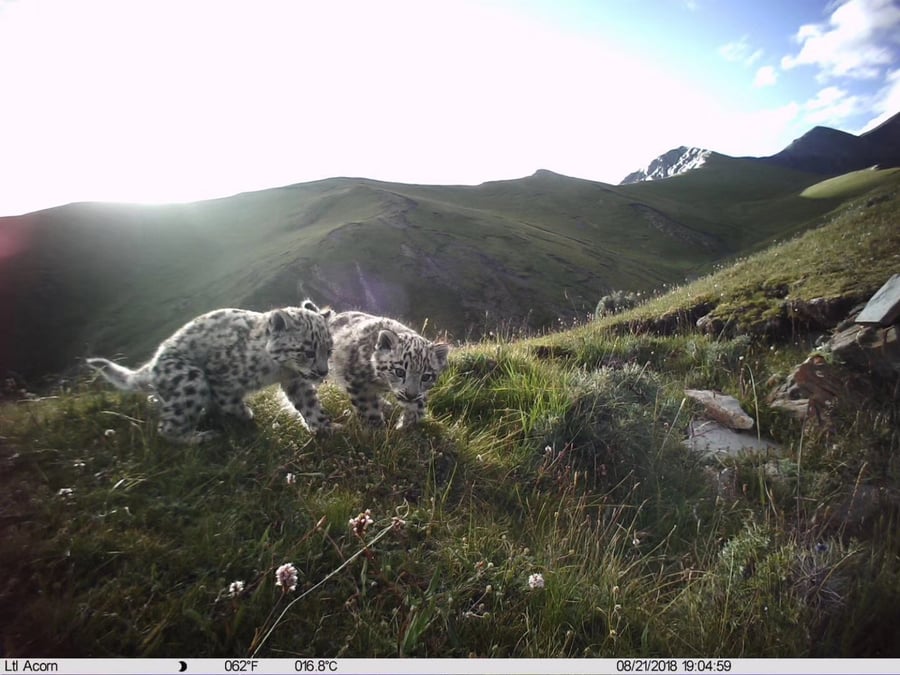
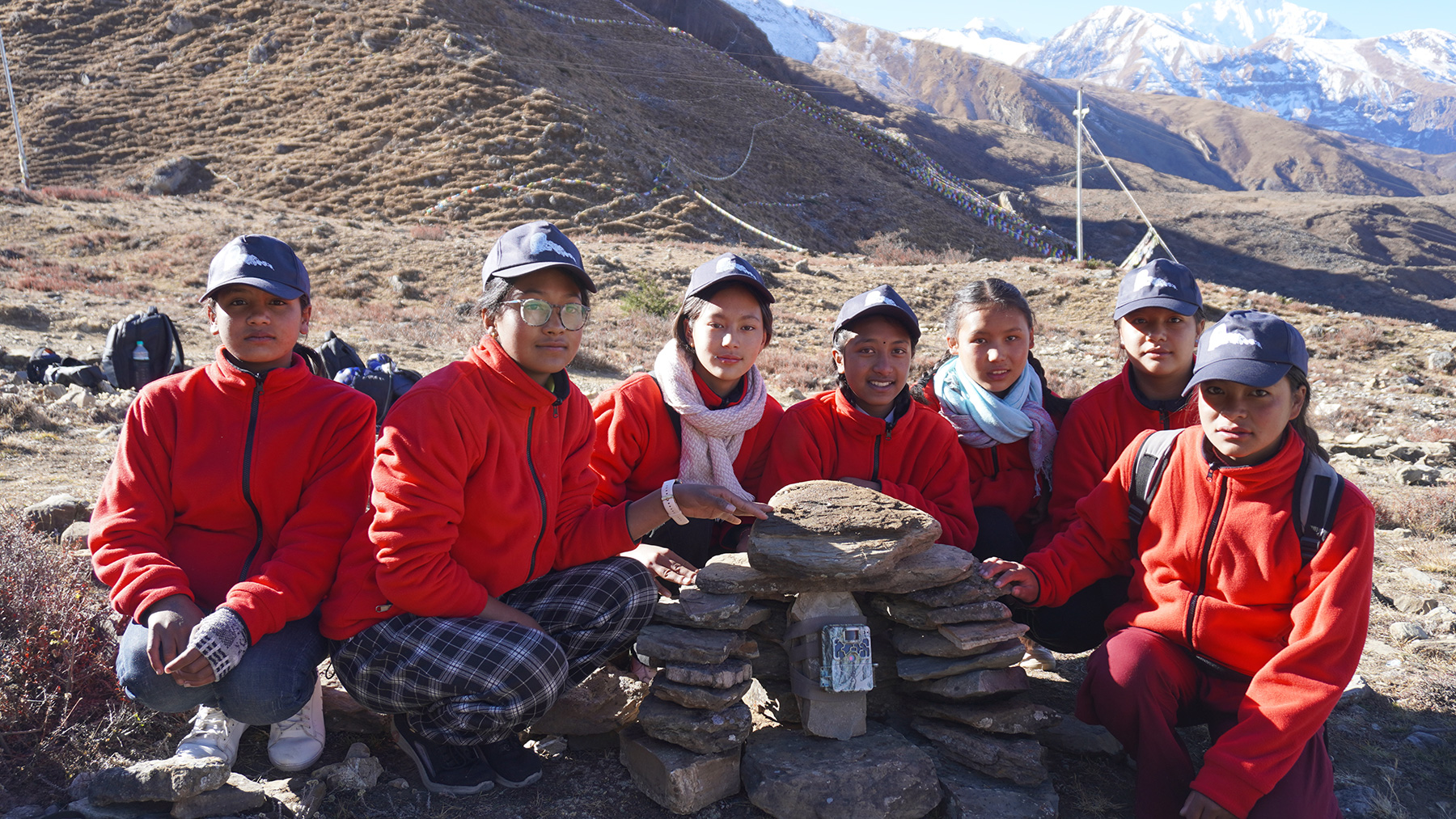
Milan BK is busy installing camera traps, checking its GPS location and peering through binoculars at outcrops on the other side of the valley for signs of snow leopard movement.
BK is 15 years old and still in school, but he handles the tracking equipment like a pro. He is a member of the conservation group from Thini village in the shadow of Mt Niligiri in Mustang.
Sonia BK is in Grade 7 at the Janwal Secondary School in nearby Marpha, and learnt about snow leopards in class, and is now being trained with her parents in tracking and monitoring the elusive and endangered animals.
“At first, I thought snow leopards were just cats, but after I started learning about their behaviour and habitat in school, I realised why it was important to protect them,” she says.
Milan and Sonia were part of a snow leopard conservation program involving 750 students from Grades 6, 7, and 8 in schools across Mustang and in Taplejung district in eastern Nepal.
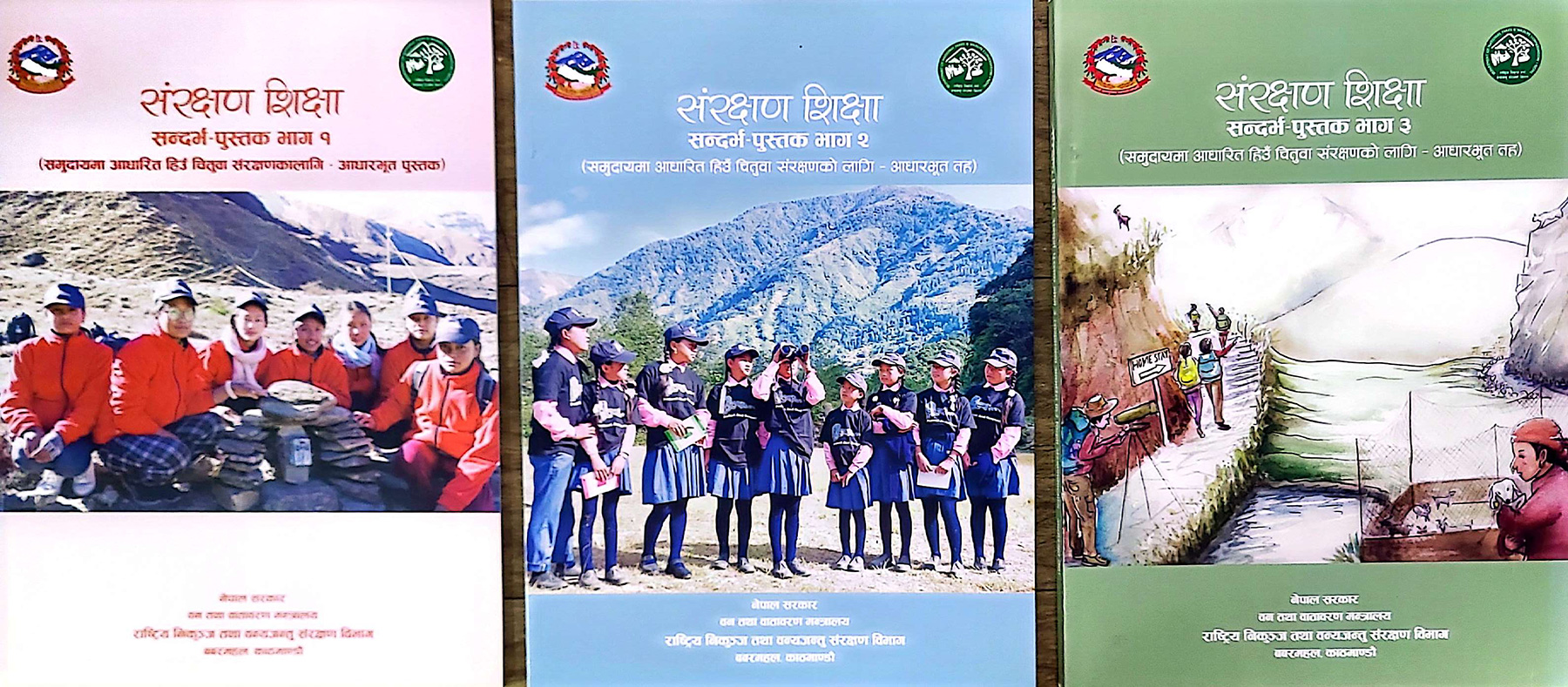
Their fieldbook was the Conservation Education Reference Book published by Nepal’s Department of National Parks and Wildlife Conservation, Teka Group Nepal and the US-based Snow Leopard Conservancy.
“The book helps teach students about conservation, involves the community in conservation activities, and enables them to value coexistence between humans and wildlife,” says author Anil Adhikari of Teka.
He adds, “The students will grow up to be the guardians of the community, enabling them to understand the importance of conservation from a young age will have long-term benefits for the protection of snow leopards.”
The young conservationists are now putting their theoretical knowledge into practice by participating in the Snow Leopard Scouts Monitoring Camp and Snow Leopard Nature Tour organised across 12 communities in the cat’s habitats in Mustang and Taplejung.
Snow leopards live on steep slopes at elevations from 3,000-5,500m and are found in 12 countries besides Nepal: India, Bhutan, Pakistan, China, Afghanistan, Tajikistan, Uzbekistan, Kazakhstan, Kyrgyzstan, Mongolia, and Russia.
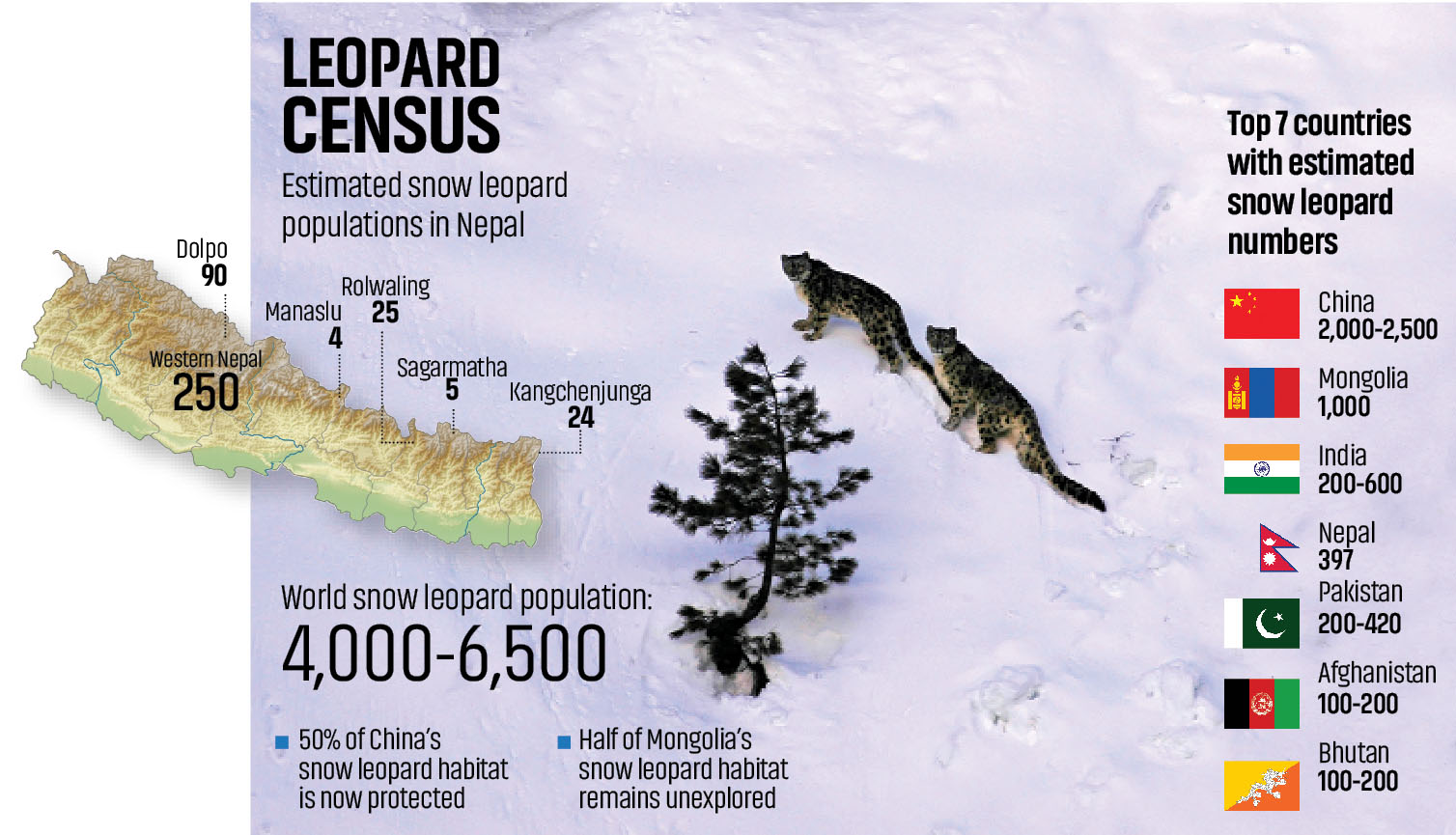
The government's census earlier this year put the number of big cat population in Nepal at 397.
The animal is at the top of the Himalayan food chain and therefore an indicator species of a healthy ecosystem. Their presence indicates that their prey base, including sables, ghoral and musk deer are also in abundance.
The mainly nocturnal hunters are endangered due to increasing human-wildlife conflict, poaching, and effects of the climate crisis. In response, Nepal launched the Community-Based Snow Leopard Conservation Program in 2022.
“The children might get bored with regular lessons, but they study this reference book with great interest,” notes Dhruba Baral, a conservation teacher at Janashanti Secondary School in Kagbeni. “The students are aware that snow leopards attack livestock, but there is now greater awareness about safely corralling yaks and sheep, as well as protect snow leopards.”